How Does Scoring Work in Board Games? Points Explained Simply
How do board games decide who wins and how is scoring tracked?
On this page
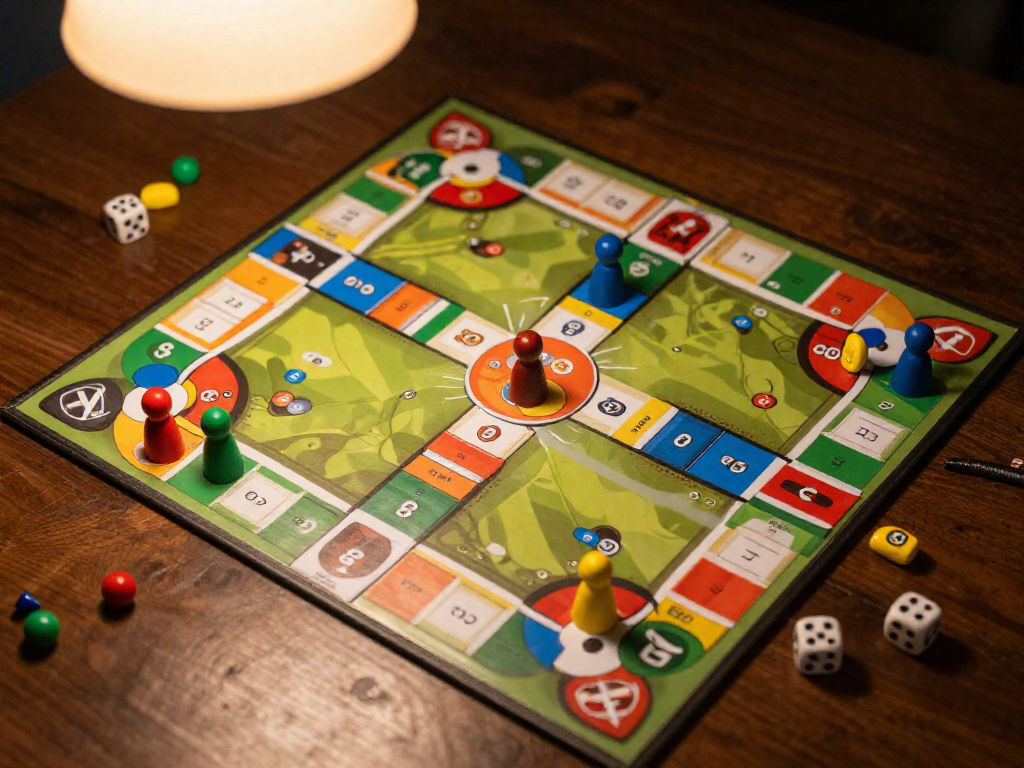
Why Scoring Confuses New Players (And Why It Doesn't Have To)
If you've ever finished a game and asked, "Wait, so who actually won?"—you're in good company. Scoring trips up almost every new player, but the problem usually isn't you. It's how the information is presented.
Here's the reassuring part: most board games reuse the same handful of scoring ideas, just dressed up in different themes. One game might call them "victory points" for trading spices, another for building train routes—but underneath, the math works the same way. (Victory points are simply the points that decide the winner.)
The trouble is that rulebooks tend to bury the "how to win" part in dense paragraphs, somewhere between setup and edge cases. So the single most important question—how do you actually win?—gets lost.
Once you learn to spot the patterns, everything speeds up. You'll open a new box, recognize the scoring style in seconds, and spend less time flipping through the rulebook and more time playing together.
The Two Big Questions: How You Win vs. How You Track It
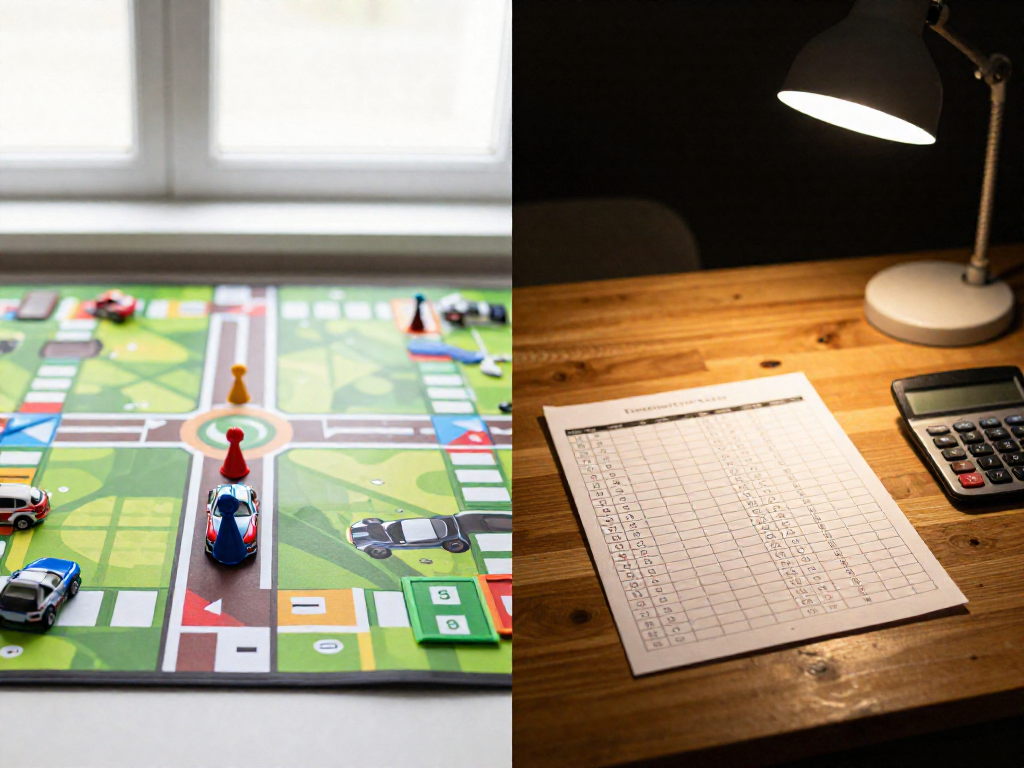
Most scoring confusion clears up the moment you split one question into two.
Question 1 — How do you win? This is the victory condition: the rule that decides who comes out on top and when the game ends. It might be "first to the finish," "most points at the end," or "the last player standing."
Question 2 — How is that tracked? This is the scoring mechanic: the running tally—points, coins, stars, spaces moved—that you accumulate along the way. Think of it as the scoreboard that feeds into the victory condition.
Here's the part that trips people up: a game doesn't always need both. Some games are pure races with no points at all. Others are all about stacking up points, where the finish line is simply "the round when we stop counting."
A quick contrast:
- Candy Land has a victory condition (reach the Candy Castle first) but no scoring. You don't tally anything—you just move and the first one there wins. It's a pure race.
- Ticket to Ride has a scoring mechanic (you earn points for routes and completed tickets) and a victory condition (most points once the trains run out). You play to the trigger, then add up your score.
So before you panic over a points sheet, ask: Is this a race, or a points game? That single question tells you what to pay attention to.
Common Scoring Systems, Explained Simply
Almost every board game uses one of a handful of scoring systems. Once you recognize them, a brand-new game feels familiar within minutes. Here are the big six.
1. Most points wins (victory points). "Victory points" is just a fancy phrase for the points that decide the winner. You earn them throughout the game, add them up at the end, and the highest total wins. In Ticket to Ride, you score for the train routes you build; in Splendor, for the gem cards you collect. Simple rule: keep doing the things that earn points.
2. First to a goal (race to the finish). No counting at all here—you win by reaching the end before everyone else. Candy Land and Sorry! are pure races to the last square. These are the easiest for young kids because "winning" is something they can literally see on the board.
3. Set collection and combos. You score by gathering matching groups of cards or tiles. In Sushi Go! you grab combinations of food cards; in Rummikub you lay down runs and groups of numbers. A "combo" just means cards that are worth more together than apart, which makes collecting feel rewarding.
4. Area or majority control. Some games reward having the most of something in a spot—the most pieces in a region, the most cards of one color. You don't need a perfect plan; just aim to out-number your opponents where it counts. Think of it as "whoever has the biggest crowd here gets the prize."
5. Elimination (last player standing). There's no scorecard—you win simply by being the last one still in the game as others get knocked out. Quick to understand, though it can leave eliminated players sitting out, so it's worth watching with restless kids.
6. Hidden or end-game-only scoring. Here, points are tallied only when the game ends, and some are kept secret until then. This is why the score can swing dramatically at the last moment—someone quietly building toward a big finish suddenly leaps ahead. It's normal, not a mistake; the game is designed to keep everyone guessing until the final count.
Spot which system a game uses, and you'll always know what to aim for.
How Points Get Tracked at the Table
Once you know how a game awards points, the next question is where those points actually live during play. Here are the methods you'll run into most:
- Score tracks. A numbered path runs around the board's edge, and each player has a marker (a little wooden cube or pawn) that scoots forward as they earn points. Easy to glance at, and no math until the end.
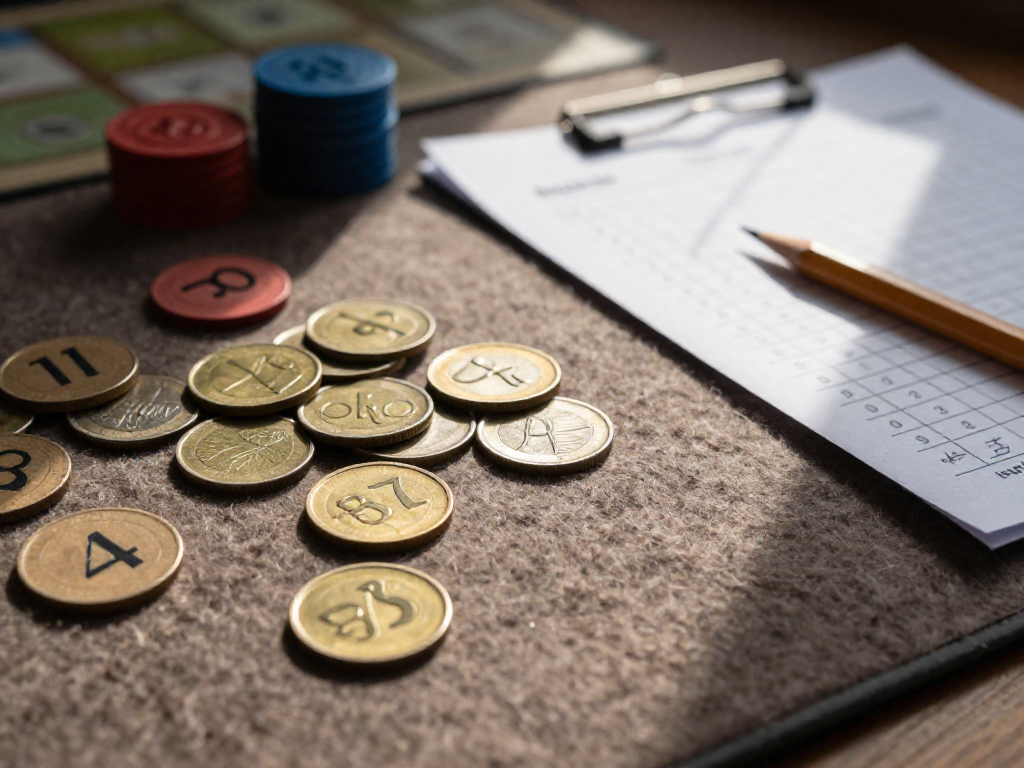
- Tokens, coins, and chips. You physically collect pieces that are worth points. Kids love this one because progress is something you can hold and stack.
- Pen-and-paper score sheets. Some games hand you a pad to jot down points each round. Keep a sharpened pencil nearby—these add up fast at the finish.
- Counting cards or tiles at the end. Many games stay quiet during play, then ask everyone to tally up collected cards, tiles, or sets once the last turn is done. Sort by color or type first to avoid recounting.
- Apps and companion tools (optional). A few modern games offer a phone app to track scores for you. Handy, but never required—paper works just as well, and it keeps screens off the table if that's your preference.
No single method is "better." Pick games that match how your table likes to keep score.
Settling Ties and End-Game Triggers
Two questions cause more family squabbles than any others: when does the game actually end, and what happens when two players tie? Knowing both before you start saves a lot of "wait, are we done?" moments.
How games signal the end. Most games use an "end-game trigger"—a specific event that begins the final wrap-up. Common ones include:
- A final round is announced once someone hits a goal (like building their last piece).
- The draw deck runs out of cards.
- A player reaches the end of a track, such as a score marker crossing a finish line.
Usually everyone finishes the current round so each player gets the same number of turns. Then you total points.
Breaking ties. When scores match, games use a tiebreaker—a backup rule that decides the winner. Typical ones are most leftover money, most cards in hand, or whoever triggered the end. These rules live in the last page or two of the rulebook, often under "Game End" or "Winning."
The simple habit: read the end-game section first. It tells you what to aim for and prevents disputes before they start.
A Quick Cheat Sheet for Figuring Out Any Game's Scoring
Cracking open a new box? Before anyone rolls a die, run through these four questions and you'll understand how to win almost any game.
-
Read the "Object of the Game" first. Most rulebooks open with a short "How to Win" or "Object of the Game" blurb. Read that one paragraph before anything else—it tells you the goal in plain terms.
-
Ask: points, race, or last standing? Nearly every game decides a winner one of three ways—most points at the end, first to reach a finish line, or the last player still in. Knowing which one shapes how you play.
-
Find the end-game trigger. This is the event that signals the final round—an empty deck, a built city, someone hitting 10 points. Spotting it early keeps the ending from sneaking up on you.
-
Note the tiebreaker. Many games include a "if tied" rule (often most leftover cards or coins). Glance at it now so a close finish doesn't spark a debate.
Tape this list inside your game-night notebook and new rulebooks stop feeling intimidating.
FAQ
What does VP mean in board games?
VP stands for "victory points"—the units a game uses to measure how well you're doing. Whoever finishes with the most victory points usually wins. You might earn them in lots of ways: completing goals, collecting sets, controlling areas, or holding the right cards at the end. Many games track VP on a scoring track around the edge of the board, while others have you tally them up only when the game finishes.
Do all board games have points?
No. Points are common, but plenty of great games decide the winner another way. "Race" games are won by being first to the finish or first to get rid of all your pieces, like in Sorry! or Candy Land. Cooperative games (where everyone plays as a team against the game itself) often have you all win or lose together with no scoring at all, such as Forbidden Island. So before you start, it's worth checking how a game decides the winner—points, position, or teamwork.
How do you know when a board game ends?
Most games tell you in the rulebook with a "game end" trigger—a specific event that signals the final round. Common triggers include a set number of rounds being played, the draw pile running out, someone reaching a target score, or a player placing their last piece. Many modern games give one last "go around" so everyone gets an equal number of turns, then you total the scores. If you're unsure, look for a section titled "End of the Game" near the back of the rules.
What happens if there's a tie in a board game?
Most rulebooks include a "tiebreaker" rule that decides the winner when scores are even. Typical tiebreakers go to the tied player who has the most leftover money, the most unused resources, the fewest pieces remaining, or who took their last turn earliest. If a game doesn't list one (or you can't find it), the friendly house-rule options are to declare a shared victory or play a quick sudden-death round. For relaxed family game nights, calling it a tie and moving on to the next game is perfectly fine.
Why does the score change so much at the end of some games?
Many games hold back a big chunk of points for "end-game scoring"—bonuses you only collect once the game is over. These reward long-term goals like completing a collection, finishing a hidden objective card, or building the largest network. Because everyone reveals and totals these at the same time, a player who looked like they were losing can leap ahead. It's an intentional design choice that keeps games tense to the final moment, so don't panic if you're behind midway through.
What's the easiest way to keep score for game night?
If your game has a scoring track on the board, use that first—it's built for the job and saves arguments. Otherwise, keep a small notepad and pen handy so you can jot totals after each round, or use a free score-keeping app on your phone (search your app store for the game's name plus "score"). For quick tallies, a bowl of tokens, coins, or even dried beans works well: hand one out each time someone earns a point, then count them at the end. Pick whichever method keeps the table relaxed and the focus on playing together.
See also
- How to Read a Board Game Rulebook
- Best Board Games for Family Game Night
- Board Game Setup: A Beginner's Step-by-Step Guide
- Easy Board Games to Learn in 5 Minutes
- What Is Set Collection in Board Games?
Related articles

What Does 'Eurogame' Mean? Hobby Jargon Demystified
What is a eurogame? A plain-language guide to the eurogame style, how it differs from other board game families, and easy titles to try at home.
Jun 27, 2026 · 6 min read
Deck-Building Explained: How These Games Actually Work
New to deck-building games? Learn what they are, how the core mechanic works, and which beginner-friendly titles to try first—explained in plain language.
Jun 27, 2026 · 10 min read
Worker Placement Explained: A Beginner's Guide to the Mechanic
What is worker placement in board games? A plain-language guide to how the mechanic works, why it's fun, and beginner-friendly games to try first.
Jun 27, 2026 · 8 min read