Azul Review: A Beautiful, Easy Game Anyone Can Learn in 5 Minutes
Is Azul a good easy-to-learn game for beginners?
On this page
Azul at a Glance: The Quick Verdict
The short answer: Yes—Azul is one of the easiest games to teach a brand-new player, and most people are placing tiles confidently within five minutes.
| Snapshot | Details |
|---|---|
| Players | 2–4 |
| Ages | 8 and up |
| Play time | 30–45 minutes |
| Price | ~$30–40 |
| Difficulty | Easy (light strategy, no rules-heavy setup) |
| Our rating | ★★★★½ (4.5/5) |
Why 4.5: gorgeous, satisfying, and dead simple to learn—docked half a star only because it's purely competitive, with no team or co-op option for mixed-age nights.
Who it's perfect for: Families with kids around 8+, couples who want a quick two-player game, and anyone new to the hobby who wants something that looks beautiful on the table and explains itself fast. The chunky tiles feel great to handle and there's zero objectionable content.
Who might want something else: Players hunting for deep, hours-long strategy, or families wanting everyone to work together—Azul is head-to-head only, so very young children may get frustrated competing against adults.
What Is Azul? The Premise in Plain Language
Azul (pronounced ah-ZOOL) is a tile-laying game, which simply means you collect colorful pieces and arrange them on your own board to score points. The theme comes from azulejos—the gorgeous painted ceramic tiles you see covering walls and palaces in Portugal and Spain. In the game, you're an artisan decorating the walls of a royal palace, and the tiles are chunky, glossy, jewel-bright squares that genuinely feel nice to hold.
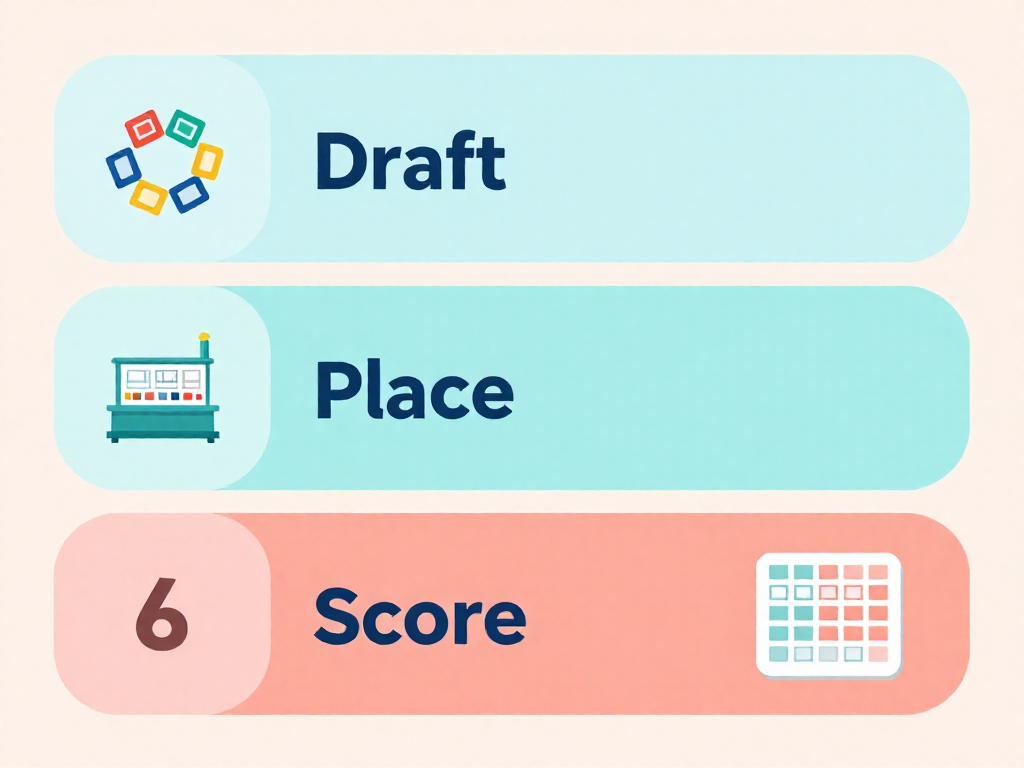
Here's the core idea in one breath: on your turn, you "draft" (pick up) all the tiles of one color from a shared display, then place them on your personal board. Fill a row, and a tile slides over to decorate your palace wall, earning points. That's the whole engine. Pick tiles, place tiles, score.
If "abstract" sounds intimidating, don't worry. Azul is technically an abstract game (the theme is light and the focus is on the puzzle), but it never feels cold or mathy. Because you're literally building a pretty mosaic in front of you, the goal is obvious at a glance—even to kids and first-timers who've never read a rulebook.
One quick trust signal worth knowing: Azul was designed by Michael Kiesling, a veteran game designer, and it won the Spiel des Jahres in 2018. That's the most prestigious "Game of the Year" award in the board game world, and it specifically rewards games that are easy to learn and fun for families. In other words, the people who hand out that medal were looking for exactly what you are.
How to Play Azul (Learn It in 5 Minutes)
Here's the honest truth after teaching Azul at countless game nights: most groups are placing their first tiles within five minutes, and nobody needs to read the rulebook cover to cover. The game runs in three simple steps that repeat each round.
Step 1: Draft your tiles. The colorful tiles you collect represent ceramic pieces for decorating a wall (that's the "drafting" part—just picking tiles to take). On the table sit several round factory displays, each holding four tiles. On your turn, you do one of two things: take all the tiles of a single color from one factory display, or take all the tiles of one color from the center of the table. When you grab tiles from a factory display, the leftover tiles of other colors slide into the center for the next player. That's it—pick a color, take them all.
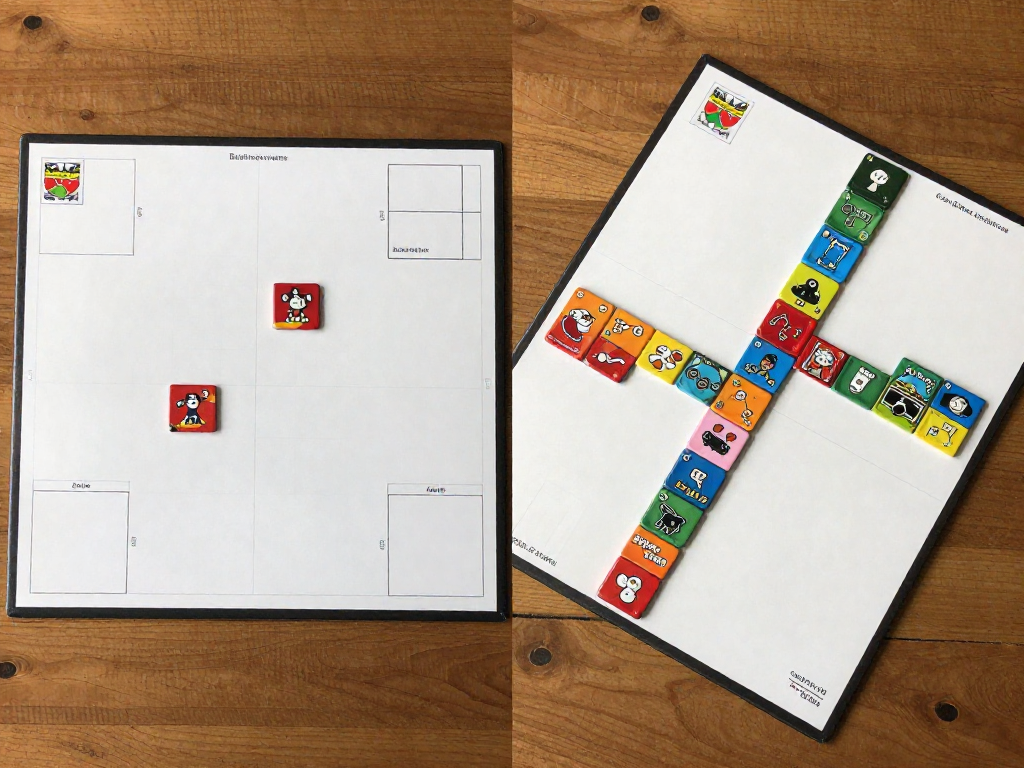
Step 2: Place tiles on your pattern lines. Your player board has five pattern lines on the left—rows that hold 1, 2, 3, 4, and 5 tiles. Put the tiles you just drafted into a single row. They must match the color already in that row, and you can only use one color per row. A row doesn't have to fill completely in one turn; you can add to it next round.
Step 3: Score by completing rows. At the end of each round, any pattern line that's completely full sends one tile over to your wall (the 5×5 grid on the right side of your board). Placing a tile there earns points—and tiles that connect to others you've already placed score even more. Then you start a fresh round.
The one rule beginners always forget: leftover tiles cost you points. If you draft more tiles than a pattern line can hold, or take a color you can't legally place, the extras drop to the floor line at the bottom—and each one subtracts from your score. New players almost always grab too many tiles early on. Take only what you can use.
That's the entire game. The rulebook is genuinely short—a single play-through and you've got it. Because the steps are visual and repeat every round, Azul truly teaches itself; by the second round, even kids are coaching the adults.
Quick reference: 2–4 players · ages 8+ · about 30–45 minutes · easy difficulty. Reading and basic counting help, so the youngest kids may need a teammate, but it's very family-friendly with no objectionable content.
The Learning Curve: Is It Really Beginner-Friendly?
Short answer: yes. Azul is one of the easiest "real" board games to teach, and most groups are playing confidently within a single round. But there's a satisfying twist—it's simple to learn and genuinely rewarding to get better at, which is exactly what keeps families coming back.
The quick stats: 2–4 players, ages 8+ (younger kids can play with a little help), about 30–45 minutes, and a difficulty we'd call easy to learn, medium to master.
Your first game, realistically
Setup takes two or three minutes: lay out the factory displays (the round cardboard discs that hold the colored tiles), fill them, and hand everyone a player board. The first couple of turns feel almost too simple—pick all the tiles of one color from a single factory and place them on a row. By the end of round one, the "aha" moment lands: leftover tiles you can't use slide into your penalty area and cost you points. That single rule is what makes the game click.
Easy to learn vs. playing well
You can teach the rules in five minutes. Playing well takes a few games, because good players think a turn or two ahead—grabbing tiles their opponents need, or deliberately taking a small penalty now to set up a big scoring turn later. New players don't need any of that to have fun, which is the point. The depth is optional, not required.
How kids and non-gamers respond
This is where Azul shines. The chunky, candy-colored tiles are a hit with kids, and people who "don't play board games" tend to relax fast because there's no reading, no complicated text, and no direct conflict beyond snatching tiles. It's calm, pretty, and quick.
Where new players stumble (and how to coach)
Two common trip-ups: forgetting that overflow tiles cause penalties, and grabbing a big handful they can't actually place. Coach gently—remind first-timers to count how many tiles a row still needs before they grab. After one painful penalty, everyone learns.
Family note: completely kid-safe, with no objectionable content. The only caution is loose tiles around very young children.
Components and Table Presence
Let's be honest: a big part of why Azul gets passed around on Pinterest is that it's gorgeous. The good news is that it looks just as nice in person.
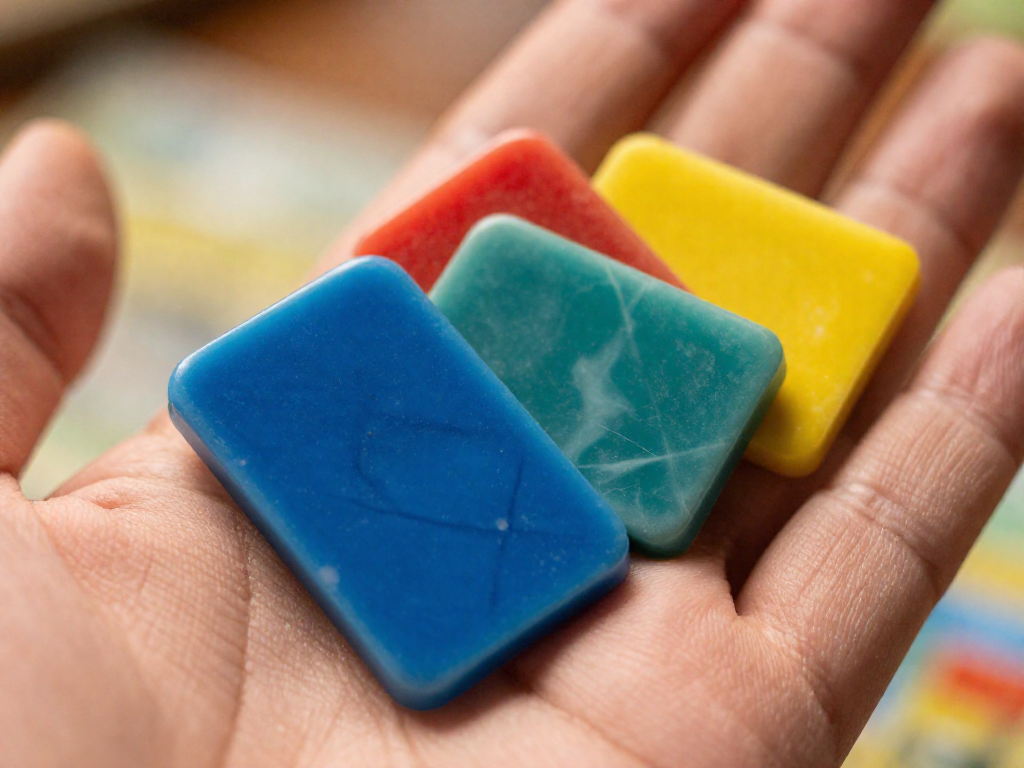
The star of the box is the tiles. Instead of flimsy cardboard, you get chunky resin tiles—small, glossy squares that feel like polished candy. They have a satisfying weight, click together as you scoop them up, and are pleasant to fidget with between turns. For a game in this price range (typically $30–$40), they're a big part of what you're paying for, and they hold up well to family use.
The player boards and factory displays (the small round cardboard disks that hold tiles each round) are sturdy and clearly printed. The boards have shallow recesses that keep your tiles from sliding around, which matters when little hands bump the table. Nothing here is luxury-tier, but it all feels durable enough to survive regular game nights with kids.
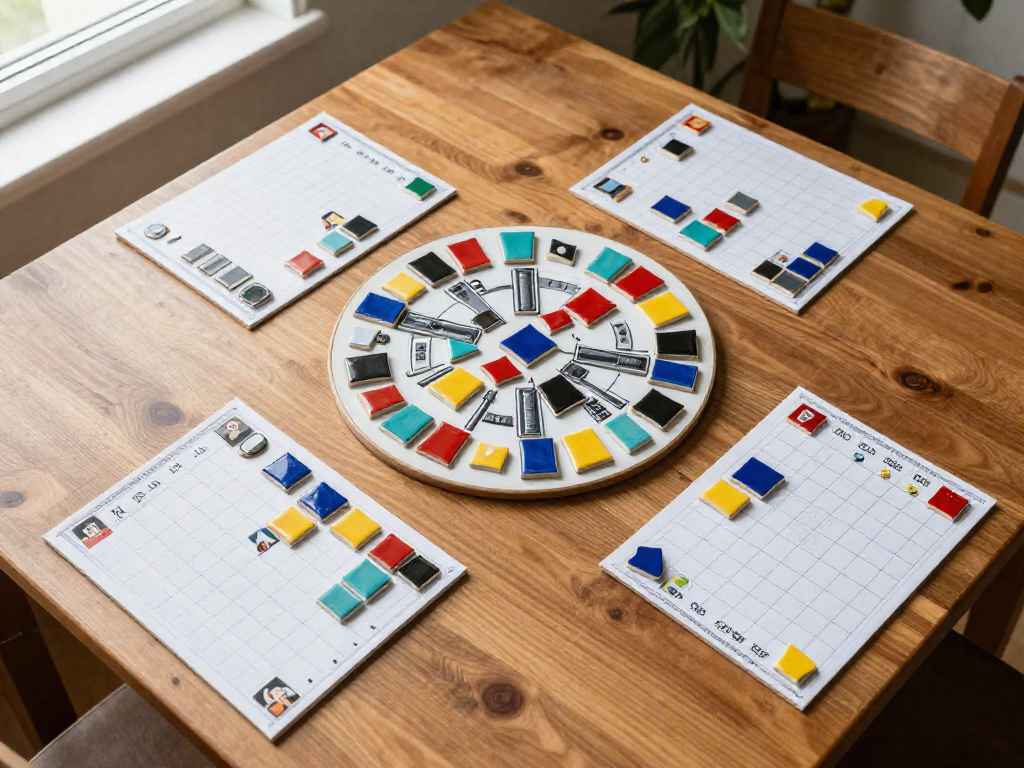
Mid-game, the table genuinely looks great. Bright tiles fan out across the displays and gradually fill in colorful mosaic patterns on each board—it photographs beautifully and draws people in who walk by.
The one gripe: storage. The tiles all live in a single cloth bag, and refilling the factory displays by hand each round is a touch fiddly. The plastic insert also doesn't keep everything tidy, so tiles rattle loose in transit. Minor stuff, but worth knowing.
Bottom line: the components punch above their price and earn their spot on the shelf—and on your feed.
The Good and the Not-So-Good
No game is perfect, and after plenty of rounds at our table, here's the honest rundown.
What we loved:
- Quick to teach. You can explain the rules in about five minutes, even to someone who's never touched a modern board game.
- Genuinely beautiful. The chunky, tile-like pieces (called "tiles" in the game) feel great in hand and look stunning mid-game.
- Scales well. It plays cleanly at any count without fiddly rule changes.
- Tense, satisfying decisions. Choosing which tiles to grab—and which to leave for the next player—creates real "ooh, tough call" moments.
What gave us pause:
- It can feel a little mean. Azul uses negative scoring: leftover tiles you can't place cost you points. Sometimes the smartest move is forcing an opponent to take tiles they don't want, which can sting younger or more sensitive players.
- Color-blindness concern. Tiles are distinguished mostly by color, so players with color vision differences may struggle to tell them apart.
- It's a quiet, thinky game. This is a "heads-down" experience, not a laugh-out-loud party game.
How it plays by count: At 2 players it's the sharpest and most strategic, since you can closely track your opponent. At 3–4 players it's looser and more chaotic—great fun, but you control less. More players also means more downtime (waiting for your turn) and a higher chance of analysis paralysis, where one player freezes up deciding their move. For families, gently nudging slower players along keeps the pace friendly.
Who Should Buy Azul (and Who Shouldn't)
The essentials: 2–4 players, ages 8 and up, 30–45 minutes, easy difficulty. Nothing in the box is unsuitable for kids—just expect some friendly competition for the best tiles.
Buy Azul if you're:
- A couple looking for a quick, satisfying game night staple. At two players the back-and-forth tile drafting (taking tiles other players want before they can) feels tense in a good way.
- A family with kids 8+ who can handle a little planning ahead. Younger kids can play with a helping hand.
- A gateway-game seeker—someone new to the hobby wanting an approachable first "real" board game.
Skip it if you want:
- Heavy strategy. Azul is clever but light; deep-strategy fans may find it thin after many plays.
- A loud party game. It's quiet and thoughtful, not the choice for a rowdy group of eight.
How it compares: If you like Azul's "easy to learn, pretty to play" vibe, also look at Splendor (simpler, faster) and Ticket to Ride (more luck and player interaction). All three are solid gateway picks.
Variants worth knowing: Azul: Stained Glass of Sintra and Summer Pavilion are standalone follow-ups with new twists—save them for after the original.
Verdict: A near-perfect first game for families and couples who want elegance without a thick rulebook.
See also
- Best Gateway Board Games for Beginners
- Easy Board Games to Learn in Under 10 Minutes
- Best 2-Player Board Games for Couples
- Family Game Night Ideas for Ages 8 and Up
- Board Game Buying Guide for New Hobbyists
Related articles
New vs. Used Board Games: Where Should Beginners Buy?
Should beginners buy board games new or used, and where? Compare prices, condition risks, and the best places to shop for your first family games.
Jun 27, 2026 · 7 min read
Should You Buy a Board Game Expansion? A Beginner's Guide
Are board game expansions worth buying for beginners? Learn when an expansion adds fun, when it adds complexity, and how to choose the right one for game night.
Jun 27, 2026 · 6 min read
Pandemic Review: Is the Classic Co-op Game Right for Your Family?
An honest, jargon-free Pandemic review for families. See how it plays, what ages it suits, and whether this co-op classic fits your game nights.
Jun 27, 2026 · 11 min read