Card Games vs. Board Games: Which Should a New Family Start With?
Should beginner families start with card games or board games?
On this page
The Short Answer: Start With Card Games (Most of the Time)
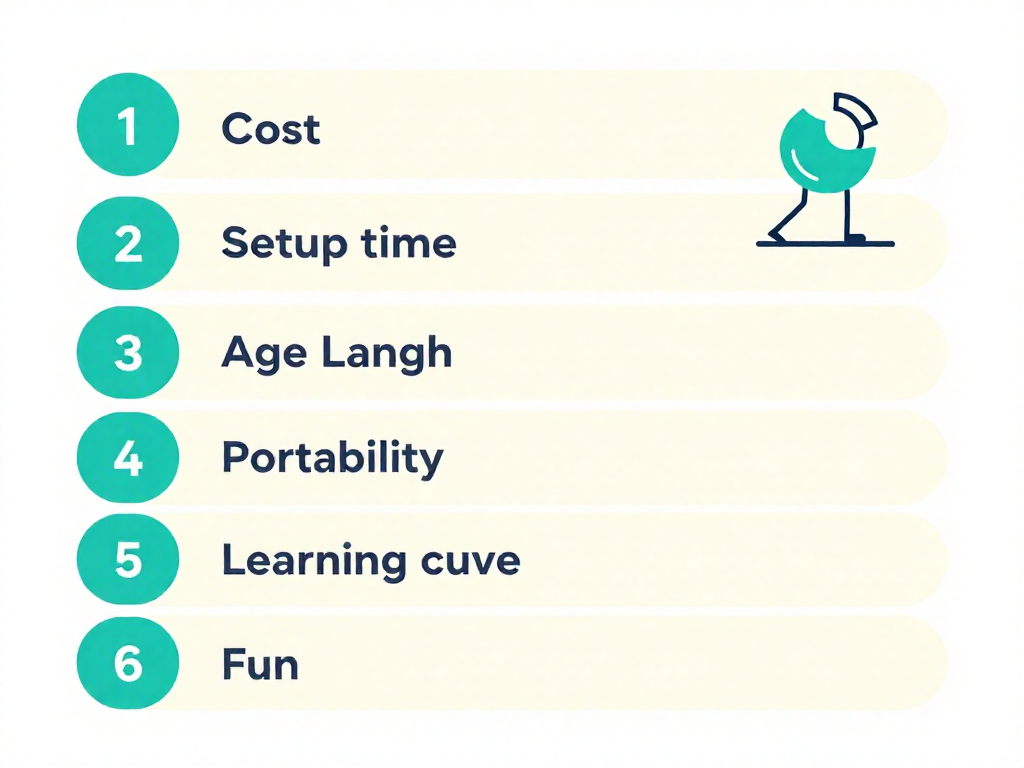
If you just want a quick verdict: most brand-new families should start with card games. They're cheap (often under $15), they fit in a coat pocket or glove box for trips and restaurants, and they get you playing in two minutes instead of twenty—no fiddling with boards, tokens, or a thick rulebook. That low-stakes setup makes it easy to try a game, laugh through a few rounds, and move on if it's not a hit.
There's one big exception: families with younger kids (roughly ages 3–6) who light up over physical pieces and bright visuals. For them, a simple board game with chunky parts to move around and pictures to point at can be more engaging—and easier to follow—than a hand of cards.
Not sure which camp you're in? That's exactly what the rest of this article is for. We'll help you choose based on your kids' ages, your budget, and how you actually like to spend game night.
What Counts as a Card Game vs. a Board Game?
Before we compare them, let's clear up what each term actually means—because the line between them is blurrier than you'd think.
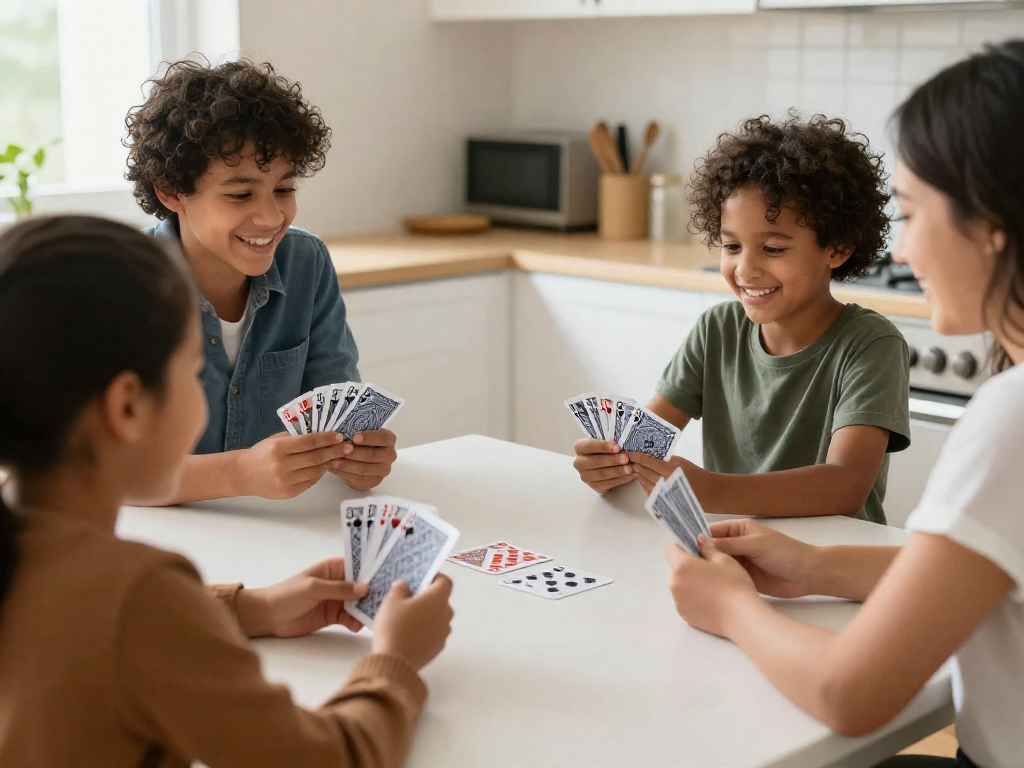
Card games are built around a deck of cards. The cards are the game; there's usually no board to set up. Think Uno, Sushi Go!, Skip-Bo, or Taco Cat Goat Cheese Pizza. You shuffle, deal, and play—often in a few minutes with very little table space.
Board games center on a shared board where you move pieces, place tokens, or claim spaces. The board is the main playing surface. Examples include Ticket to Ride, Catan, and Candy Land. They typically need more room and a bit more setup time.
The gray area: plenty of modern games mix both. A "card-driven board game" (like Ticket to Ride, where you collect cards to claim routes on a map) uses cards and a board. Don't overthink the label—it won't change how fun the game is or whether it suits your family.
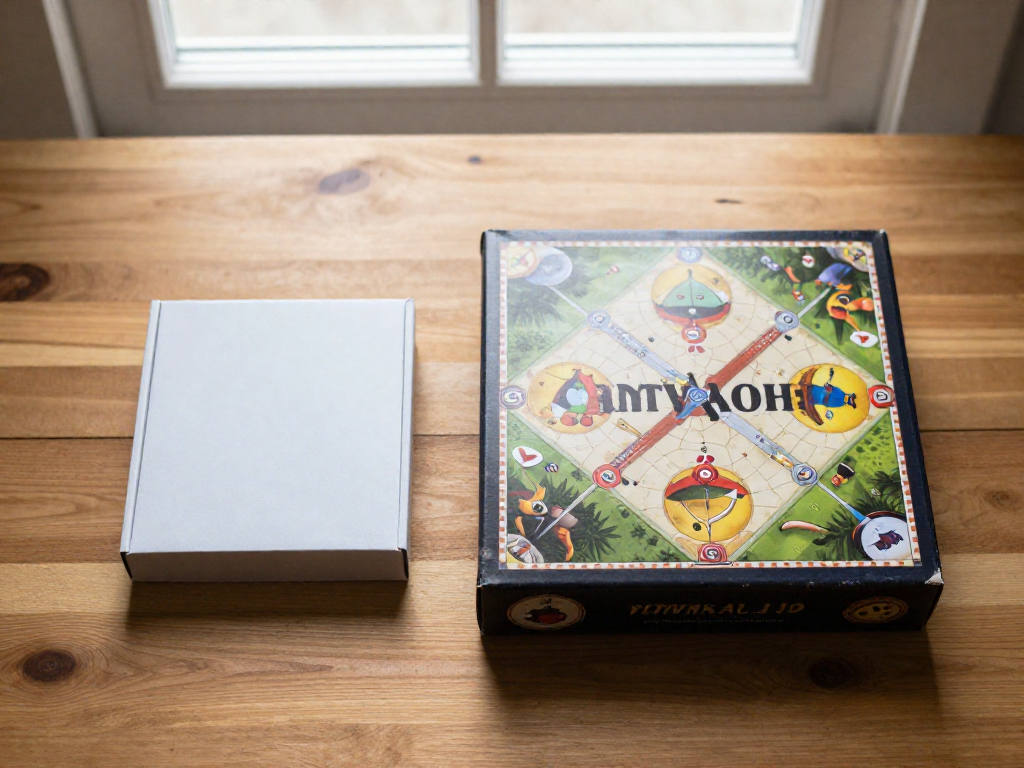
A quick footprint test: if it comes in a small box that fits in your hand and plays on a bare tabletop, it's probably a card game. If the box is large and unfolds into a printed playing surface, you're looking at a board game.
Head-to-Head: 7 Things New Families Actually Care About
Here's how card games and board games stack up on the factors families ask us about most. Skim the table, then read the quick verdicts below.
| What matters | Card games | Board games |
|---|---|---|
| Cost | $8–$15 | $25–$60 |
| Setup & cleanup | Shuffle and deal (under a minute) | Unfold board, sort tokens, scan rulebook (5–10 min) |
| Learning curve | A 7-year-old and a grandparent can join in one round | Often needs a teaching round first |
| Play time per round | 10–20 min | 30–90 min |
| Portability | Fits a purse or glovebox | Needs a table and shelf space |
| Player count | Easy to add or drop players mid-night | Usually a fixed range per box |
| Storage | Lives in a kitchen drawer | Wants a dedicated game shelf |
Cost
Card games win on price. For the cost of one mid-size board game you can build a small card-game shelf, which is reassuring when you're not sure what your family will actually replay.
Setup and cleanup
Cards are "shuffle-and-deal": you're playing in under a minute and cleaning up just as fast. Board games ask for more—unfolding the board, sorting tokens (the small pieces that mark your spot or score), and a glance at the rulebook. With tired kids, that gap matters.
Learning curve
A learning curve just means how hard a game is to pick up. Most family card games can be taught in a single hand, so a young child and a grandparent can both play right away. Board games often need one practice round before everyone feels confident.
Play time per round
Card rounds run 10–20 minutes, so a quick loser can jump back in fast. Board games run 30–90 minutes—great for a planned game night, tougher on a weeknight before bedtime.
Portability
Cards travel anywhere: restaurants, car trips, waiting rooms. Board games stay home and need a cleared table.
Player count flexibility
Many card games stretch from 2 players to a whole crowd, and latecomers can join the next deal. Board games usually print a fixed range (say, 2–4) on the box, so a surprise fifth person sits out.
Table space and storage
A deck of cards lives in a drawer and plays on a kitchen counter. Board games claim real estate—both on the table and on a shelf.
Who this is for: If you want cheap, fast, grab-anywhere play that scales to whoever shows up, start with card games. If you're after a planned, immersive family event and have the space, board games earn their footprint. Both are family-friendly; just check the listed age range on any box before buying for younger kids.
Match the Game Type to Your Family Situation
There's no single right answer—the best starting point depends on who's playing and where. Find the scenario that sounds most like your family and go with the pick.
You have young kids (ages 3–6). Lean toward a simple board game with big, colorful visuals. Little ones who can't read yet do better following pictures, spaces, and a clear "move your piece here" goal. Look for cooperative titles (everyone wins or loses together) so there are fewer meltdowns over losing.
Your game nights are multigenerational (kids, parents, grandparents). Card games are the great equalizer. Rounds are short, rules are easy to re-explain, and players can jump in or sit out without derailing the game. Nobody gets stuck waiting 45 minutes for their turn.
You're on a tight budget or just testing the waters. Start with cards. A solid family card game often costs under $15, versus $30–$50 for many board games. If the hobby doesn't stick, you're out very little.
You live in a small apartment or don't have a dining table. Cards win every time. They play on a coffee table, a bed, or a picnic blanket, and they store in a drawer instead of a closet.
You're planning a long, cozy weekend or a holiday gathering. This is when a board game earns its space. A bigger game with a board, pieces, and a story becomes the main event—the thing everyone remembers, not just a way to fill ten minutes.
When in doubt, a versatile card game is the safer first buy; save the board game for when you know you'll have the time and table for it.
5 Beginner-Friendly Picks to Buy First
Ready to grab something tonight? Here are five low-risk starters we've played at our own table, with the basics up front (players, ages, play time, and difficulty—where "difficulty" just means how hard it is to learn).
Sushi Go! — 2–5 players · ages 8+ · ~15 min · easy. You pass cards around and grab the best ones (called "drafting"). Cute, quick, and great for teaching patience and turn-taking. Cons: light scoring math can frustrate kids under 8. For: families wanting a gentle first step.
Taco Cat Goat Cheese Pizza — 2–8 players · ages 8+ · ~10 min · very easy. Cheap, loud, slap-the-pile chaos. Cons: the slapping gets rowdy. For: big groups and short attention spans.
Skip-Bo or Uno — 2–6 players · ages 7+ · ~20 min · easy. Familiar comfort picks most adults already half-know. Cons: can feel repetitive. For: the cautious newcomer.
Ticket to Ride: First Journey — 2–4 players · ages 6+ · ~20 min · easy. A kid-sized version of the train-route classic. Cons: outgrown after a year or two. For: young families ready for a real board game.
Outfoxed! — 2–4 players · ages 5+ · ~20 min · easy. Cooperative, so everyone wins or loses together—no tears over losing. For: the youngest players.
How to Make Your First Family Game Night Actually Fun
A smooth first game night isn't about picking the "perfect" game—it's about removing the little snags that make people quit early. A few simple habits go a long way.
- Learn the rules before everyone sits down. Skim the rulebook (or watch a 5-minute how-to-play video) ahead of time so you can teach the game in your own words instead of reading instructions aloud while the table waits. This alone prevents most first-night frustration.
- Play one short game, not a marathon. Pick a single game that runs 15–30 minutes. Ending while people still want more is the goal—it's what makes them say yes to a second night.
- Embrace house rules. A "house rule" is just a tweak you make to fit your family (for example, letting a 5-year-old peek at cards or skip a tricky step). Bending the rules to keep little kids engaged is completely fine.
- Plan a snack and a stopping point. A bowl of something to munch and a clear "last round" keep energy up and avoid meltdowns when attention fades.
Get these four right, and the game you chose matters far less than the fact that everyone had a good time.
See also
- Best card games for family game night
- Easy board games to learn in 5 minutes
- Cooperative games where the whole family wins together
- Game night snack ideas for kids and adults
- Best two-player games for couples and parent-kid duos
Related articles
New vs. Used Board Games: Where Should Beginners Buy?
Should beginners buy board games new or used, and where? Compare prices, condition risks, and the best places to shop for your first family games.
Jun 27, 2026 · 7 min read
Should You Buy a Board Game Expansion? A Beginner's Guide
Are board game expansions worth buying for beginners? Learn when an expansion adds fun, when it adds complexity, and how to choose the right one for game night.
Jun 27, 2026 · 6 min read
Pandemic Review: Is the Classic Co-op Game Right for Your Family?
An honest, jargon-free Pandemic review for families. See how it plays, what ages it suits, and whether this co-op classic fits your game nights.
Jun 27, 2026 · 11 min read