Best Board Games for Big Groups of 6 or More People
Which board games actually work well with six or more players?
On this page
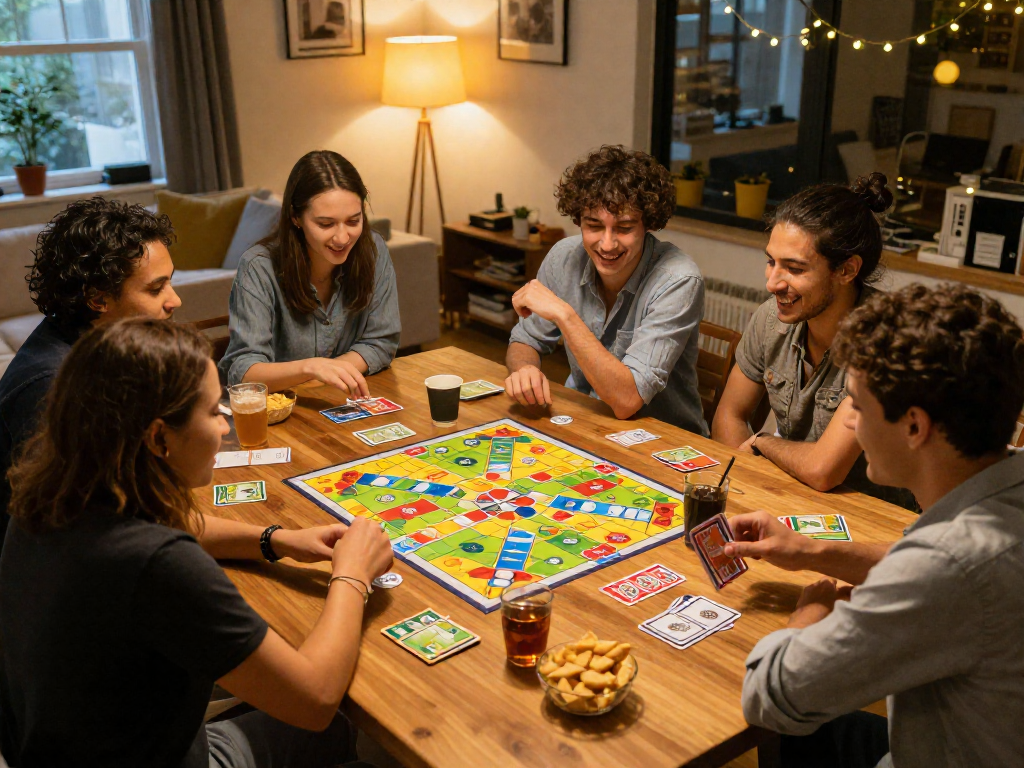
What Makes a Board Game Work for 6+ Players
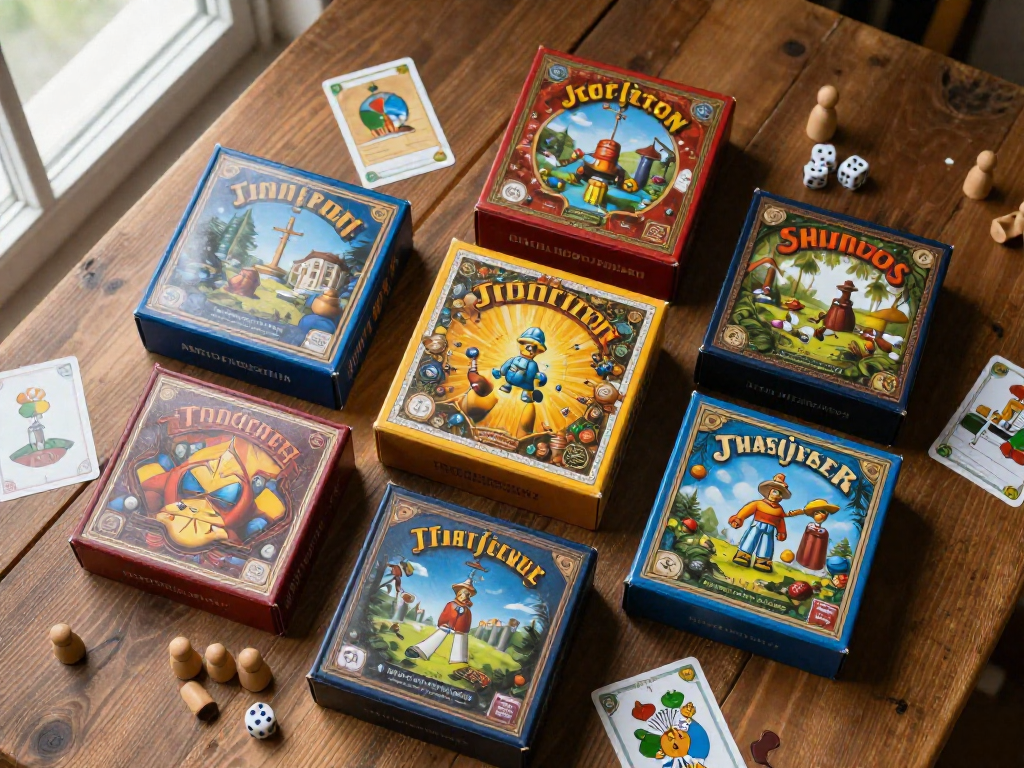
Once you cross six players, the math changes. A game that's great for four can fall apart at seven because half the table sits around waiting for a turn. Here's what separates a true big-group game from one that just lists a high number on the box.
Low downtime. This is the big one. "Downtime" simply means the time you spend waiting between your turns. The best large-group games keep everyone busy—either everyone acts at the same time, or turns are so quick that the next person is up in seconds. If a game makes you wait 10 minutes to do one thing, people start checking their phones.
A fast teach. With a crowd, you don't want to spend 20 minutes explaining rules before anyone plays. Look for games a host can teach in under 5 minutes so the whole table starts together. Bonus points if new players can learn as they go.
Team or hidden-role formats. Some game types are built to soak up extra people. Team games split the table into sides, and hidden-role games (where some players secretly work against the group) actually get better with more bodies because there's more to figure out.
Honest player counts. A box might say "2–10," but most games have a sweet spot. Throughout this guide we'll tell you not just what's allowed, but which counts truly shine.
Components and table space. Finally, be realistic about your kitchen table. Some games need lots of room or a pile of cards and tokens passed around—a hassle once seven hands are reaching in.
Best Party Games for Big Groups
When you've got six or more people crammed around a table, you don't want anything fiddly. Party games are the answer: easy to teach, fast to play, and built for laughter. Here are four we keep coming back to for big, casual crowds.
Codenames (and Codenames Duet)
A team word-guessing game where one person on each team gives one-word clues to point teammates toward the right cards on the grid—while avoiding the deadly "assassin" card.
- Ideal players: 4–8+ (scales great; just add to the teams)
- Age range: 10 and up
- Play time: ~15 minutes per round
- Difficulty: Easy to learn, with room to get clever
Pros: Endlessly replayable, teaches in two minutes, and everyone stays involved. Cons: The clue-givers do the heavy lifting, so it leans on a couple of confident players. Codenames Duet is a two-player co-op spin—skip it for big groups. Who it's for: Word lovers and competitive families who like a little brain-teasing.
Telestrations
Think the game of telephone, but with drawing. You sketch a word, pass it on, the next person guesses, and the chaos compounds. The reveal at the end is where the laughs live.
- Ideal players: 6–8 (more the merrier)
- Age range: 8 and up
- Play time: ~20 minutes
- Difficulty: Very easy
Pros: Hilarious, zero skill required, and great for mixed groups. Cons: You need decent table space, and shy artists may feel self-conscious. Who it's for: Families who want guaranteed giggles, no game-night experience needed.
Wavelength
Teams guess where a clue falls on a hidden dial between two opposites (like "hot" to "cold"). Simple to explain, surprisingly fun to argue over.
- Ideal players: 4–10+
- Age range: 12 and up
- Play time: ~30 minutes
- Difficulty: Easy
Pros: Sparks great debate; easy to teach. Cons: A few prompts can wander into grown-up territory—glance through them before playing with kids. Who it's for: Chatty groups who love friendly disagreements.
Just One
A cooperative game where everyone writes a one-word clue to help one player guess a secret word—but matching clues cancel out. You win or lose together.
- Ideal players: 3–7
- Age range: 8 and up
- Play time: ~20 minutes
- Difficulty: Very easy
Pros: Cooperative, kind to younger players, and quick. Cons: Caps at seven, so split into two tables for bigger crowds. Who it's for: Mixed-age families who'd rather work together than compete.
Best Team and Hidden-Role Games
Once you hit six players, social deduction games—where some players secretly work against the group while everyone tries to figure out who—become the sweet spot. The bigger the table, the harder it is to read everyone, which makes the bluffing more fun and the laughs louder. Here are three favorites we keep coming back to on busy game nights.
The Resistance: Avalon
- Players: 5–10 (best at 7–10) · Ages: 13+ · Time: 30 min · Difficulty: Easy to learn
- Pros: No player elimination, so nobody sits out; tension builds every round.
- Cons: Needs a confident group willing to argue and accuse; quiet tables fall flat.
- Moderator? Plays itself—no separate referee needed.
- Who it's for: Groups that love debating, bluffing, and calling each other out.
Decrypto
- Players: 3–8 (shines at 6–8) · Ages: 12+ · Time: 15–35 min · Difficulty: Medium
- Pros: Two teams give clever word clues while spying on each other; great balance of thinking and downtime so nobody is bored waiting their turn.
- Cons: Word-association puzzles can stump younger or word-shy players.
- Moderator? Plays itself.
- Who it's for: Word lovers who want a team game with a brainy twist.
Spyfall
- Players: 3–8 (great at 6–8) · Ages: 13+ · Time: 15 min per round · Difficulty: Very easy
- Pros: Lightning-fast rounds, almost no setup, and endless replay—one player secretly doesn't know the location everyone else shares.
- Cons: Short rounds mean an unlucky spy can be caught in seconds.
- Moderator? Plays itself (an app or timer helps).
- Who it's for: Big groups wanting quick, low-commitment rounds between bigger games.
A note on Werewolf: Classic and excellent at 7–10, but it needs a moderator (one person runs the game instead of playing) and eliminated players wait on the sidelines—worth knowing before you start.
Family note: All four are best for ages 12+ since they reward reading social cues and tolerating a little friendly deception. Younger kids may find the lying uncomfortable or the discussion hard to follow.
Best Family-Friendly Picks for a Full Table
When you've got kids and adults crowding the same table, you need games that bend to a wide range of ages without slowing down. These three earn their spot at family game night.
Sushi Go Party!
- Players: 2–8 | Ages: 8+ | Play time: 20 min | Difficulty: Easy
- You pick one card, then pass your hand to the next player—this is called "drafting," and it just means everyone chooses from a shared, shrinking pool. You're collecting matching food cards for points.
- Pros: Quick rounds, adjustable card sets, no reading-heavy rules. Cons: Big groups can stall while everyone decides.
- Who it's for: Families wanting a fast, low-pressure opener that fills a full table.
Ticket to Ride
- Players: 2–5 base (up to 6–7 with the USA 1910 or larger map expansions) | Ages: 8+ | Play time: 30–60 min | Difficulty: Easy-Medium
- Collect colored cards to claim train routes across a map. It's familiar, visual, and the goal is easy to grasp in one turn.
- Pros: Recognizable, satisfying for adults and kids alike. Cons: Needs an expansion to seat 6+, and longer play can test younger attention spans.
- Who it's for: Mixed groups who want a little light planning without strategy jargon.
Dixit
- Players: 3–6 (up to 12 with the Odyssey version) | Ages: 8+ | Play time: 30 min | Difficulty: Easy
- Give a clue for your dreamlike art card; others try to guess which is yours. Creative, gentle, and not about winning fast.
- Pros: No reading required to play, great for imaginative kids. Cons: Very young children may need help framing clues.
- Who it's for: Families who'd rather laugh and create than compete hard.
A few practical notes: All three suit confident early readers (roughly age 8), though pre-readers can play Dixit with an adult reading or helping. Expect to supervise scoring with younger kids.
Balancing competitive kids and casual adults: Pair an eager kid with a relaxed adult as a team, or play Dixit first to set a friendly, no-winners-yet tone before anything with a scoreboard.
Quick Comparison: Which Game for Your Group
Use this table to match your crowd to a pick at a glance. "Vibe" tells you the mood: silly (laugh-out-loud party fun), strategic (more thinking and planning), or cooperative (everyone plays as a team against the game).
| Game | Best player count | Play time | Age | Vibe |
|---|---|---|---|---|
| Codenames | 4–8+ | 15 min | 10+ | Strategic |
| Telestrations | 4–12 | 30 min | 8+ | Silly |
| The Resistance: Avalon | 5–10 | 30 min | 13+ | Strategic |
| Spyfall | 3–8 | 15 min | 8+ | Silly |
| Just One | 3–7 | 20 min | 8+ | Cooperative |
Best for the biggest crowds (8+): Telestrations scales to 12 players and never drags—everyone draws and guesses at once.
Best when you're short on time: Codenames or Spyfall both wrap a round in about 15 minutes.
Best budget pick: Just One is usually under $20 and works for nearly any mix of people.
Best for mixed kids and adults: Just One is cooperative and reads at an 8+ level, so younger players stay involved without getting crushed. Note that Avalon's hidden-role bluffing suits ages 13 and up.
Tips for a Smooth Big-Group Game Night
A great game night with a full table is as much about setup as it is about the game itself. A few simple habits keep everyone engaged and the chaos friendly:
- Teach the rules once, to the whole group. Gather everyone before you start and walk through the goal and the basic turn in plain terms. Explaining it five separate times slows things down and leaves people confused mid-game.
- Keep a short backup game on hand. Energy dips, especially with kids or after a long round. A quick 10–15 minute "filler" (a fast card or word game) resets the mood without committing to another long session.
- Split into two tables once you hit 10 or more. Big games can stall when eight people wait for one person's turn. Two smaller groups means more action per player and easier conversation—you can even run the same game at both tables.
- Plan snacks and table space ahead. Crowded tables mean knocked-over pieces and lost cards. Set drinks and bowls on a side table, and leave a clear playing zone so components stay put.
A little hosting prep makes almost any game land better with a crowd.
See also
- Best Board Games for Couples (2 Players)
- Easy Board Games You Can Teach in 5 Minutes
- Best Cooperative Board Games for Families
- Board Game Night Snacks and Setup Ideas
- Best Party Games for Adults
Related articles
New vs. Used Board Games: Where Should Beginners Buy?
Should beginners buy board games new or used, and where? Compare prices, condition risks, and the best places to shop for your first family games.
Jun 27, 2026 · 7 min read
Should You Buy a Board Game Expansion? A Beginner's Guide
Are board game expansions worth buying for beginners? Learn when an expansion adds fun, when it adds complexity, and how to choose the right one for game night.
Jun 27, 2026 · 6 min read
Pandemic Review: Is the Classic Co-op Game Right for Your Family?
An honest, jargon-free Pandemic review for families. See how it plays, what ages it suits, and whether this co-op classic fits your game nights.
Jun 27, 2026 · 11 min read