Catan vs. Ticket to Ride: Which Gateway Game Should You Buy First?
Should a beginner family buy Catan or Ticket to Ride first?
On this page
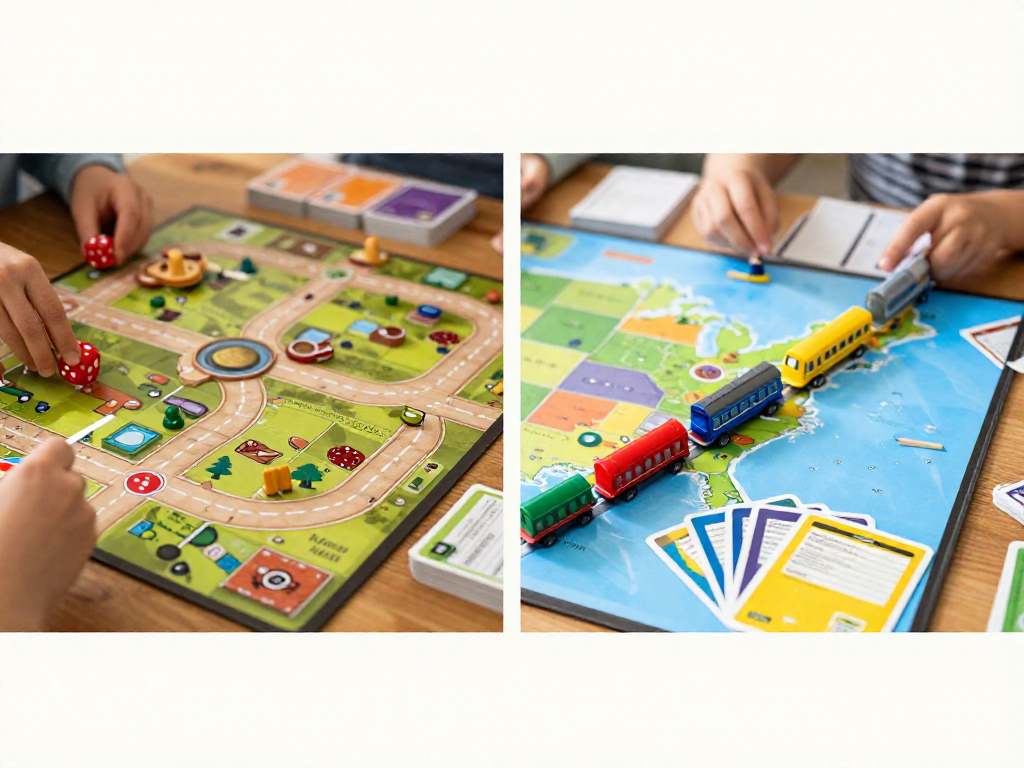
Quick Verdict: Which One Should You Buy?
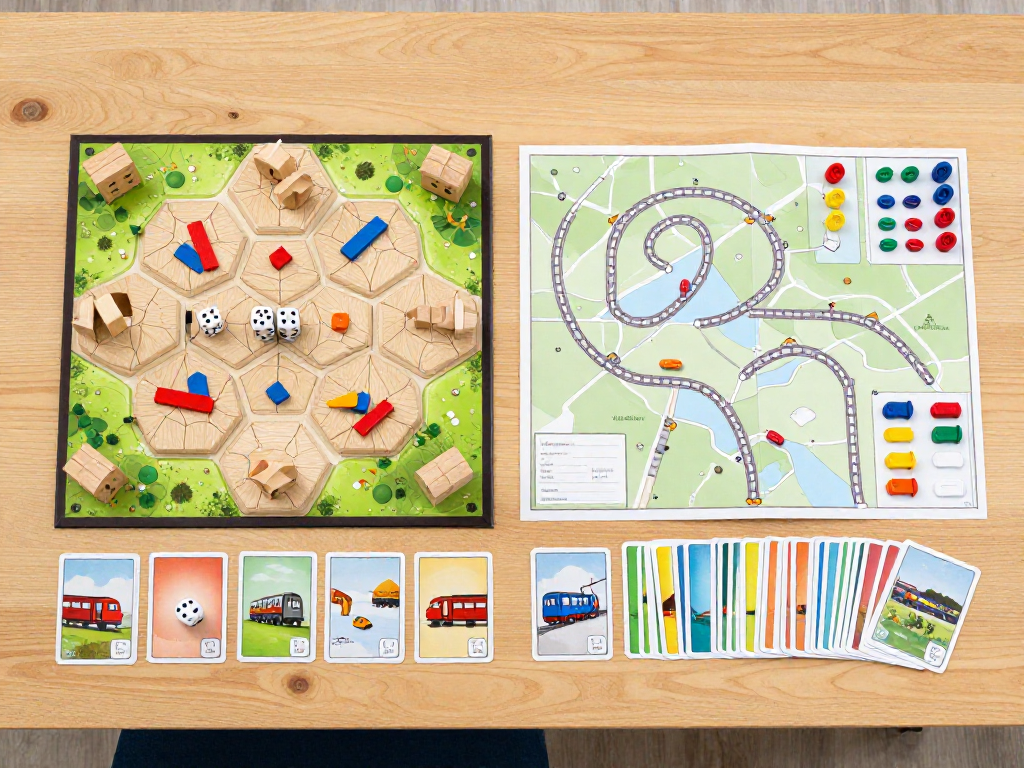
For most families, buy Ticket to Ride first. It's the easier on-ramp: you collect matching train cards to claim railway routes across a map, and a new player can learn the whole game in about five minutes.
- Ticket to Ride — 2–5 players, ages 8+, 30–60 minutes, easy. The friendliest starting point for mixed-age game nights.
- Catan (formerly Settlers of Catan) — 3–4 players, ages 10+, 60–90 minutes, medium. Choose this first if your group likes trading, negotiating, and a bit more decision-making.
Honestly, both are superb "gateway games" (beginner-friendly titles designed to ease newcomers into the hobby), and you can't really go wrong with either. Catan involves player-to-player trading and the occasional blocked road, which can spark light tension—worth knowing if you have very young or competitive kids.
Below, we break down exactly why—covering setup, learning curve, replay value, and which one fits your family's style.
What Is a Gateway Game (and Why These Two)?

A gateway game is a board game designed to welcome newcomers into the hobby. It's easy to teach, plays in under an hour, and rewards good decisions without demanding the deep, chess-like planning of heavier games. Think of it as the friendly on-ramp before the highway.
Catan and Ticket to Ride are the two titles you'll see recommended most often, and for good reason. Both have sold millions of copies, sit on most store shelves, and have taught countless families their first taste of modern tabletop gaming.
Here's what to expect from either choice: you'll learn core hobby concepts—taking turns with real choices, trading or collecting resources, and racing to a points goal—without needing to memorize a thick rulebook. They're approachable, repayable, and built for laughing around the table, not stressing over strategy.
At-a-Glance Comparison
Here's a quick side-by-side so you can see how these two "gateway games" (beginner-friendly games that ease new players into the hobby) stack up at a glance.
| Feature | Catan | Ticket to Ride |
|---|---|---|
| Players | 3–4 (5–6 with expansion) | 2–5 |
| Age range | 10+ | 8+ |
| Play time | 60–90 min | 30–60 min |
| Price range | ~$40–$50 | ~$45–$55 |
| Rules complexity | Medium | Low |
| Setup time | 5–10 min | 2–5 min |
| Player interaction | High—you trade resources, negotiate, and block others' routes | Low to medium—you mostly build your own train routes ("parallel building"), with occasional competition for routes |
| Best-fit family | Families who enjoy talking, haggling, and a longer game night | Families with younger kids who want something quick, calm, and easy to teach |
Quick takeaways:
- Need 2 players or have a younger child (8–9)? Ticket to Ride is the easier fit—it plays well with just two people and starts at age 8.
- Want a chatty, social game where everyone's involved on every turn? Catan's trading keeps the table talking, but it needs at least 3 players.
- Short on time or patience? Ticket to Ride wraps up faster and teaches in a couple of minutes.
Both are family-friendly with no mature content. The main difference is how you compete: Catan rewards negotiation, while Ticket to Ride lets each player build mostly on their own.
How Catan Actually Plays
Best for: 3–4 players (a 5–6 player extension is sold separately) • Ages 10+ • 60–90 minutes • Difficulty: easy-to-learn, harder-to-master
At its heart, Catan is about turning raw materials into a growing little kingdom. On each turn you roll two dice, collect the resources (wood, brick, sheep, wheat, and ore) that your settlements sit next to, and spend them to build roads, new settlements, and cities. First player to 10 points wins. That's the core loop, and it's simple enough to teach in five minutes.
What makes it sing is the trading. You almost never have exactly what you need, so you barter with the other players—"two wheat for your brick?"—and those negotiations are where the table comes alive. Pair that with the gamble of the dice, and you get the classic "one more turn" pull that keeps a game night going.
A couple of honest snags trip up new players. The robber—a piece that blocks a tile and steals resources whenever someone rolls a 7—feels punishing until you get used to it. And trading can stall if players don't know what they want yet.
Who this is for: Families and groups who enjoy a bit of friendly haggling and don't mind some direct competition. Heads up: Catan can get cutthroat, and turns may drag with younger or restless kids, so it shines best with ages 10 and up.
How Ticket to Ride Actually Plays
Best for: 2–5 players · Ages 8+ · 30–60 minutes · Difficulty: very easy
On a turn you do just one thing: draw colored train cards, or spend matching cards to claim a route between two cities by placing your little plastic trains on the board. That's the whole engine. Your secret goal is finishing destination tickets—cards that name two cities and pay you points if you connect them by the end of the game (and dock you points if you don't).
What makes it fun: every turn shows visible progress. Your colored line stretches across the map, you feel closer to your goals, and there's almost no downtime waiting on other people. It's a low-stress pace where you're building something, not crunching numbers.
It teaches itself in five minutes because there are only two real choices each turn—take cards or claim a route. New players grasp the loop after one demo round, no rulebook re-reading required.
Group dynamics: the tension is friendly but real. Someone might grab the route you were eyeing, forcing a quick detour, but no one gets attacked or knocked out. That makes it forgiving for kids and easy to enjoy across mixed ages, since a 9-year-old and a grandparent can play the same way.
Who this is for: families wanting a relaxed, quick-to-learn game with steady progress.
Watch-outs: route blocking can frustrate very young or competitive kids; nothing else is inappropriate.
Head-to-Head on What Matters for Families
Here's how the two stack up on the things that actually decide game night.
Ease of teaching. Ticket to Ride wins for first-timers. You collect colored train cards, then spend matching sets to claim routes on the map—that's nearly the whole game, and you can teach it in five minutes. Catan asks you to learn resource collection, trading, and building all at once, so plan on a 15-minute explanation and a "practice" first round.
Best ages. Ticket to Ride is comfortable for kids around 8 and up, and younger players can team up with an adult. Catan leans 10+; the trading and planning frustrate many under-8s, even with help.
Game length and interruptions. Ticket to Ride runs 30–60 minutes and survives a paused game well—your cards and claimed routes stay put, so a snack break or bedtime detour doesn't derail it. Catan runs 60–90 minutes and loses momentum when stopped, since so much depends on the flow of trading.
Replayability. Both hold up over many plays. Catan's board is rebuilt every game, so no two setups feel alike, which rewards families who want to keep growing. Ticket to Ride stays the same per map but adds challenge through route choices and optional expansion maps.
Conflict level. This is the biggest split. Catan involves active negotiation and a "robber" piece that blocks opponents—great for talkative families, but it can spark sibling friction. Ticket to Ride is mostly your-own-thing; the only conflict is racing someone to a route, making it the calmer pick.
Family-friendly note: Neither has objectionable content. Just know Catan's trading can get heated, while Ticket to Ride keeps competition gentle.
Who this is for: Choose Ticket to Ride for younger kids, shorter sessions, and low-stress nights; choose Catan for older kids who enjoy deal-making and a longer, meatier sit-down.
Editions and What to Actually Buy
Walk into the games aisle and you'll see several boxes for each title. Here's what to grab—and what to ignore for now.
Catan: start with the base game. Skip the expansions (add-on boxes like Seafarers or Cities & Knights that bolt extra rules onto the original). They're great later, but they assume you already know the core game. One thing to know up front: the base box plays 3–4 players. If you're a couple or have a five- or six-person crowd, you'll need a separate expansion to fit everyone, so check the back of the box before buying.
- Catan (base) — 3–4 players, ages 10+, ~60–90 min, easy-to-moderate difficulty.
Ticket to Ride: pick the version that fits your table. The original USA map is the friendliest first buy. Europe adds a few twists (tunnels, ferries, train stations) that are fun but slightly more to teach. For kids roughly 6–8, First Journey is a stripped-down version with simpler goals and shorter games.
- Ticket to Ride (USA) — 2–5 players, ages 8+, ~30–60 min, easy.
- First Journey — 2–4 players, ages 6+, ~15–30 min, very easy.
Buy first: Ticket to Ride USA for mixed-age families; Catan base if your group is reliably 3–4 adults or older kids who enjoy a bit more negotiation.
Final Recommendation by Family Type
No single winner fits every household, so here's our hands-on pick for each kind of family.
-
Best for younger kids and short attention spans: Ticket to Ride. Players 8+, best with 2–4 people, about 30–60 minutes, low difficulty. Collect matching train cards, claim routes, done. The turns are quick and the rules click in one round, so restless kids stay in it.
-
Best for families who love banter and dealmaking: Catan. Players 10+, best with 3–4 people, about 60–90 minutes, medium difficulty. Trading resources face-to-face ("I'll give you wood for wheat") turns the table into a friendly negotiation—great if your crew enjoys talking smack.
-
Best for the smoothest possible learning experience: Ticket to Ride. It's the gentlest on-ramp for first-time hobbyists, with almost no math and no fiddly setup.
-
What to consider buying second once you're hooked: Grab whichever you skipped, then add a map expansion (extra boards/routes) for Ticket to Ride or Catan: Seafarers for fresh challenges.
A quick note: both are family-friendly with no objectionable content, though Catan's longer length suits patient players best.
See also
- Best Gateway Board Games for Families
- How to Host a Stress-Free Family Game Night
- Board Games for 2 Players: Best Picks for Couples
- Beginner's Guide to Board Game Terms
- Best Board Games for Kids Ages 6-10
Related articles
New vs. Used Board Games: Where Should Beginners Buy?
Should beginners buy board games new or used, and where? Compare prices, condition risks, and the best places to shop for your first family games.
Jun 27, 2026 · 7 min read
Should You Buy a Board Game Expansion? A Beginner's Guide
Are board game expansions worth buying for beginners? Learn when an expansion adds fun, when it adds complexity, and how to choose the right one for game night.
Jun 27, 2026 · 6 min read

Pandemic Review: Is the Classic Co-op Game Right for Your Family?
An honest, jargon-free Pandemic review for families. See how it plays, what ages it suits, and whether this co-op classic fits your game nights.
Jun 27, 2026 · 11 min read