Best Board Games for Kids Aged 4 to 6 (That Adults Won't Hate)
What are the best board games for preschool-age kids that adults can enjoy too?
On this page
How We Picked (What Makes a 4–6 Game Worth Owning)
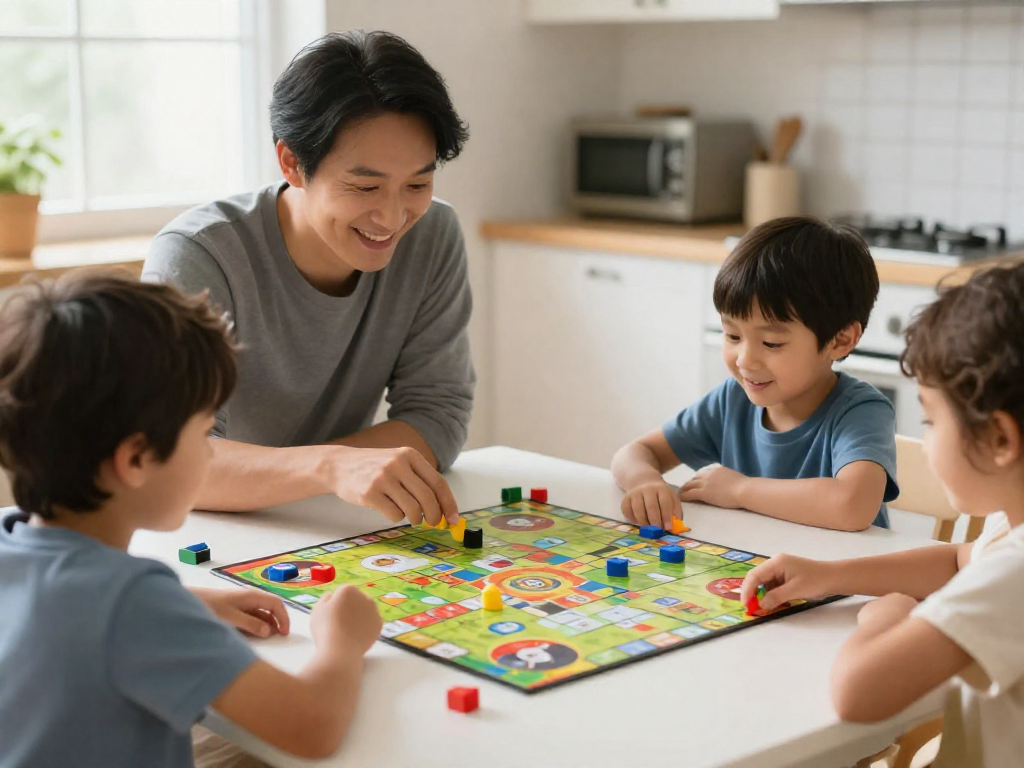
We tested every game on this list at our own kitchen tables, with real preschoolers and real parents who'd rather not play the same game 40 times in a row. Two filters had to pass before a game made the cut.
The "adult tolerance" test. A great kids' game gives grown-ups something to do, too. We looked for meaningful choices (decisions that actually change what happens), short play time so nobody loses interest, and replayability—the game feels different enough each round that you'll happily pull it out again.
The age-fit test. For ages 4–6, we required:
- No reading needed, since many kids this age aren't reading yet—symbols and pictures do the work.
- Simple turns a child can take without constant help.
- A skill it builds, like counting, memory, matching, or fine motor control (small, precise hand movements).
We also weighed cooperative vs. competitive play. In a cooperative game, everyone works together against the game instead of against each other. At this age that's gold: when there's no single loser, you get far fewer tears and tantrums. Competitive games still earn a spot when the stakes stay light and turns move fast.
Finally, we favored the family-night sweet spot: about 10–20 minutes of play and a player count of 2–4, so the whole table can join without anyone waiting too long for a turn.
Quick-Pick Cheat Sheet
Short on time? Here's the whole lineup at a glance. "Co-op" means everyone plays as a team against the game; "competitive" means players race or compete against each other.
| Game | Best for (skill) | Players | Play time | Co-op or competitive |
|---|---|---|---|---|
| Outfoxed! | Logic & deduction | 2–4 | 20 min | Co-op |
| Hoot Owl Hoot! | First-game teamwork | 2–4 | 15 min | Co-op |
| Sneaky Snacky Squirrel | Colors & fine motor | 2–4 | 15 min | Competitive |
| My First Carcassonne | Pattern matching | 2–4 | 20 min | Competitive |
| Animal Upon Animal | Steady hands & fun | 2–4 | 15 min | Competitive |
Best overall: Outfoxed! — it sneaks in real reasoning while staying genuinely fun for grown-ups.
Best budget pick: Hoot Owl Hoot! — a low-cost, no-reading co-op that's perfect for a first game night.
Scroll on for the hands-on deep dives, including who each game truly suits.
The Best Board Games for Kids Aged 4 to 6

These are the games we keep coming back to on family game nights—ones that hold a young kid's attention without making grown-ups quietly check their phones. Each pick lists the basics up front, plus an honest note on where it starts to wear thin.
Outfoxed! (cooperative deduction)
- Players: 2–4 · Ages: 5+ · Time: 20 min · Difficulty: Easy
- Why kids love it: They're detectives chasing a fox thief, revealing clues and slamming the "fox finder" gadget shut. The mystery hooks them instantly.
- Why adults don't mind it: It's cooperative (everyone plays as a team against the game), so there's no meltdown over losing—you win or lose together. There's real, gentle logic in eliminating suspects.
- Builds: Deductive reasoning and process of elimination.
- Where it gets repetitive: Only 16 suspect cards, so older 6-year-olds may start recognizing patterns after a dozen plays.
- Who it's for: Families who want a low-stakes team game and a soft intro to "figure it out" thinking.
My First Castle Panic (cooperative defense)
- Players: 1–4 · Ages: 4+ · Time: 20 min · Difficulty: Easy
- Why kids love it: You team up to keep monsters from reaching the castle, matching colors and shapes to fend them off. The countdown tension is exciting but never scary.
- Why adults don't mind it: Light shared decisions ("which monster do we stop first?") give it just enough strategy to stay engaging.
- Builds: Color/shape matching and simple planning.
- Where it gets repetitive: The monster art and moves are limited; the challenge plateaus once kids learn the rhythm.
- Who it's for: Anxious-about-losing kids and parents who want cooperation over competition.
Hoot Owl Hoot! (cooperative racing)
- Players: 2–4 · Ages: 4+ · Time: 15 min · Difficulty: Very easy
- Why kids love it: Move the owls home before the sun rises—colorful, fast, and forgiving.
- Why adults don't mind it: Short enough to fit before bedtime, and there's a subtle "play for the team, not yourself" lesson baked in.
- Builds: Color recognition and turn-taking.
- Where it gets repetitive: Almost no decisions for adults; it's purely a kids' game you facilitate.
- Who it's for: The youngest players in the 4–6 range and quick filler nights.
Animal Upon Animal (dexterity stacking)
- Players: 2–4 · Ages: 4+ · Time: 15 min · Difficulty: Easy
- Why kids love it: You stack wooden animals into a wobbly tower—pure tactile fun with the thrill of the crash.
- Why adults don't mind it: Genuinely tricky for big hands too, so it's a fair fight across ages.
- Builds: Fine motor skills and steady hands.
- Where it gets repetitive: It's the same stacking goal every time; novelty comes from the wobble, not new rules.
- Who it's for: Mixed-age groups who want something physical and giggly.
Hisss (light matching/color)
- Players: 2–5 · Ages: 4+ · Time: 10 min · Difficulty: Very easy
- Why kids love it: Build colorful snakes from head to tail; complete one and you keep it.
- Why adults don't mind it: Zero reading, fast turns, easy to play one-handed while juggling a toddler.
- Builds: Color matching and basic counting.
- Where it gets repetitive: Very little strategy, so adults treat it as a warm-up, not the main event.
- Who it's for: Younger 4s and as a quick opener.
Sleeping Queens (light strategy/cards)
- Players: 2–5 · Ages: 6+ · Time: 20 min · Difficulty: Easy-medium
- Why kids love it: Wake queens, dodge dragons, and play sneaky cards on each other.
- Why adults don't mind it: Sneaky addition (making number combos) and light tactics keep grown-ups thinking.
- Builds: Simple math and decision-making.
- Where it gets repetitive: Luck of the draw can swing games; the card combos are the same each time.
- Who it's for: Strong 5s and 6s ready for a touch of competition.
Underrated pick: Concept Kids: Animals (cooperative clue-giving)
- Players: 2–12 · Ages: 4+ · Time: 20 min · Difficulty: Easy
- Why kids love it: They give clues by pointing to icons (claws, water, big) while everyone guesses the animal.
- Why adults don't mind it: It's wordless charades-style fun that scales to a crowd, great for gatherings.
- Builds: Categorization and communication without reading.
- Where it gets repetitive: A finite set of animal cards; clue-pointing repeats after many sessions.
- Who it's for: Bigger family groups and parties.
Family-friendliness note: All of these are safe for young children—no scary themes or content concerns. The main caution is small pieces in Animal Upon Animal, so keep an eye on kids who still mouth toys.
Games to Skip (and Why)
Not every "kids' classic" earns a spot on your shelf. Here's what parents most often regret buying.
- Pure-luck roll-and-move games. Titles where you simply roll a die and move (think classic spin-the-spinner races) leave kids with no real choices and bore adults within minutes. Fun for one play, forgotten by the third.
- Fiddly setups and tiny pieces. Anything with a 10-minute setup or dozens of small bits works against a preschooler's short attention span—and you'll be hunting for lost pieces under the couch instead of playing.
- Mismatched age ratings. A box labeled "4+" sometimes assumes reading or counting a 4-year-old hasn't mastered yet, leading to meltdowns. When in doubt, check whether the core task is something your child can already do solo.
Skip these, and game night stays short, smooth, and genuinely fun for everyone at the table.
Tips for a Smooth Game Night with Little Kids
A great game night with 4–6 year olds is less about the game and more about how you run it. A few small habits keep the table happy.
- Keep first sessions short. Plan for 10–15 minutes and stop while everyone's still smiling. Ending on a high note makes kids ask to play again instead of melting down.
- Teach by playing, not lecturing. Skip the rulebook read-aloud. Set up, explain just the first turn, and learn the rest as you go. Kids absorb rules faster by doing than by listening.
- Coach turn-taking and losing. At this age, waiting and losing are genuinely hard. Name the feeling ("It's tough to wait, huh?"), use a clear signal for whose turn it is, and praise good sportsmanship more than winning. Cooperative games—where everyone plays against the board instead of each other—sidestep meltdowns entirely.
- Rotate your lineup. Even a favorite gets stale. Keep three or four games in play and swap them every week or two so each one feels fresh again.
The goal isn't a perfect game—it's a few minutes of fun together that everyone wants to repeat.
See also
- Best cooperative board games for families
- How to teach kids board game rules without the fights
- Best board games for kids aged 7 to 9
- Family game night ideas for a weeknight
- Beginner board games for adults who think they hate them
Related articles
New vs. Used Board Games: Where Should Beginners Buy?
Should beginners buy board games new or used, and where? Compare prices, condition risks, and the best places to shop for your first family games.
Jun 27, 2026 · 7 min read
Should You Buy a Board Game Expansion? A Beginner's Guide
Are board game expansions worth buying for beginners? Learn when an expansion adds fun, when it adds complexity, and how to choose the right one for game night.
Jun 27, 2026 · 6 min read
Pandemic Review: Is the Classic Co-op Game Right for Your Family?
An honest, jargon-free Pandemic review for families. See how it plays, what ages it suits, and whether this co-op classic fits your game nights.
Jun 27, 2026 · 11 min read