How to Handle a Sore Loser at Family Game Night
How do you manage poor sportsmanship and tantrums when playing games?
On this page
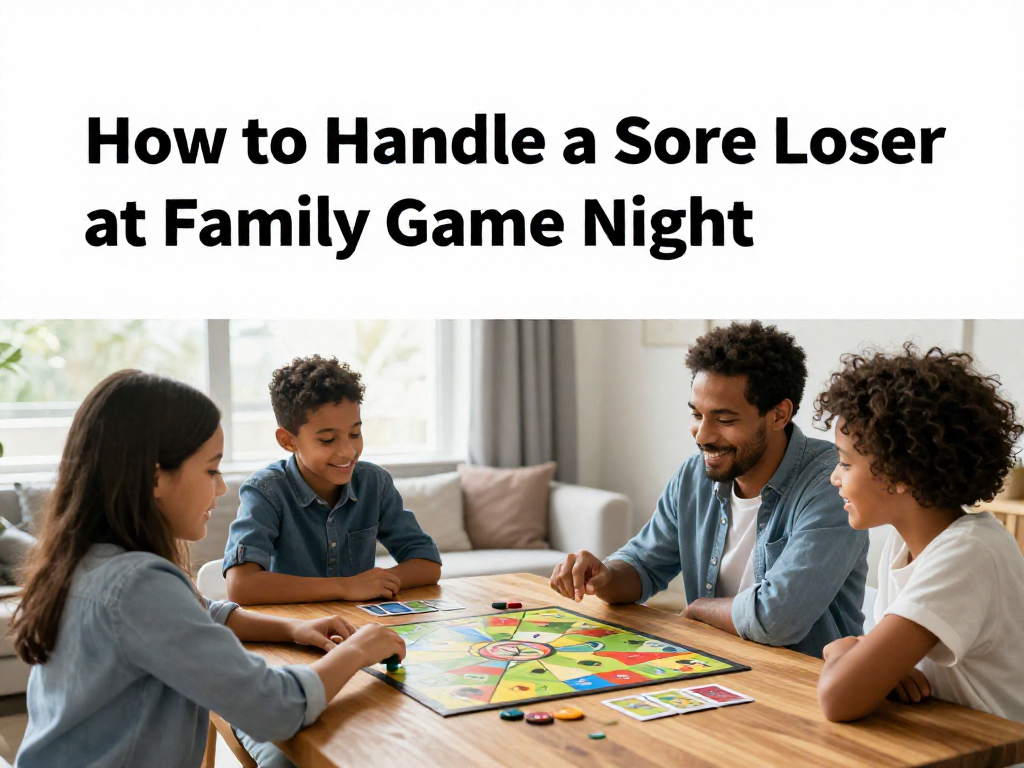
Why Kids (and Some Adults) Become Sore Losers
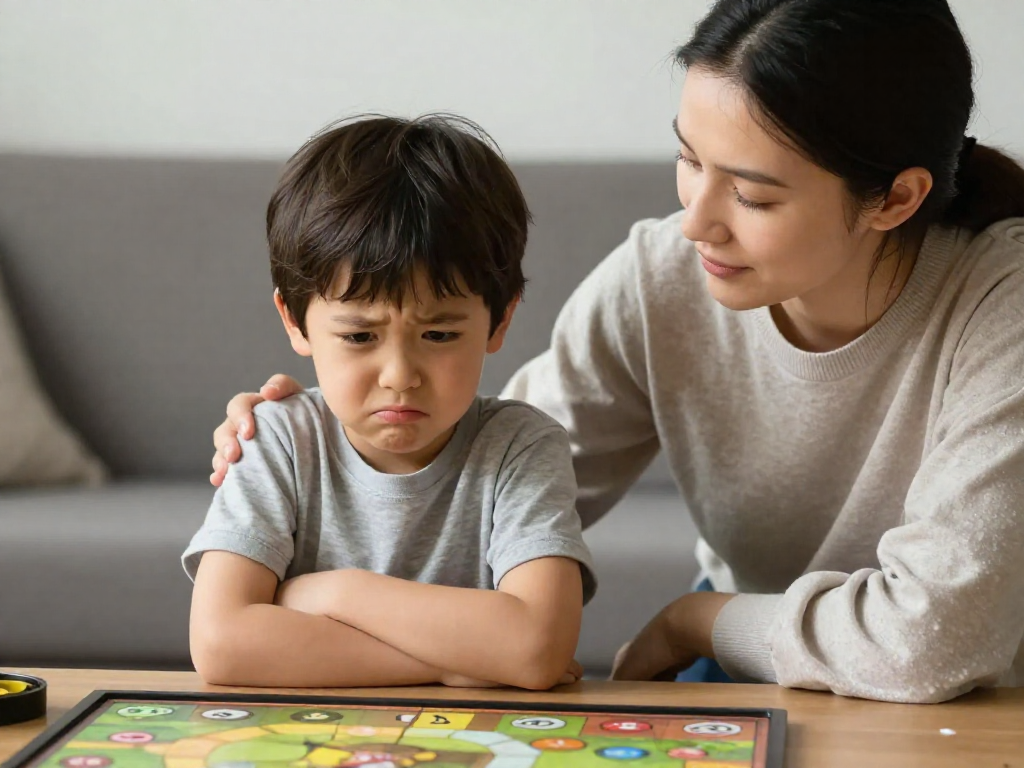
Before you can calm a meltdown, it helps to understand what's actually happening. A sore loser isn't trying to ruin game night—their reaction usually comes from feelings they can't yet manage.
Losing genuinely hurts. That flash of disappointment is real, and young brains simply don't have the impulse control to hide it the way adults do. The tears or table-flipping are emotion spilling over, not bad behavior on purpose.
Age changes the why. For kids under 6, the issue is basic emotional regulation—they feel big feelings and can't dial them back. For tweens, it's more about identity and fairness; losing can feel like a statement about who they are, and a rule that seems "unfair" can set them off fast.
Kids copy the room. If the adults at the table gloat over a win or grumble over a loss, that becomes the model. Children learn sportsmanship by watching how the grown-ups handle the same moments.
Tell a phase from a pattern. An occasional rough night, especially when a child is tired or hungry, is normal and usually passes. A consistent, every-game reaction that disrupts play is worth gently addressing with the strategies later in this article.
Reading the cause behind the reaction lets you respond with patience instead of frustration—which sets the tone for everyone at the table.
Set Expectations Before the Game Starts
The biggest mistake families make is waiting until someone melts down to talk about behavior. By then, emotions are running too high for the message to land. The fix is simple: have a quick "house rules" chat before the box is even open.
Keep it short and upbeat—30 seconds, not a lecture. Cover three points everyone can agree on:
- We're here to have fun. Winning is nice, but the goal is playing together.
- We're good sports. That means cheering good moves and shaking off bad luck.
- Someone has to lose. It's built into the game, and it's not a reflection of who you are.
It also helps to name what good winning and good losing actually look like, so they're not abstract ideas. Good winning sounds like "good game, that was close." Good losing sounds like "nice play—want a rematch?" Kids do far better when you give them the exact words instead of just telling them to "be nice."
Two more high-leverage moves:
- Let kids help pick the game. When they have a say, they feel ownership and are more invested in the experience than the outcome.
- Set a round or time limit up front. Agreeing on "best of three" or "we stop at 8:00" makes the ending feel planned instead of sudden—which removes a common trigger for end-of-game tantrums.
A 30-second chat now prevents a 20-minute meltdown later.
In-the-Moment Tactics for a Meltdown
When a game-night meltdown hits—tears, a flipped scorecard, or an "I'm never playing again"—your reaction sets the tone for everyone at the table. The goal isn't to win the argument or stop the tears instantly. It's to help the person feel understood and get the room back to a good place.
Start by naming the feeling. A calm, simple statement works better than a lecture: "You're really frustrated that you lost that round." Naming the emotion shows you get it, and it often takes the heat out of the moment faster than telling someone to "calm down" (which rarely helps anyone).
Offer a pause, not a punishment. A short break—getting a glass of water, stepping away for two minutes—gives a flooded brain time to reset. Forcing someone to keep playing while they're upset usually makes the meltdown worse.
Don't over-praise or quietly let them win. It's tempting to throw the game to stop the crying, but kids (and adults) notice, and it teaches them that big reactions get rewarded. Steady, honest encouragement beats fake comebacks.
Redirect to the fun. Once the worst has passed, point to a specific good moment: "That bluff you pulled on me earlier was genius," or "Remember when the dice gave you four sixes?" This reframes the game as something you enjoyed together, not just a contest someone lost.
Know when to end it. If the player is calming down and wants to continue, push through—finishing builds resilience. But if emotions keep escalating, it's fine to close the game gracefully: "Let's call it here and play something lighter." Ending on your terms is far better than letting a meltdown drag the whole night down.
Teach Good Sportsmanship That Sticks
In-the-moment fixes calm a meltdown, but the real win is helping your family handle losing better over time. The trick is to make a good attitude the thing that gets noticed—not just the final score.
Praise the right things. When you celebrate effort, smart guesses, or a kind move, you tell kids that how they play matters more than whether they won. Try specific praise like, "You stayed patient even when you were behind—that was awesome." Winning gets enough attention on its own; balance it out.
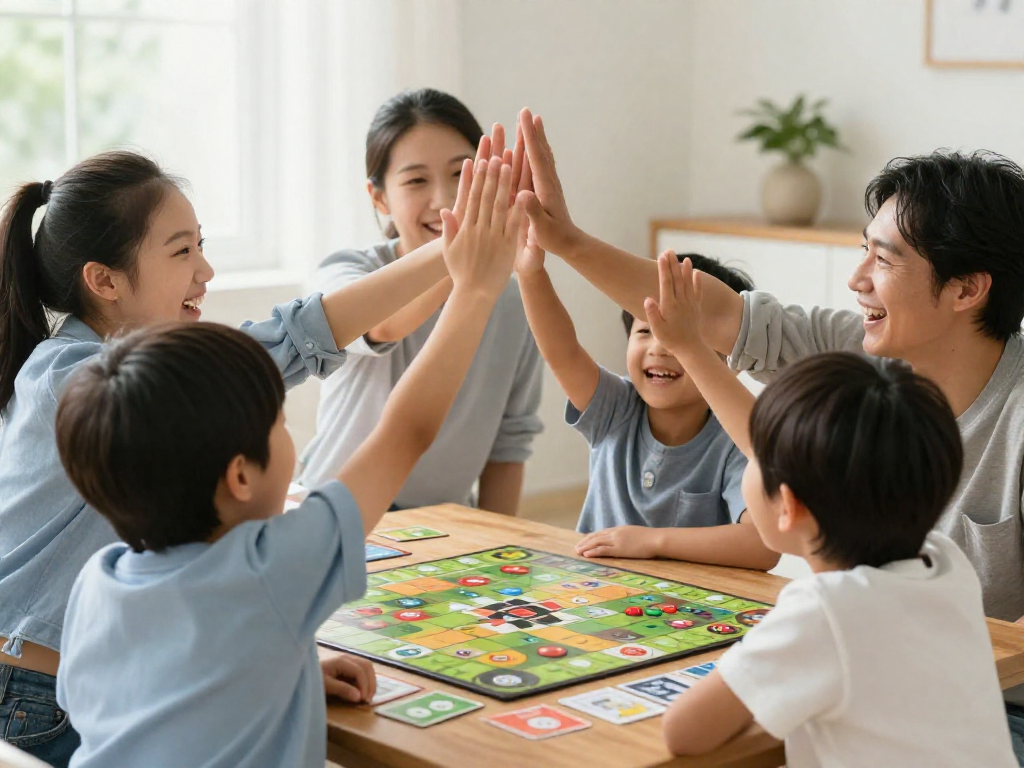
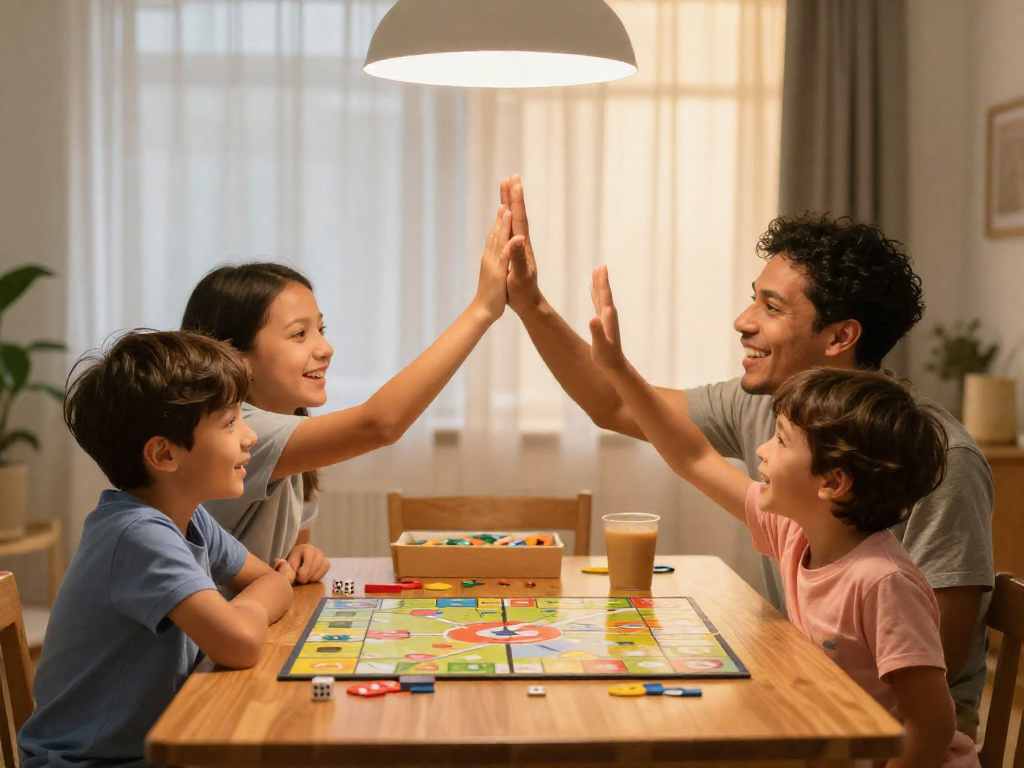
Build a post-game ritual. A short, predictable closing routine takes the sting out of losing and ends every game on a warm note. Pick one or two you'll do every time:
- High-fives or fist bumps all around
- Each person shares their "best moment" from the game
- Everyone congratulates the winner out loud
Model losing well. Kids copy what they see, so lose out loud with a smile: "Aw, you got me that time—good game! Rematch later?" Narrating your own good attitude gives them a script to borrow.
Borrow stories. Picture books, chapter books, and family shows about characters who lose and bounce back give you a low-pressure way to talk about feelings—away from the heat of the moment. Read one together, then ask, "What could they have done differently?"
Done consistently, these small habits turn good sportsmanship from a one-night lecture into something that simply sticks.
Game Choices That Reduce Sore Losing
Sometimes the fastest fix isn't changing the kid—it's changing the game. A few smart swaps can take the sting out of losing before it ever starts.
Try cooperative games. In a cooperative game, everyone plays as one team against the game itself, so you all win or lose together. No single person "loses," which sidesteps meltdowns entirely. Outfoxed! is a great starter (2–4 players, ages 5+, about 15 minutes, easy difficulty)—a whodunit where kids work together to catch a fox. Pros: zero head-to-head tension, builds teamwork. Cons: older kids may want more challenge. Who it's for: families with sensitive young players.
Play in teams. Splitting into teams softens an individual loss, since the blame (and the glory) is shared. Charades or Codenames: Pictures (2–8+ players, ages 8+, ~15 minutes, easy) work well here.
Keep it short. A loss hurts less when it only cost 15 minutes, not 45. Quick games also let a frustrated player bounce back with a fresh round.
Lean on luck for younger kids. Skill-heavy games reward experience, which can frustrate beginners. Luck-based games like Sushi Go! (2–5 players, ages 8+, ~15 minutes, easy) level the field so anyone can win. Pros: fair for mixed ages. Cons: strategy fans may find it light. Who it's for: mixed-age family nights.
All of these are family-friendly with no mature content. For more, see our beginner game-night picks.
When the Sore Loser Is an Adult
It's easy to focus on the kids, but sometimes the grumpiest player at the table is a grown-up. How you handle it matters, because little eyes are watching.
- Keep it light. A joke or a quick "tough break—rematch?" defuses tension far better than calling someone out. Never shame an adult in front of the children; it only models the behavior you're trying to discourage.
- Set the example. If you lose with a smile and congratulate the winner, kids absorb that this is just how game night works.
- Match the competitive temperature. If one adult turns cutthroat, steer toward cooperative games—where everyone plays against the game together—or light party titles instead of head-to-head strategy battles.
- Have a private word later. If it's a recurring pattern, a calm one-on-one conversation away from the table works better than addressing it mid-game.
A relaxed adult sets the tone for the whole room.
FAQ
Is it ever okay to let my child win?
Occasionally, yes—especially with very young kids (roughly ages 3–6) who are still learning how games work. A win early on builds confidence and keeps them engaged. But make it the exception, not the rule. If a child always wins, they never get practice at losing gracefully, which is the very skill you're trying to build. A better long-term approach is to pick games with a built-in luck factor (like dice rolls or card draws) so wins and losses feel fair to everyone, or to play cooperative games where you all win or lose together. As kids get older, taper off the assists and let real outcomes stand.
At what age do kids grow out of being sore losers?
Most kids start handling losses more calmly between ages 7 and 9, as their emotional self-control and sense of fairness mature. Before that, strong reactions to losing are developmentally normal, not a discipline problem. That said, there's no hard cutoff—some kids (and plenty of adults) still struggle. The goal isn't an exact age but steady progress: fewer meltdowns, quicker recovery, and the ability to say 'good game' even after a loss. Consistent modeling from grown-ups and lots of low-stakes practice move that timeline along more than waiting it out does.
What should I do if my child throws the game pieces?
Stay calm and pause the game right away—don't lecture in the heat of the moment. Calmly state the boundary ('We don't throw pieces; if that happens, we stop'), and follow through by taking a short break. Once your child is settled, have them help pick the pieces up; this links the action to a natural consequence without shaming them. Later, when everyone's relaxed, talk briefly about what to do with big feelings next time. To prevent repeats, keep early game nights short, choose lower-stakes games, and praise good sportsmanship as actively as you'd correct poor behavior.
Are cooperative games a cop-out for teaching sportsmanship?
Not at all. In a cooperative (or 'co-op') game, all players work together against the game itself rather than competing against each other—so the group wins or loses as a team. Far from dodging the lesson, these games teach teamwork, shared decision-making, and how to lose without blaming a single person, which is often where sore-loser behavior starts. They're a great on-ramp for younger or sensitive players. Once kids handle a team loss well, you can mix in competitive games. Think of co-ops as a stepping stone, not a substitute, for full sportsmanship. A good starter is Outfoxed! (2–4 players, ages 5+, about 15–20 minutes, easy).
How do I handle a sore loser without ending game night for everyone?
Address the behavior without letting it derail the whole table. First, give the upset player a quiet moment—a short break or a job like shuffling cards—so the others can keep playing. Acknowledge the feeling briefly ('I know losing stinks') without negotiating the rules or the result. Set the expectation up front that game night continues even if someone has a tough moment, so no one learns that a tantrum stops the fun. For mixed-mood groups, keep a couple of quick, lighthearted games on hand to reset the mood. And model it yourself: when you lose, say 'good game' and mean it—kids copy what they see more than what they're told.
See also
- Best Cooperative Board Games for Families
- Easy Family Game Night Ideas for Beginners
- Best Short Board Games Under 30 Minutes
- How to Start a Weekly Family Game Night
Related articles

Outdoor and Backyard Game Night Ideas for Warm Evenings
Plan the perfect outdoor game night with family-friendly backyard games, lighting and snack ideas, and tips for playing tabletop games outside on warm evenings.
Jun 27, 2026 · 7 min read
Game Night on a Budget: Big Fun Without Spending Much
Host a fun family game night without overspending. Get free and cheap game ideas, DIY snacks, and simple setups everyone will love.
Jun 27, 2026 · 9 min read
How to Keep Young Kids Engaged During Family Game Night
Short attention spans and meltdowns? Here's how to keep little kids interested during family game night, with simple fixes for the most common problems.
Jun 27, 2026 · 9 min read