Best First Board Games to Start a Family Collection
Which board games should a family buy first to build a collection?
On this page
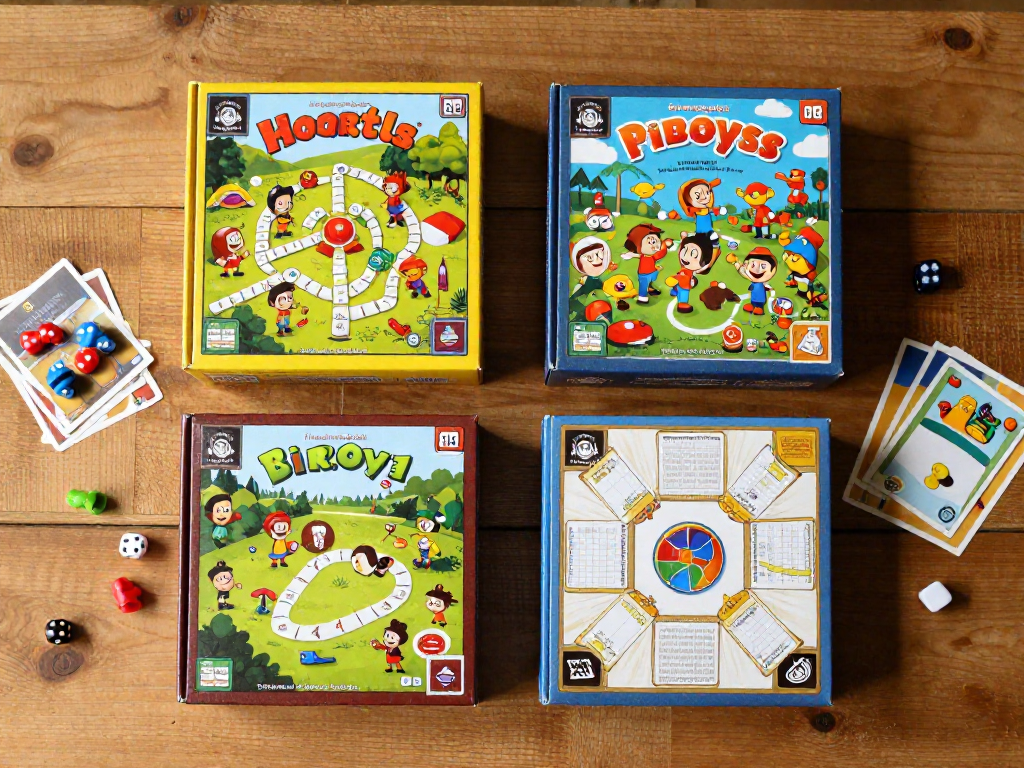
Open by acknowledging the overwhelm of choosing your first games (hundreds of options, conflicting reviews) and reframe the goal: you're not picking one perfect game, you're building a balanced starter shelf. Promise a curated set that covers different player counts, ages, and play styles—so any night you can grab something that fits the mood.
How to Build a Balanced Starter Shelf (Not Just Buy One Game)

The biggest mistake new families make is buying five versions of the same kind of game. A great starter collection works like a small toolbox: each game does a different job, so you're ready for any kind of night. We call this variety over volume—aim for four to six games that each cover a different need, not ten that all feel alike.
Here are the four jobs your shelf should fill:
- Quick filler — a short game (usually 10–20 minutes) for when you only have a little time or want to warm up before something bigger.
- Cooperative game — everyone plays as a team against the game itself instead of against each other. Great for mixed ages and avoiding hurt feelings.
- Party/social game — light, laugh-friendly games that work with bigger groups and don't require much focus.
- Gateway strategy game — a "gateway" is an easy entry point into deeper games: a little planning and decision-making, but still simple to teach in a few minutes.
Match games to your actual household, not an ideal one. Before you buy, picture a real game night: How old are the kids? How many people usually play? How long does everyone stay interested before someone wanders off? A game that shines with four focused adults can flop with two restless seven-year-olds. Check each game's player count, age range, and play time against your reality.
Budget tip: you don't need the whole shelf at once. Start with three games—one filler, one cooperative, and one gateway—then add a party game and a second strategy pick over the next season. Buying with a plan beats panic-buying ten boxes that gather dust.
What Makes a Great First Family Game
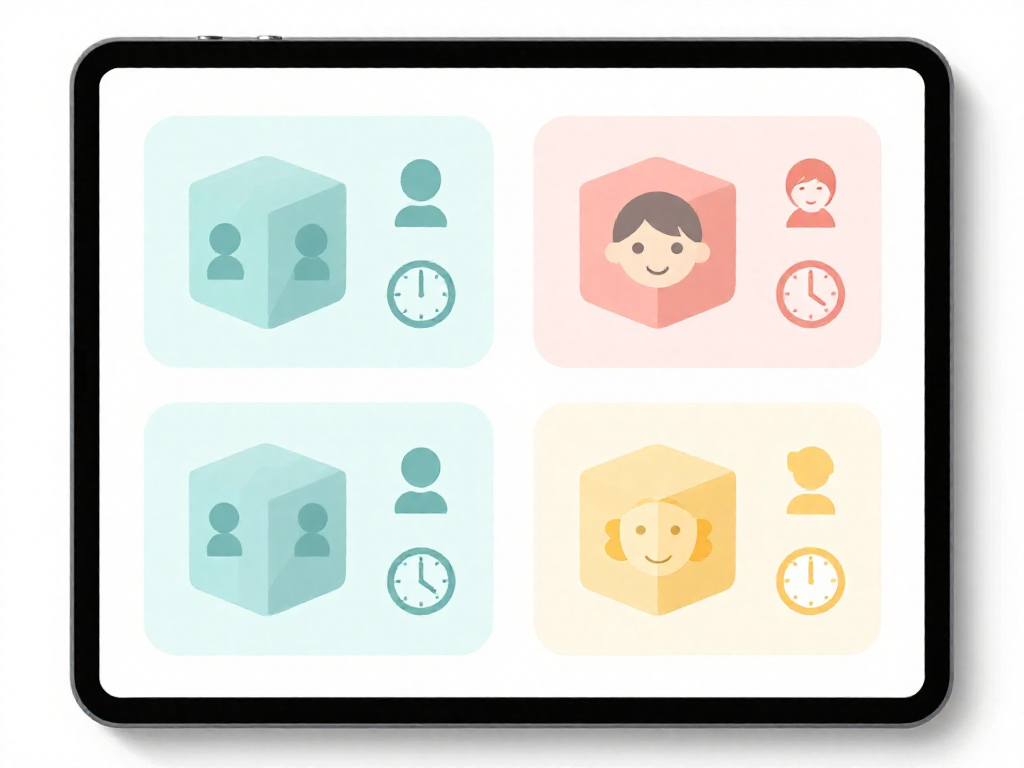
Before you start buying, it helps to know what separates a game that hits the table every week from one that gathers dust. Here's the checklist we use for every pick in this guide.
- Quick to teach. If you can explain the rules in under 10 minutes, nobody loses interest before the first turn. Long rulebooks are the fastest way to kill a game night.
- Works across ages. A great starter game keeps a 7-year-old and a grown-up at the same table without one side getting bored or buried. This often means a little luck mixed in, so a younger player can still win.
- Right-sized playtime. Aim for 20–45 minutes. Short enough to fit a school night, long enough to feel like a real game. You can always play a second round.
- Plays again and again. High replayability—meaning the game feels different each time—matters more than flashy parts. Fast setup and cleanup keep it from becoming a chore.
If a game clears all four bars, it earns a spot on your shelf. Use these same criteria to judge anything you buy later.
The Best First Board Games for a Family Collection
Think of your first five games like a starter toolbox: each one covers a different occasion. Buy these and you'll have something for almost any group, mood, or amount of time you have. ("Gateway game" just means an easy on-ramp—simple enough for newcomers, but still satisfying for grown-ups.)
The gateway strategy pick: Ticket to Ride
- Players: 2–5 · Ages: 8+ · Time: 30–60 min · Difficulty: Easy
- You collect colored train cards and use them to claim railway routes across a map, racing to connect cities. The rules fit on a postcard, but deciding which routes to grab gives everyone something to think about.
- Why it earns a shelf spot: It teaches light planning and trade-offs without any reading-heavy rulebook or math. New players "get it" within one round.
- Watch-out: With 4–5 players, someone may snatch the route you wanted, which can sting for kids who dislike surprises. The 2-player game is calmer.
- Who it's for: Families ready to graduate from roll-and-move games into real choices.
The cooperative pick: Forbidden Island
- Players: 2–4 · Ages: 10+ (works at 8+ with a helping adult) · Time: 30 min · Difficulty: Easy–Medium
- Cooperative means you all play as a team against the game itself—nobody wins or loses alone. Here, you race to grab four treasures and escape an island that's sinking tile by tile.
- Why it earns a shelf spot: No sore losers, because you win or lose together. It's the antidote to competitive meltdowns.
- Watch-out: A confident player can quietly take over and make everyone's decisions ("quarterbacking"). Agree up front that each person steers their own turns.
- Who it's for: Groups with a mix of ages, or anyone who wants teamwork over trash talk.
The party/social pick: Just One
- Players: 3–7 · Ages: 8+ · Time: 20 min · Difficulty: Very easy
- One person guesses a secret word while everyone else writes a one-word clue. The twist: any duplicate clues get canceled, so you want a hint that's helpful but not obvious.
- Why it earns a shelf spot: Big laughs, almost no rules, and it scales to a crowd—perfect when relatives drop by.
- Watch-out: It needs at least three players to work, so it's not a two-person night option.
- Who it's for: Mixed groups and gatherings where you want everyone involved fast. (If you prefer teams and word association, Codenames is the spicier alternative for ages 10+.)
The quick filler pick: Sushi Go!
- Players: 2–5 · Ages: 8+ · Time: 15 min · Difficulty: Easy
- A "filler" is a short game you play before dinner or to close out the night. You pass a hand of cute sushi cards around the table, keeping one each turn to build the tastiest combo.
- Why it earns a shelf spot: Tiny box, fast setup, and it fits in a bag for restaurants or travel.
- Watch-out: The card-passing ("drafting") idea takes one round to click for younger kids—after that they're fine.
- Who it's for: Anyone needing a 15-minute win when there's no time for a big game.
The family-and-young-kids pick: Outfoxed!
- Players: 2–4 · Ages: 5+ · Time: 20 min · Difficulty: Very easy
- A cooperative whodunit where players roll dice and gather clues to figure out which fox stole the pie before it escapes. Everyone works together, so little ones never feel singled out.
- Why it earns a shelf spot: True 5+ accessibility with light deduction, and adults won't be bored helping.
- Watch-out: It's the lightest game here—older kids may outgrow it, so pair it with Kingdomino (ages 8+) as they level up.
- Who it's for: Households with early readers or pre-readers who want in on game night.
A Sample Starter Set Under $100
If you'd rather skip the guesswork, here's a four-game bundle that covers every kind of game night—and still leaves room in a $100 budget.
- Ticket to Ride — 2–5 players, ages 8+, 30–60 min, easy. A "gateway game" (a beginner-friendly title that eases newcomers into the hobby) about claiming train routes. Around $35–$45; watch for Target and Amazon sales near the holidays.
- Sushi Go! — 2–5 players, ages 8+, ~15 min, very easy. A quick card-drafting game (you pick one card, then pass the rest) that's perfect for warm-ups. About $10–$13.
- Kingdomino — 2–4 players, ages 8+, ~15 min, easy. Tile-laying with a satisfying puzzle feel. Roughly $15–$20.
- The Mind — 2–4 players, ages 8+, ~15 min, easy. A cooperative game (everyone plays as a team, not against each other) that gets families laughing together. Around $10–$15.
That's roughly $70–$90 total. If you have room for one more, add Codenames ($15–$20) for larger groups or party nights.
Why this mix works: you get a meatier main event, two fast fillers, and a co-op—so you're never stuck replaying the same game. Short titles rescue tired weeknights, while Ticket to Ride anchors a longer weekend session. All four are family-friendly with no mature content.
Tips for Your First Few Game Nights
Buying the games is the easy part—getting them to the table is where families stumble. A few small habits make the difference between a shelf that gets used and one that gathers dust.
- Learn before you set up. Read the rules ahead of time, or watch a 5-minute "how-to-play" video (a short tutorial that walks through a game). Nothing kills momentum like learning rules while everyone waits.
- Start with the easiest game. Open the simplest title first so everyone wins a little confidence before tackling anything trickier.
- Skip the extras at first. Ignore variants (optional alternate rules) and expansions (add-on content) until the base game clicks. The core game is plenty for night one.
- Make play effortless. Keep snacks simple and store games visible on a shelf, not buried in a closet. Games you can see are games you'll actually play.
Give a new game two or three tries before deciding—most feel smoother the second time around.
See also
- Easy Cooperative Board Games for Family Game Night
- How to Teach Board Game Rules Without Boring Everyone
- Best 2-Player Board Games for Couples and Parents
- Board Game Night Snack and Setup Ideas
Related articles
Best Card Games Every Family Should Own
The essential card games every family should own—affordable, easy to learn, and fun for all ages. Plain-language picks for game night at home.
Jun 27, 2026 · 6 min read

Best Party Board Games for Loud, Laughing Big Groups
The best party board games for large groups that scale to 6, 8, or 10+ players. Easy rules, big laughs, and game-night picks everyone can join.
Jun 27, 2026 · 7 min read
The Best Family Board Games of the Year, Ranked
Our ranked guide to the best family board games right now—picks by age, group size, and play style, with plain-language rules and game-night tips. No jargon.
Jun 27, 2026 · 11 min read