Best Party Board Games for Loud, Laughing Big Groups
What are the best party games for large social gatherings?
On this page
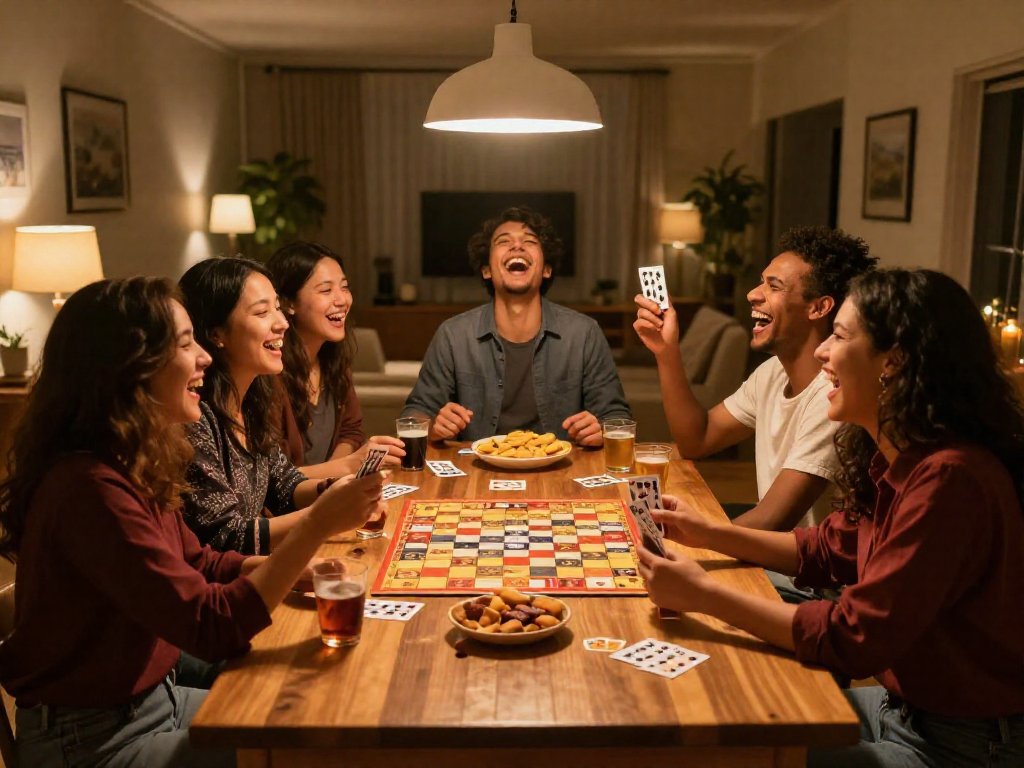
Open on the chaos of a packed living room where someone always ends up sitting out—then promise games built to absorb a crowd, teach in two minutes, and keep everyone yelling and laughing instead of reading rulebooks.
What Makes a Great Big-Group Party Game
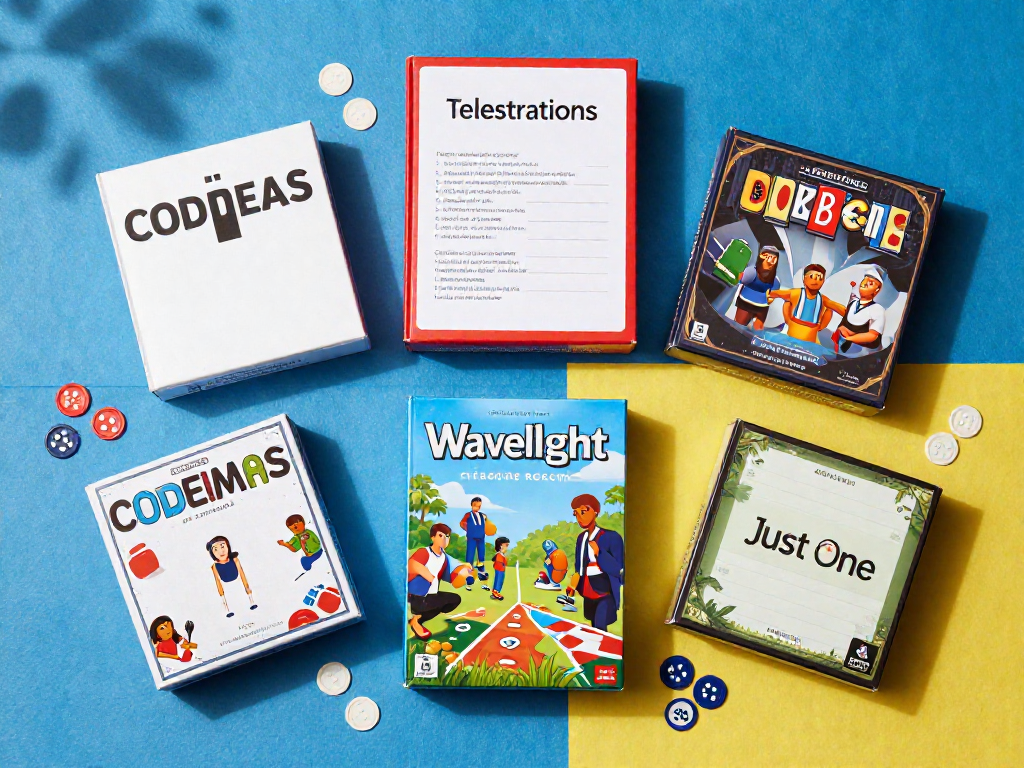
Before you trust any "best of" list, it helps to know what you're actually looking for. A game that's perfect for two strategy nerds can fall flat when ten people are crammed around a coffee table with snacks in hand. Here's the checklist we use when picking party games for big, loud crowds.
- It actually fits your crowd. Look for a high player count—at least 6, and ideally 8–10 or more. The best options scale to "unlimited" by splitting everyone into teams, so nobody gets benched.
- You can teach it in under 3 minutes. If you need the rulebook open all night, the energy dies. Great party games explain in a sentence or two: "Describe this word without saying it," and you're playing.
- Rounds are short. Quick rounds mean latecomers can jump in, and anyone who needs a snack or bathroom break can drop out without wrecking the game.
- It rewards talking, not silence. You want bluffing, acting, drawing, and arguing over the right answer—not five quiet minutes while someone plots their move. Laughter is the whole point.
- It works across ages and skill levels. A good pick lets your competitive uncle and your 10-year-old both have a real shot, so mixed-age game nights stay fun for everyone.
Keep these five traits in mind and you can judge any game—including ours below—on whether it suits your people.
Quick-Pick Comparison: Best Party Games at a Glance
Short on time? Use this table to find your match, then jump to the full review below. "Party game" here means a light, social game built for laughs and big groups—not heavy strategy.
| Game | Players | Play Time | Age | Best For |
|---|---|---|---|---|
| Codenames | 4–8+ | 15 min | 10+ | Best overall—clever, quick, team-based |
| Telestrations | 4–12 | 30 min | 8+ | Drawing + guessing chaos; family-friendly |
| Wavelength | 2–12 | 30 min | 10+ | Debate and big personalities |
| Just One | 3–7 | 20 min | 8+ | Cooperative; great with kids included |
| The Resistance | 5–10 | 30 min | 13+ | Best for huge crowds; bluffing (mild deception may frustrate younger kids) |
Quick flags:
- Need pen/paper or markers: Telestrations, Just One.
- Phone optional, never required: all picks here play fully offline.
- Team-based: Codenames, Wavelength, The Resistance.
- Best for kids-included: Just One and Telestrations keep everyone laughing without reading-heavy rules.
Want details, pros, and cons? Each game gets a full breakdown next.
The Best Party Board Games for Big Groups
When you've got a living room full of people, the right game turns noise into laughter instead of chaos. These are our hands-on favorites for big, loud crowds. For each one we list the ideal player count, age range, play time, and difficulty (how hard it is to learn and play), plus a quick "who it's for" verdict.
Codenames
- Players: 4–8+ (scales well by splitting into two teams) · Ages: 10+ · Play time: 15–20 min · Difficulty: Easy A team word-guessing game. One person on each team gives one-word clues to help teammates find their secret words on a grid without hitting the other team's words. It shines because everyone debates clues out loud, and you can pack extra people onto each team as guessers. Downside: the clue-giver does most of the thinking, so quiet players may hang back. Who it's for: word lovers and groups that enjoy gentle back-and-forth.
Telestrations
- Players: 4–8 (get the 12-player version for bigger crowds) · Ages: 12+ · Play time: 30 min · Difficulty: Very easy Think "telephone" with sketches: you draw a word, pass it on, the next person guesses what it is, and so on until the original idea gets gloriously mangled. The reveal at the end is where the big laughs live. Downside: people self-conscious about drawing sometimes freeze up (reassure them—bad art is the whole point). Who it's for: any mixed group that wants guaranteed laughs with zero strategy.
Wavelength
- Players: 2–12, best with 6+ · Ages: 12+ · Play time: 30–45 min · Difficulty: Easy Teams guess where a clue falls on a hidden spectrum, like "boring" to "exciting." It reliably sparks loud, friendly arguments because everyone has an opinion. Downside: needs table space and a moment to grasp the dial mechanic. Who it's for: opinionated crowds who love defending their take.
Just One
- Players: 3–7 · Ages: 8+ · Play time: 20 min · Difficulty: Very easy A cooperative game (everyone works together against the game) where players write one-word clues to help one person guess a word—but matching clues get canceled out, so you have to think differently from your friends. Downside: it tops out around seven, so very large groups need to rotate. Who it's for: families and all-ages groups wanting a warm, no-conflict opener.
Cards Against Humanity (and a family-friendly swap)
- Players: 4–10+ · Ages: 17+ · Play time: 30–90 min · Difficulty: Easy Players answer fill-in-the-blank prompts with the funniest (often raunchy) card in hand. It's a crowd classic for adults-only nights. For all-ages crowds, swap in a clean alternative like Apples to Apples or What Do You Meme? Family Edition, which use the same matching format without the adult content. Downside: the original is explicit and not for kids or every adult. Who it's for: grown-up game nights (original) or family tables (the clean versions).
One Night Ultimate Werewolf
- Players: 3–10 · Ages: 8+ · Play time: 10 min per round · Difficulty: Medium A social deduction game—players have hidden roles, and the group debates to find the secret "werewolves" among them. Rounds are fast, so huge groups stay engaged. Downside: roles take a game or two to learn, and you'll want one confident person to run the app-narrated setup. Who it's for: crowds who love bluffing, accusing, and reading each other.
Herd Mentality
- Players: 4–20 · Ages: 10+ · Play time: 20 min · Difficulty: Very easy Answer simple questions and score by matching the most popular answer—standing out is bad. It handles the largest crowds on this list effortlessly. Downside: light on depth, so it works best as a filler rather than the main event. Who it's for: mixed-age parties that just want easy, inclusive fun.
Snake Oil
- Players: 3–10 · Ages: 10+ · Play time: 20 min · Difficulty: Easy Combine two word cards into a wacky product, then pitch it to a "customer" who picks the best sales spiel. It rewards hams and improvisers. Downside: shy players may find the on-the-spot pitching intimidating. Who it's for: performer-heavy groups who love a quick laugh and a captive audience.
How to Run a Smooth Party Game Night
Great games help, but a little hosting prep is what keeps a big group laughing instead of standing around. Here's how we set up game night at home.
Open with a "teach-fast" game. A teach-fast game is one you can explain in under two minutes. Start one as guests arrive so latecomers can jump in without holding everyone up. Save the more involved games for when the whole crew has settled in.
Use teams when you have a crowd. Many boxes cap out at six or eight players, but most party games work fine if you split extra people into teams. Two friends sharing one "player" slot means nobody sits on the sidelines.
Keep food away from the table. Set snacks and drinks on a separate counter or side table. Greasy fingers and spilled soda are rough on cards and boards, and a dedicated snack zone keeps the play area clear.
Have a backup and keep rounds short. Not every game lands with every group. Keep a second option ready, and favor short rounds so people can tap out or rotate in without restarting the whole game.
Let people come and go. Pick games that handle players dropping in and out between rounds—it keeps the energy loose and the mood relaxed.
How to Choose the Right Game for Your Crowd
The "best" party game depends entirely on who's sitting around your table. Use these quick filters to match a pick to your crowd.
- All adults vs. mixed ages. Adult-only nights can handle cheeky, fill-in-the-blank humor games. With kids in the room, choose a "family-friendly" title (one with no mature jokes or themes) so everyone plays the same game.
- Loud extroverts vs. a quieter group. Big, rowdy crowds thrive on fast, shout-it-out games. Shy or mixed groups relax faster with a structured game—one that tells each person exactly when it's their turn, so no one feels put on the spot.
- Budget vs. splurge. Many crowd-pleasers run $15–$25 and play 6+ people. Save the $35+ "splurge" boxes for groups that gather often and want more variety in the box.
- Phone-based backups. Forgot to pack a game? App-driven party games let everyone use their phones as buzzers or answer pads—handy, but check that the host has decent Wi-Fi first.
When in doubt, pick for your loudest and your shyest guest.
See also
- Best family board games for game night
- Easy board games you can teach in 5 minutes
- Best cooperative board games for beginners
- Board game night snack and setup ideas
Related articles
Best Card Games Every Family Should Own
The essential card games every family should own—affordable, easy to learn, and fun for all ages. Plain-language picks for game night at home.
Jun 27, 2026 · 6 min read
Best First Board Games to Start a Family Collection
Building a family board game shelf? Here are the best first board games to buy, balanced for variety, easy rules, and fun game nights everyone enjoys.
Jun 27, 2026 · 7 min read
The Best Family Board Games of the Year, Ranked
Our ranked guide to the best family board games right now—picks by age, group size, and play style, with plain-language rules and game-night tips. No jargon.
Jun 27, 2026 · 11 min read