The Best Family Board Games of the Year, Ranked
What are the best family board games right now?
On this page
How We Ranked These Games
Before we get to the list, here's exactly how we sorted it—so you can trust the picks and skip straight to the ones that fit your table.
We judged every game on four things that actually matter on family game night:
- Ease of learning — How fast can you teach it and start playing? We favored games you can explain in five minutes or less.
- Replay value — Will you want to play it again next week, or does it get stale after one night?
- Group size flexibility — Does it work with 3 players and 6? Games that stretch to fit your crowd scored higher.
- Fun across mixed ages — This was our biggest priority. We rewarded games that keep both a 7-year-old and a grandparent engaged, not just one or the other.
We also factored in price and US availability. A brilliant game that's out of stock or costs a fortune won't help you this weekend, so easy-to-find, fairly priced titles got a boost.
How to read each entry. Every game below includes the same quick-reference details so you can compare at a glance:
- Best for: the occasion or group it shines with
- Player count: how many can play
- Age: the youngest age that can genuinely keep up
- Setup time: how long before the first turn
- Why it wins: a one-line verdict on what makes it worth your shelf space
No deep strategy jargon, no fluff—just what you need to pick a winner.
Quick Picks: The Top Family Board Games at a Glance
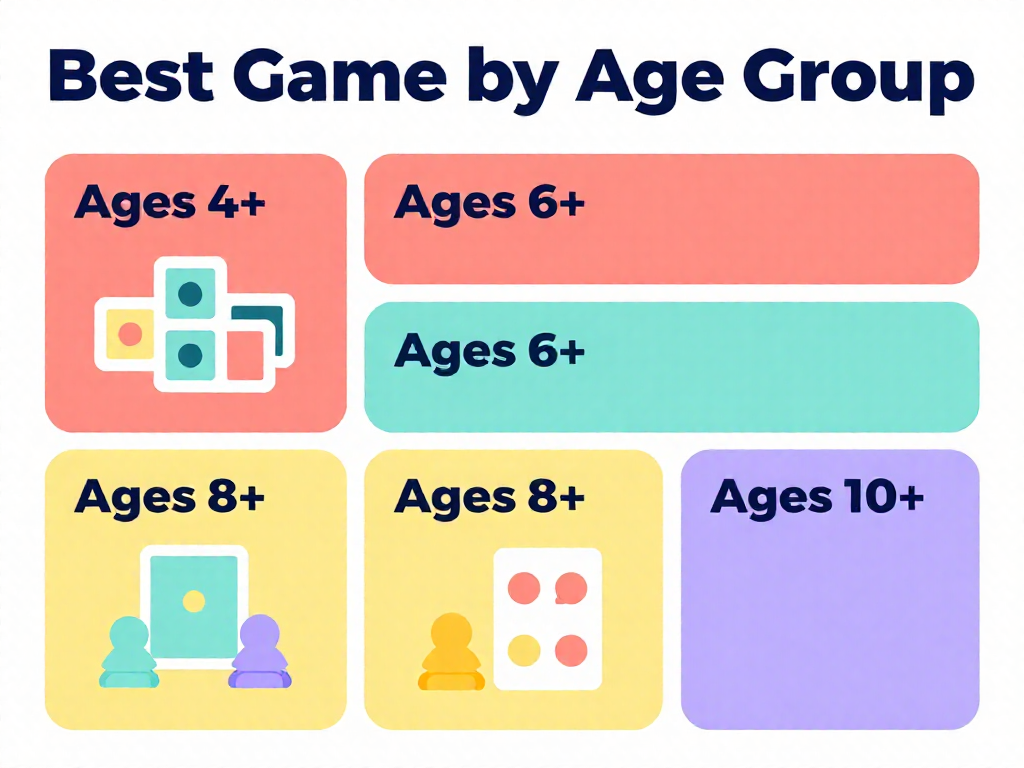
Short on time? Here are our fast favorites before the full reviews below. Each pick lists the ideal player count, age range, play time, and difficulty (how hard it is to learn and play).
- Best overall — Ticket to Ride. Build train routes across a map; easy to teach, satisfying for everyone. 2–5 players · ages 8+ · 30–60 min · easy-to-learn. A reliable crowd-pleaser that grows with your family.
- Best for young kids (ages 4–7) — Outfoxed! A cooperative "whodunit" where players work together (no one loses alone). 2–4 players · ages 5+ · about 20 min · very easy. Reading isn't required, so pre-readers can join.
- Best for big groups — Codenames. Two teams race to guess words from one-word clues. 4–8+ players · ages 10+ · 15–30 min · easy. Scales well for game night with extended family or friends.
- Best quick game (under 20 minutes) — Sushi Go! A fast card-drafting game (you pick a card, then pass your hand). 2–5 players · ages 8+ · about 15 min · easy. Great as a warm-up or filler.
- Best budget pick under $20 — Uno or Sleeping Queens. Simple, portable, and forgiving for mixed ages. 2–5 players · ages 6+ · 15–30 min · very easy. Hard to beat for the price.
At-a-glance comparison
| Game | Players | Age | Play time | Price tier |
|---|---|---|---|---|
| Ticket to Ride | 2–5 | 8+ | 30–60 min | $$ |
| Outfoxed! | 2–4 | 5+ | ~20 min | $ |
| Codenames | 4–8+ | 10+ | 15–30 min | $ |
| Sushi Go! | 2–5 | 8+ | ~15 min | $ |
| Uno / Sleeping Queens | 2–5 | 6+ | 15–30 min | $ |
Price tiers: $ = under $20, $$ = $20–$40. A note for parents: all of these are family-friendly with no mature content. Full hands-on reviews, including pros, cons, and who each game is best for, follow below.
The Ranked List: Best Family Board Games of the Year
Here are our top picks, ranked after dozens of hands-on game nights with kids, grandparents, and mixed-skill groups. Each entry tells you who it's for, how it plays, and what to watch out for so you can pick the right box on the first try.
A quick note on the labels: a gateway game is an easy-to-learn game designed to welcome newcomers into the hobby. A cooperative game is one where everyone plays as a team against the game itself instead of competing against each other. Price tiers are rough US estimates: $ (under $25), $$ ($25–$45), $$$ ($45+).
1. Ticket to Ride
- Best for: A first "real" board game night
- Players: 2–5 | Ages: 8+ | Time: 30–60 min | Price: $$ | Difficulty: Easy (gateway)
How it works: You collect colored train cards and use them to claim railway routes across a map, trying to connect cities listed on your secret destination cards. Longer routes and completed destinations earn more points.
Why families love it: The rules fit on a postcard, but choosing which routes to grab feels genuinely satisfying. It's the game we hand to people who say "I don't really play board games." Watch out: with 4–5 players, popular routes get blocked, which can frustrate younger kids who had a plan. Scaling: plays fine at 2 but shines at 3–4.
Who this is for: Families ready to graduate from roll-and-move kids' games to something with light decision-making.
2. The Crew: The Quest for Planet Nine
- Best for: Co-op fans who want a brain-tickle
- Players: 2–5 | Ages: 10+ | Time: 20 min/round | Price: $ | Difficulty: Medium
How it works: This is a cooperative card game (a "trick-taking" game, meaning each round everyone plays one card and the highest wins it). The twist: the team must win specific cards in a specific order, and you can barely communicate. You work through 50 escalating missions.
Why families love it: It's cheap, packs small, and the shared "we did it!" moment is contagious. Watch out: the no-talking rule and card logic make this better for tweens and up—younger kids may feel lost. Scaling: excellent at 3–4; the 2-player mode uses a bot and feels slightly less magical.
Who this is for: Families with older kids who like puzzles and teamwork over head-to-head competition.
3. Codenames
- Best for: Bigger groups and party nights
- Players: 2–8+ | Ages: 10+ | Time: 15–30 min | Price: $$ | Difficulty: Easy
How it works: Two teams race to find their secret agents on a grid of word cards. One "spymaster" per team gives one-word clues to point teammates toward the right words—while avoiding the assassin word that ends the game instantly.
Why families love it: It's a word game that scales to a crowd and gets everyone laughing at near-misses. Watch out: clue-giving leans on vocabulary and shared references, so it's best with kids 10+ (the kid-friendly Codenames: Pictures swaps words for images). Scaling: built for 4–8+; the 2-player variant works but loses the team energy.
Who this is for: Families that host game nights or have relatives over and need something a big mixed group can jump into.
4. Sushi Go Party!
- Best for: Quick light strategy with little ones
- Players: 2–8 | Ages: 8+ | Time: 20 min | Price: $$ | Difficulty: Easy (gateway)
How it works: Cards pass around the table and each turn you keep one (this passing mechanic is called "drafting"). You're building the best plate of sushi—collecting sets, pairs, and dessert—for points over three quick rounds.
Why families love it: The art is adorable, rounds are fast, and the choices are simple enough for an 8-year-old yet interesting for adults. Watch out: very little here for kids under 7 who can't read the scoring symbols yet. Scaling: smooth from 2 all the way to 8, which is rare and makes it a flexible go-to.
Who this is for: Families who want a colorful, low-pressure game that handles odd group sizes.
5. Trekking the National Parks
- Best for: Trivia-light family bonding
- Players: 2–5 | Ages: 10+ | Time: 30–60 min | Price: $$$ | Difficulty: Easy–Medium
How it works: You move across a US map collecting stones and claiming national parks for points. Trivia cards add fun facts about each park, but you don't need to know answers to win, so no one gets quizzed out of the game.
Why families love it: It's gorgeous, sneakily educational, and great for travel-loving households. Watch out: at $$$ it's a bigger commitment, and the rules take one full play to click. Scaling: good at 2–4; five players adds downtime between turns.
Who this is for: Families who like a calmer, scenic game and don't mind learning the rules over the first session.
6. Klask
- Best for: Fast, physical fun for two
- Players: 2 | Ages: 8+ | Time: 10 min | Price: $$$ | Difficulty: Easy
How it works: A dexterity game (one that tests hand skill, not planning): you grip a magnetic handle under the board to slide your striker and knock a ball into your opponent's goal—like tabletop air hockey with magnets.
Why families love it: Zero reading, instant understanding, and it's genuinely thrilling. Perfect for an adult-and-kid head-to-head. Watch out: strictly 2 players, and the wooden board sits at a premium price. Scaling: two only—pair it with a group game above for variety.
Who this is for: Parent-and-kid duos or anyone wanting an active break from "thinky" games.
How to choose from this list
- Brand-new to board games? Start with Ticket to Ride or Sushi Go Party!—both are true gateway games.
- Big group or party? Reach for Codenames or Sushi Go Party! (best at 6+).
- Just two of you? Klask and The Crew are the standouts.
- Want everyone on the same team? The Crew is the cooperative pick.
- Younger kids at the table? Stick to the 8+ titles and consider Codenames: Pictures in place of the word version.
Any of these will earn a permanent spot on the shelf—pick based on your group size and the mood you're after, and you really can't go wrong.
Best Family Board Games by Age Group
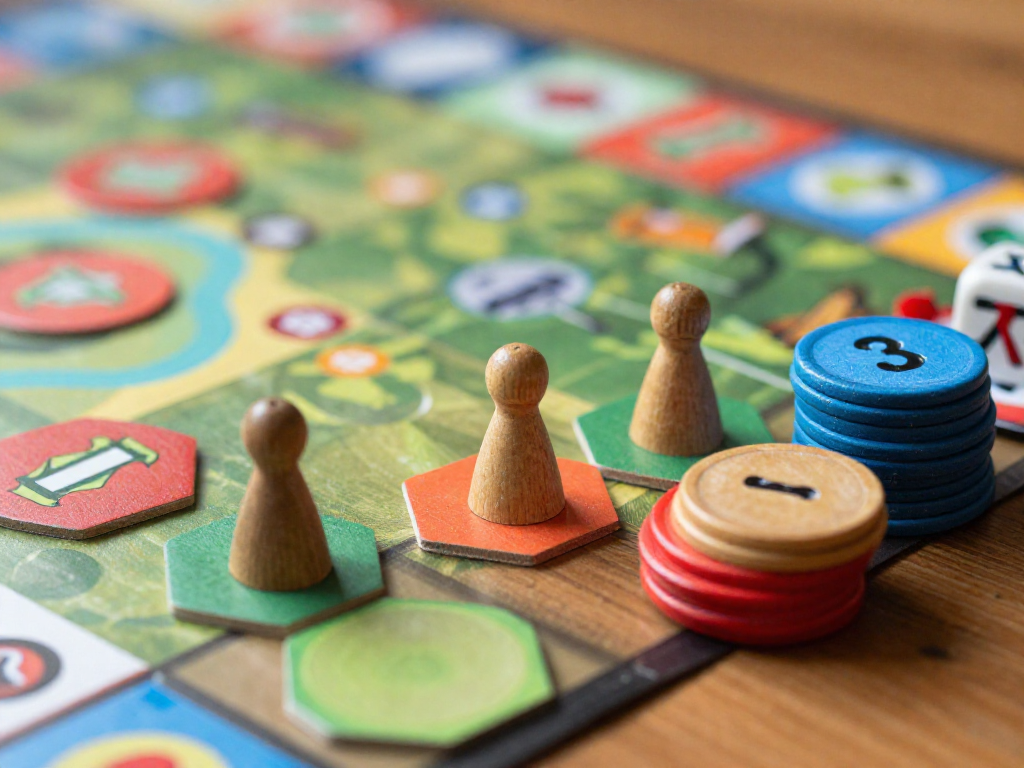
Kids change fast, and the "right" game depends a lot on what your table can read, sit through, and giggle about. Here's how to match a game to the ages around it.
Ages 4–7: Simple Rules, Short Turns, Lots of Luck
At this age, you want games where a turn is over quickly and winning leans on luck (a dice roll or a flipped card) rather than planning ahead. That keeps every kid in the game and softens the sting of losing.
- Outfoxed! — 2–4 players · ages 5+ · 15–20 min · very easy. A cooperative "whodunit" where everyone works together to catch the fox, so nobody is eliminated. Who it's for: preschoolers who melt down over losing. Fully family-friendly.
Ages 8–11: Light Strategy and Reading-Friendly Picks
Now kids can handle a small decision or two and read their own cards. "Light strategy" just means you make a simple choice each turn—not deep tactics.
- Ticket to Ride: First Journey — 2–4 players · ages 6+ · 15–30 min · easy. Connect cities by train; quick to teach and forgiving of mistakes. Who it's for: newer readers ready for a goal beyond pure luck. No mature content.
Ages 12+ and Mixed Adult/Teen Groups
Teens and adults can enjoy a little tension and bluffing.
- Codenames — 2–8+ players · ages 12+ (we'd say 10+ with help) · 15 min · easy to learn, sneaky to master. Give one-word clues to lead teammates to the right words. Who it's for: big groups and word lovers. Heads up: some word combinations can read as adult—use the kid-friendly "Codenames: Pictures" for younger tables.
Playing Across a Wide Age Gap
When a 6-year-old and a 14-year-old share a table, reach for cooperative games (everyone vs. the game) or team games so a younger player can pair with an adult. You can also "handicap" by giving little ones a head start or letting them play their hand face-up with a coach.
How to Pick the Right Game for Your Family
The ranked list above gives you great starting points, but the "best" game is really the one that fits your table. Use this quick framework to choose with confidence.
Start with group size and play time. Count who actually plays on a typical game night, then check the box for the player count (the number of people a game supports) and the play time (how many minutes one game usually lasts). A game built for 4–5 players can fall flat with just two, and a 90-minute epic is a tough sell on a school night. Match the numbers to your real routine, not your ideal one.
Decide between cooperative and competitive. In a cooperative game, everyone works together against the game itself, so there's no single loser—great for mixed ages or families who'd rather not stoke rivalries. Competitive games pit players against each other, which adds friendly tension that older kids and adults often love. If your crew includes a sensitive younger player, lean cooperative.
Treat box complexity and setup time as buying signals. A thick rulebook and dozens of fiddly pieces usually mean a longer learning curve and more time spent setting up before anyone has fun. For casual nights, look for games you can teach in five minutes and set up in two. Save the heavier boxes for groups that enjoy a challenge.
Buy smart. Compare prices across a few major retailers and your local game store, which often offers demos and advice. Watch the per-play value: a $40 game you'll replay weekly beats a $20 one that sits on the shelf. Check that all components and the age range suit your youngest player before you commit.
Game-Night Tips to Make Any of These a Hit
A great game night is less about the box and more about how you bring everyone in. A few simple habits make any of these picks land better.
Teach in under 5 minutes with the "demo-a-turn" method. Skip the full rulebook read-aloud. Explain the goal in one sentence, then play one example turn out loud so everyone sees how it works. People learn faster by watching than by listening, and you can fill in edge cases as they come up.
Set up snacks that don't slow things down. Pick finger foods that won't smudge cards—pretzels, grapes, popcorn in individual bowls. Keep a drink station off the table to avoid spills on the board.
Handle rules disputes without killing the fun. Agree up front: if a question stalls play for more than a minute, make a quick "house ruling," finish the game, and look it up after. Winning a debate matters less than keeping the energy up.
Build a starter shelf you can grow. Begin with three games—one quick filler (under 20 minutes), one crowd-pleaser, and one slightly meatier pick for older kids. Add titles as your family's tastes become clear, rather than buying a stack all at once.
See also
- Best Cooperative Board Games for Families
- Easy Board Games to Teach in 5 Minutes
- Best 2-Player Board Games for Couples and Parents
- Board Game Gift Guide for Kids by Age
- Family Game Night Ideas and Themes
Related articles
Best Card Games Every Family Should Own
The essential card games every family should own—affordable, easy to learn, and fun for all ages. Plain-language picks for game night at home.
Jun 27, 2026 · 6 min read
Best First Board Games to Start a Family Collection
Building a family board game shelf? Here are the best first board games to buy, balanced for variety, easy rules, and fun game nights everyone enjoys.
Jun 27, 2026 · 7 min read

Best Party Board Games for Loud, Laughing Big Groups
The best party board games for large groups that scale to 6, 8, or 10+ players. Easy rules, big laughs, and game-night picks everyone can join.
Jun 27, 2026 · 7 min read