Cozy Game Night In: A Lineup for a Rainy Saturday with Kids
How do you plan a cozy at-home game night with young kids?
On this page
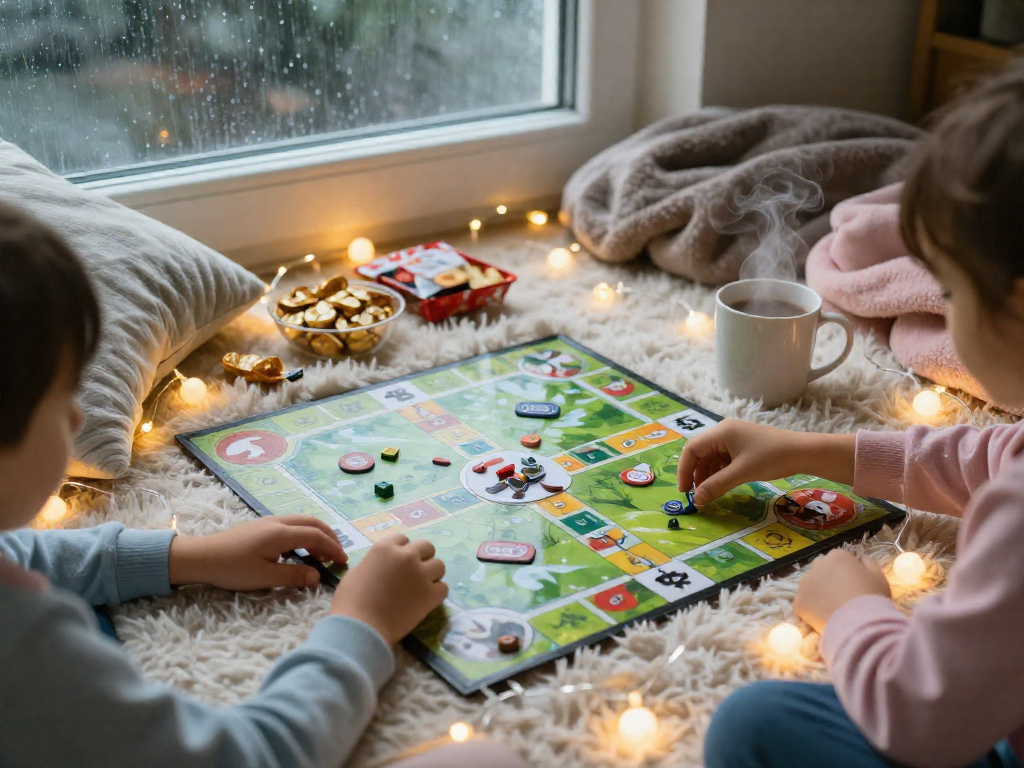
Open on the rainy-Saturday scenario every parent knows—restless kids, gray skies, nowhere to go—and reframe it as the perfect excuse for a cozy game night. Promise a simple, ready-to-run plan: a warm setup, a kid-friendly game lineup that escalates in energy then winds down, and small comfort touches that make it feel special without extra work.
Set the Cozy Scene First (Before Any Game Comes Out)
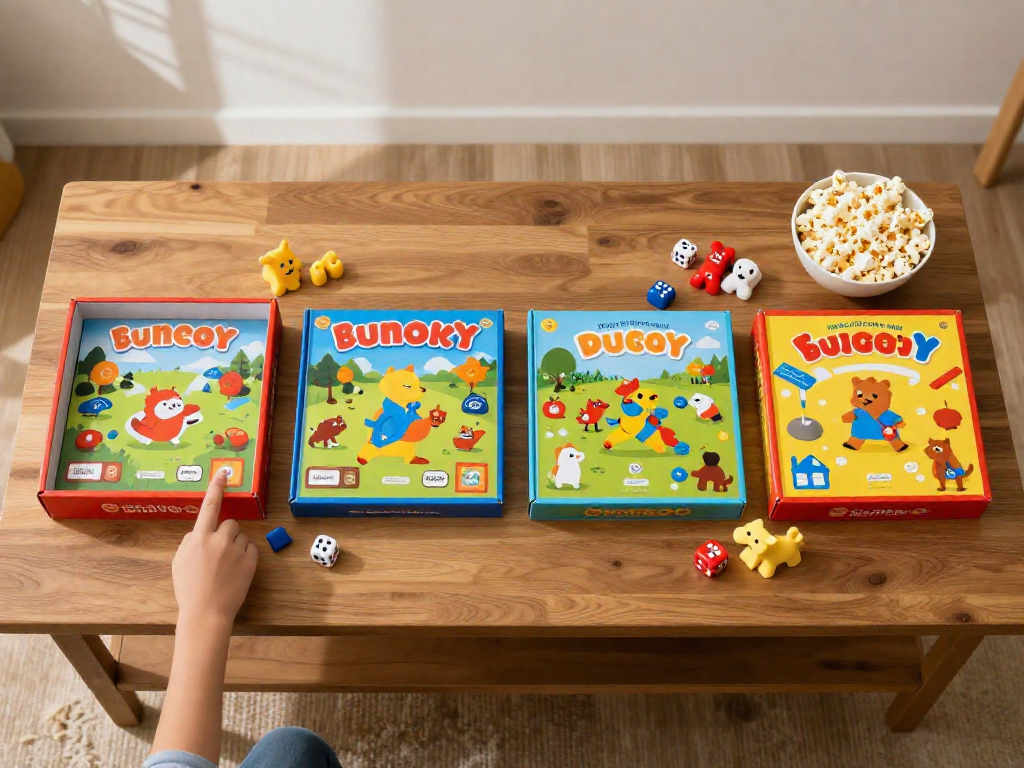
Here's the secret to a memorable rainy-Saturday game night: the vibe matters as much as the games. Spend ten minutes setting the scene and the whole evening feels like a small event instead of just "playing a game." Here's how to do it without any special equipment.
- Dim the lights and add warmth. Switch off the overhead glare and turn on lamps, string lights, or a few candles kept well out of kids' reach. Soft light instantly signals "this is special time."
- Build a comfy spot to play. A blanket-and-pillow nest on the floor works great for little ones, or clear off the kitchen table if you want a flat, well-lit surface for cards and pieces. Pick whichever keeps everyone close together.
- Add gentle background sound. A quiet rainy-day playlist or soft instrumental music at low volume fills the silence without drowning out conversation. Keep it low enough that nobody has to raise their voice.
- Collect the phones. Drop everyone's phones in a basket by the door. It sounds small, but it's the single biggest thing that keeps the family actually present and laughing together.
- Plan for fast cleanup. Keep a tray or shallow bin nearby to corral game pieces, cards, and dice. When a game wraps up, everything sweeps into one spot—no lost pieces under the couch, and no reason to dread the next round.
With the mood set, you're ready to pick the first game.
The Game Lineup: A Flow That Builds Up, Then Winds Down
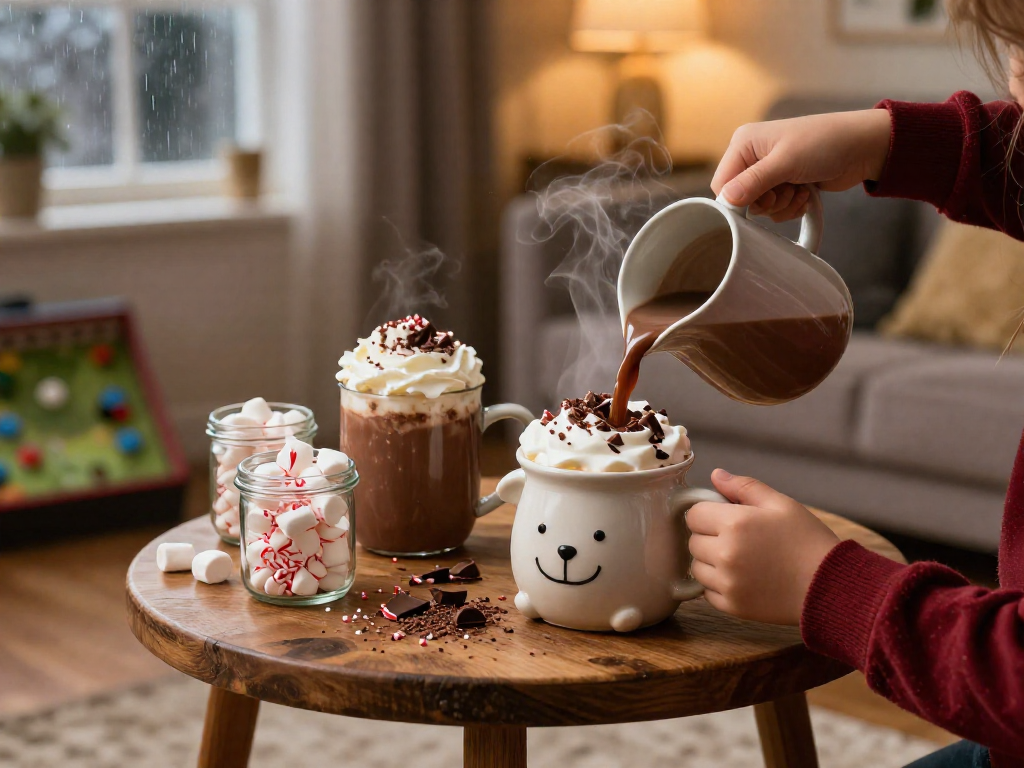
A great family game night isn't about pulling random boxes off the shelf—it's about sequence. Think of it like a meal: a light starter, a satisfying main, and something soothing to finish. Ordering your games this way keeps energy from spiking too early (and crashing into a meltdown before bedtime). Start easy, peak in the middle, end calm.
Aim for 15 to 30 minutes per game. That's long enough to feel like a real round and short enough to match a young child's attention span.
1. Warm-Up: Ease Everyone In
- Players: 2–6
- Ages: 4+
- Play time: 10–15 minutes
- Difficulty: Very easy
- Who it's for: The whole table, including the youngest player, with almost no rules to explain.
The goal here isn't competition—it's getting everyone seated, laughing, and warmed up.
2. Main Event: The Lively Centerpiece
Now bring out one slightly longer game with a bit more action—the kind that pulls everyone in and gets the table loud. Look for light strategy or a playful "take that" mechanic, but nothing that requires a lecture to set up.
- Players: 2–5
- Ages: 6+
- Play time: 20–30 minutes
- Difficulty: Easy to moderate
- Who it's for: Families ready for the energetic peak of the night.
One caution: skip games with heavy elimination, where a player is knocked out early and has to sit and watch. That's a fast track to boredom and tears.
3. Wind-Down: Quiet Before Lights Out
Close with something gentle—a quiet cooperative game or a simple storytelling round where each person adds a line to a shared tale. Soft, slow, and screen-free.
- Players: 2+
- Ages: 4+
- Play time: 10–15 minutes
- Difficulty: Very easy
- Who it's for: Settling racing minds before bed.
Keep a Backup Within Reach
Not every game lands. If the main event falls flat—too long, too fiddly, or just not clicking—don't force it. Have one familiar favorite stashed nearby so you can pivot without losing the cozy momentum.
Game Picks by Age (So No One Feels Left Out)
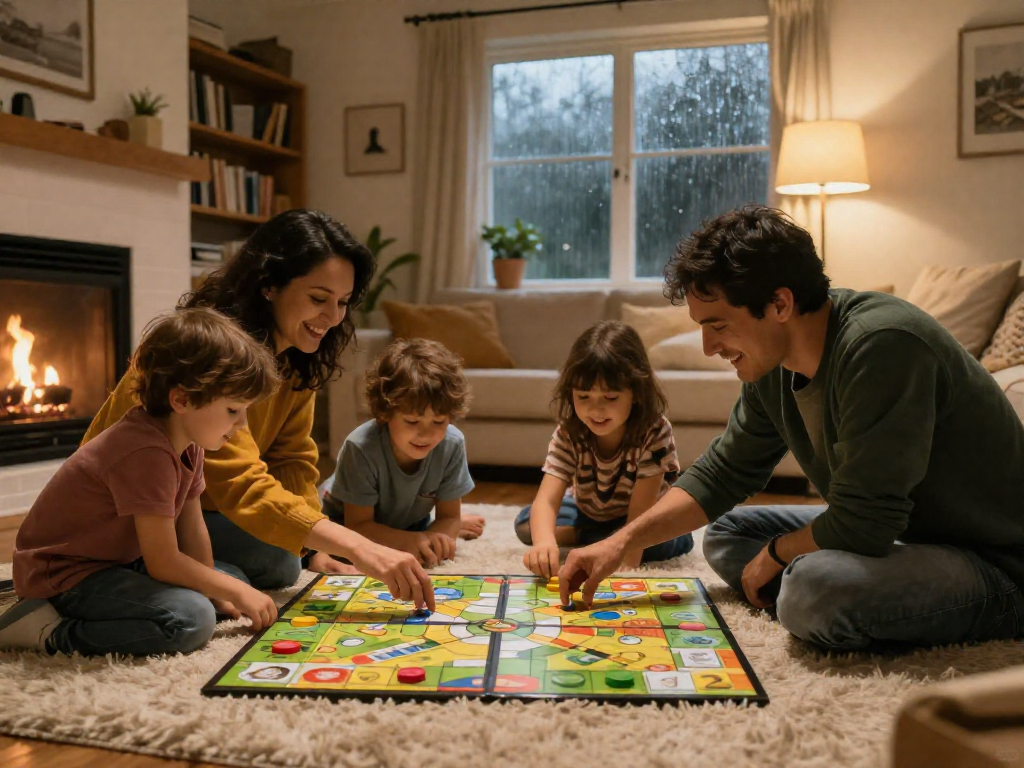
The trickiest part of family game night isn't the games—it's the age gap. A 4-year-old and a 10-year-old want very different things, and forcing everyone into one game is how meltdowns start. Here's how to match picks to the table.
Toddlers and preschoolers (3–5). Reach for cooperative games (everyone plays as a team against the game, so nobody loses) built around matching colors and shapes. Look for titles with 2–4 players, ages 3+, 10–15 minute play time, and very easy difficulty. These keep little ones engaged without reading or counting.
Early elementary (6–8). This age loves light memory games, dexterity games (think stacking or flicking—games that test a steady hand, not strategy), and simple drawing games. Aim for 2–6 players, ages 6+, 15–20 minutes, and easy difficulty. Pros: fast and giggly. Cons: a few have a competitive edge, so watch for sore-loser moments.
Older kids and adults (9+). Now you can add family party games and "strategy-lite" games—light planning, no rulebook marathons. Target 3–8 players, ages 9+, 20–30 minutes, and easy-to-medium difficulty.
Mixed ages (the real world). Two fixes work almost every time: pair a younger child with a grown-up as one team so the field feels even, and lean cooperative over competitive whenever you can. Shared wins keep tired kids from spiraling.
Who this is for: any household juggling more than one age bracket who wants everyone at the same table, smiling. Family-friendliness is high across all of the above—just preview drawing-game prompts so they stay kid-appropriate.
Cozy Snacks and Drinks That Won't Wreck the Cards
Snacks make game night feel like an event, but greasy fingers and spills are the enemy of cards and game pieces. The fix: pick low-mess, one-hand foods and keep them off the playing surface.
Snacks that stay tidy
- Popcorn served in individual cups (not a shared bowl that tips over)
- Pretzels, crackers, and grapes—dry, grab-and-go, and easy for small hands
- Skip anything buttery, powdery (think cheese dust), or drippy near the table
Warm drinks for a rainy mood
- Set up a simple hot cocoa bar: cocoa plus a few toppings like marshmallows or a candy cane stirrer
- Warm apple cider is a cozy, no-fuss alternative for the whole family
Protect the game
Put all food and drinks on a separate "snack station"—a side table, counter, or tray a few steps away. Players take a break to refuel, then return with clean hands. This one habit saves cards, boards, and tempers.
Make it feel special
Add one small themed treat tied to your lineup (a "dragon" gummy, a colored frosting cookie). Little touches turn a regular Saturday into a memory.
Keep It Fun: Simple House Rules and Meltdown Savers
The fastest way to sink a cozy game night isn't a "bad" game—it's frustration. A few simple house rules (small agreements you set before you start) keep things light when feelings run high.
- Explain rules in plain language. Skip advanced variants (optional, harder versions of a game) with young kids. Teach the basic version first; you can always add complexity later.
- Set a "good sport" rule before the first roll. Agree out loud that everyone cheers good moves and nobody gloats. Naming it upfront makes it easier to gently point back to it mid-game.
- Give little ones a job. Let them shuffle, deal, or move pieces—even on someone else's turn. Staying involved keeps wiggly kids from wandering off.
- End on a high note. Stop while it's still fun, not when everyone's wiped out. One great round beats three exhausting ones, and it leaves kids asking to play again next time.
- Have a quiet exit plan. If a child is done before the game is, that's okay. Keep a picture book or coloring page nearby so they can drift into something calm without derailing the table.
Cozy beats competitive every time. Protect the mood, and the memories take care of themselves.
Your Rainy Saturday Game Night, Start to Finish
Here's the whole plan in one easy template you can pin to the fridge.
A simple timeline:
- 4:00 – Tidy a table and dim the lights (see "Set the Cozy Scene First").
- 4:10 – Open with a quick warm-up game while snacks come out.
- 4:45 – Move into your main "builds up" pick from the lineup.
- 5:30 – Refill drinks, stretch, swap players if anyone's restless.
- 6:15 – Wind down with a short, calm game before dinner.
- 7:30 – Lights-out, cards back in the box together.
Grab-in-10-minutes checklist:
- [ ] 2–3 games (one easy, one main, one calm)
- [ ] Snacks in bowls, drinks with lids
- [ ] Blanket, pillows, and a dimmable lamp
- [ ] A timer for restless moments
- [ ] Box lids for sorting pieces
Do this a few rainy Saturdays in a row and it becomes your tradition. Best of all, the lineup is yours to remix—swap in your family's favorite games and make the night feel like home.
FAQ
What are the best cooperative board games for a family game night with young kids?
Cooperative games (everyone plays as a team against the game itself, so you win or lose together) are perfect for young kids because no one gets singled out as the loser. Three favorites for mixed-age tables: Outfoxed! (2–4 players, ages 5+, about 20 minutes, very easy) is a kid-friendly whodunit where you gather clues to catch a fox. Hoot Owl Hoot! (2–4 players, ages 4+, about 15 minutes, very easy) has you fly owls home before sunrise and works even for pre-readers. Forbidden Island (2–4 players, ages 8+, about 30 minutes, easy-to-medium) is a small step up for families with older kids, with a sinking-island theme and light teamwork. Who they're for: families who want low-stress play and fewer tears. None contain scary or inappropriate content, though Forbidden Island's reading and planning suit ages 8 and up better than preschoolers.
How long should a family game night last with toddlers and preschoolers?
Keep it short—about 30 to 45 minutes of actual play for toddlers and preschoolers, broken into one or two quick games rather than one long one. At this age, attention spans run roughly the child's age in minutes plus a little, so a 4-year-old may stay focused for 15–20 minutes per game. Pick titles with a play time of 10–20 minutes (the box usually lists this), and stop while everyone is still having fun rather than pushing to the bitter end. A good rhythm is one warm-up game, a snack break, then one more game. If your child is melting down or wandering off, that's your cue to wrap up—ending on a high note makes them excited for next time.
What snacks are best for game night without ruining the cards or board?
Stick to dry, low-grease, low-dye finger foods that won't leave residue on cards or components. Good picks: popcorn, pretzels, plain crackers, cheese cubes, grapes, apple slices, and dry cereal. Avoid anything orange or red and powdery (think cheese puffs or chips with seasoning dust), chocolate that melts on fingers, and sticky or saucy items—these are the usual culprits behind stained cards and gummy boards. A few simple habits help a lot: serve snacks in small bowls set away from the play area, keep a damp towel and a dry one nearby, and call a quick hand-wipe break between rounds. For card games specifically, consider inexpensive plastic-coated or washable cards so spills aren't a disaster.
How do I keep a competitive kid from melting down during games?
Set expectations before you start and choose the right games. First, lean on cooperative games (where everyone wins or loses together as a team) so there's no single loser to fixate on. When you do play competitive games, talk briefly beforehand about being a 'good sport'—congratulating the winner and trying again next time. During play, narrate effort over outcome ('great move!') rather than just who's ahead. Keep games short so a loss never feels like a long ordeal, and consider playing in teams so a child shares the result with an adult. If frustration builds, take a snack or stretch break before it boils over. Finally, model losing gracefully yourself—kids copy how the grown-ups react far more than any lecture.
What can we do for game night if we only have a deck of cards?
A standard 52-card deck covers a whole evening. For younger kids, try Go Fish (2–6 players, ages 4+, about 15 minutes, very easy) for collecting matching sets, or Snap and War (2 players, ages 4+, 10–15 minutes, very easy) for fast, no-reading fun. For ages 7 and up, Crazy Eights (2–5 players, about 20 minutes, easy) and Old Maid (3–6 players, about 15 minutes, easy) add light strategy. Mixed-age families can enjoy Rummy (2–4 players, ages 8+, about 30 minutes, medium) where you form runs and sets. Who this is for: families who want zero-setup, no-cost play that travels anywhere. All are family-friendly with no objectionable content; just match the game to your youngest player's reading and counting skills.
See also
- Best cooperative board games for families
- Easy board games to teach in 5 minutes
- Family game night snack ideas
- Best board games for preschoolers and toddlers
- How to explain game rules to kids without the jargon
Related articles
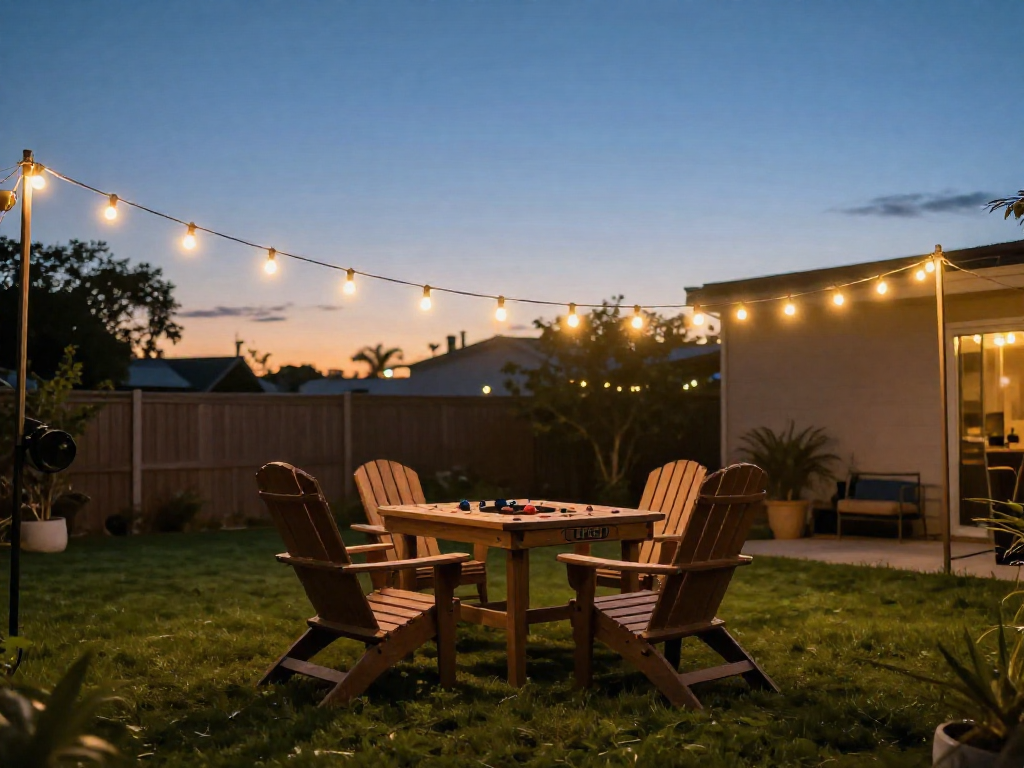
Outdoor and Backyard Game Night Ideas for Warm Evenings
Plan the perfect outdoor game night with family-friendly backyard games, lighting and snack ideas, and tips for playing tabletop games outside on warm evenings.
Jun 27, 2026 · 7 min read
Game Night on a Budget: Big Fun Without Spending Much
Host a fun family game night without overspending. Get free and cheap game ideas, DIY snacks, and simple setups everyone will love.
Jun 27, 2026 · 9 min read

How to Handle a Sore Loser at Family Game Night
Tears, tantrums, and table-flipping? Here's how to defuse poor sportsmanship and teach kids (and adults) to lose gracefully at family game night.
Jun 27, 2026 · 9 min read