How to Play Sushi Go!: A 5-Minute Guide to the Card-Drafting Game
How do you play Sushi Go and what is card drafting?
On this page
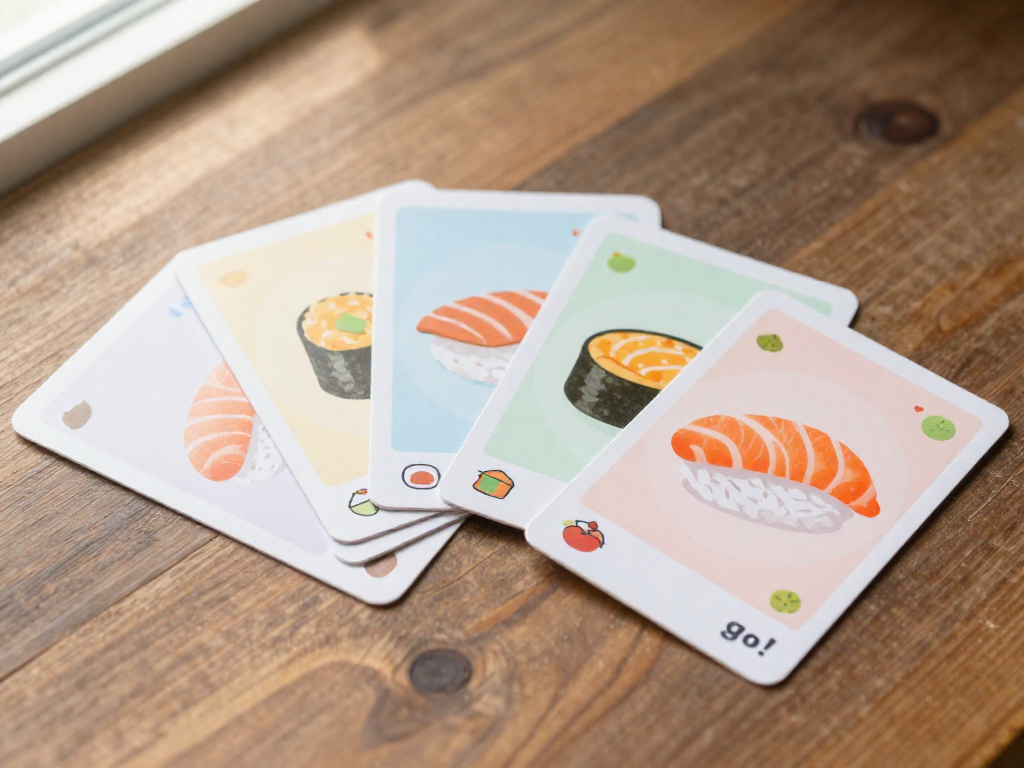
What Is Sushi Go! (and Why It's Great for Beginners)
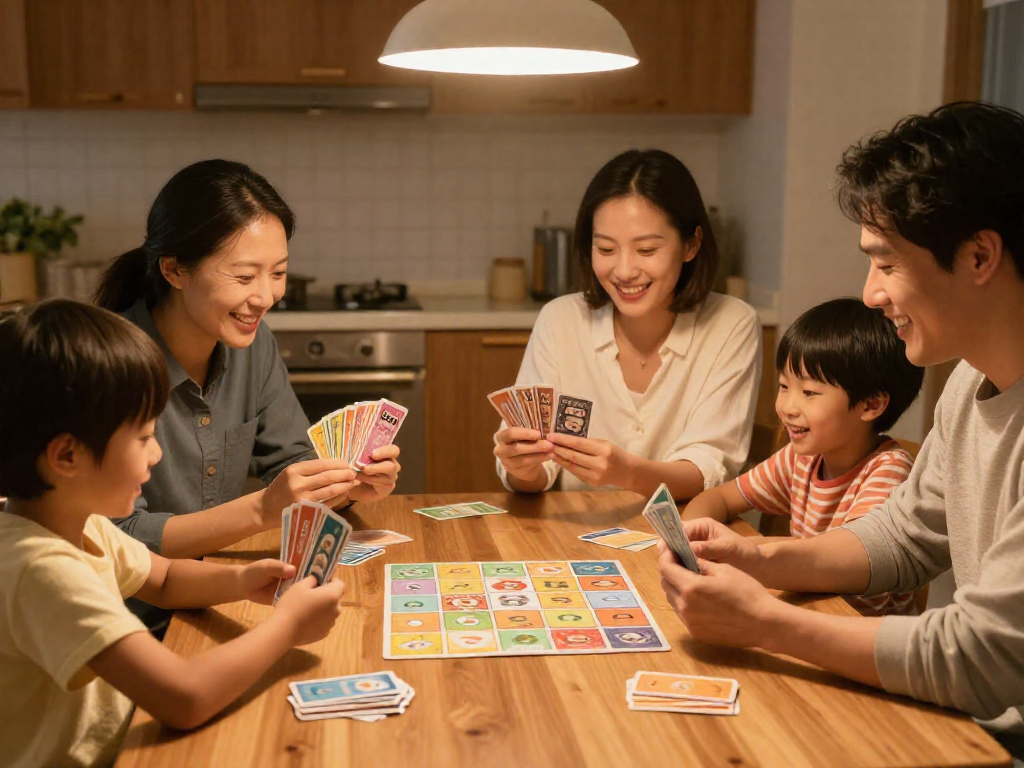
Sushi Go! is a fast, charming card game where you "draft" the tastiest sushi dishes you can to score the most points. Drafting just means picking one card from your hand, then passing the rest to the next player—so everyone builds their meal at the same time, with no downtime.
Here's the snapshot:
- Players: 2–5
- Ages: 8+ (younger kids can play on a team with an adult)
- Play time: ~15 minutes
- Difficulty: Very easy
It's a perfect gateway game—a great first step into the hobby—because the rules fit on a napkin, the cards use cute pictures instead of dense text, and a round is over before anyone loses interest. It's wholesome and family-friendly with no objectionable content.
One more thing: Sushi Go! is the compact original, while Sushi Go Party! is a bigger box for up to 8 players with swappable dishes—start with the original.
What You Get in the Box & How to Set Up
Open the box and you'll find just two things: a deck of colorful sushi cards and a small scorepad. That's it—no boards, no fiddly tokens, no dice. This simplicity is a big reason setup takes about a minute.
To begin, shuffle the deck and deal each player a hand of cards. The number you deal depends on how many people are playing:
- 2 players: 10 cards each
- 3 players: 9 cards each
- 4 players: 8 cards each
- 5 players: 7 cards each
Everyone holds their cards face down and doesn't peek until the round starts. Set the rest of the deck off to the side as a draw pile—you'll use it between rounds.
Leave the middle of the table clear. As the game goes on, each player builds a small row of face-up cards in front of them (the sushi they've "picked up"). Keep the scorepad and a pen handy for tallying points at the end of each round, and you're ready to play.
What Is Card Drafting? (Explained Simply)
Card drafting is just a fancy name for a simple idea: everyone holds a hand of cards, picks one card to keep, then passes the rest to the next player. You do this over and over until the cards run out. That's the whole engine that makes Sushi Go! tick.
Here's the loop in plain terms:
- You're dealt a hand of cards.
- You look it over and choose one card to keep, placing it face-up in front of you.
- You pass the remaining cards to the player on your left.
- You receive a new (smaller) hand from the player on your right—and repeat.
The best part: everyone picks at the same time. Nobody sits around waiting for "their turn." The moment you've all chosen, you pass and go again, so the table stays busy and the game moves fast.
Think of it like passing plates around a dinner table. A platter comes your way, you grab the one bite you want most, then slide the rest to the person beside you. Next platter arrives, you pick again. Over the meal, you build the combination that suits your taste.
That's why drafting feels so friendly for new players and families: each decision is small and quick, there's no long-term strategy to memorize, and you're always doing something—just picking and passing.
How to Play, Turn by Turn
Once everyone has a hand of cards, play moves in quick, simultaneous turns—no waiting for the person next to you to finish their thinking.
-
Pick a card—everyone at once. Look at your hand, choose one card you want, and hold it face down. When the table is ready, everyone flips their chosen card face up in front of them at the same time. No turn order, no waiting.
-
Pass the rest to your left. Take all your remaining cards and hand them to the player on your left. At the same time, you'll receive a new (slightly smaller) hand from the player on your right.
-
Repeat until the cards run out. Pick, reveal, pass—over and over. Each pass the hands get one card thinner, until there are no cards left to choose from. This is called drafting: you keep the best card for yourself and pass the rest along.
-
That's one round. A full game is three rounds. After each round you'll add up points for the cards in front of you (we'll cover scoring next).
One thing to set aside: dessert cards (the pudding). Don't score these between rounds—keep them in front of you, because they're only counted once at the very end of the game.
How Scoring Works
Scoring happens at the end of each round, and it's easier than it looks once you know what each card does.
- Maki rolls (the cards with little rolls on them): Count the arrows on your maki cards. Whoever has the most arrows scores 6 points; second-most scores 3. Ties split the points evenly, rounded down.
- Tempura: Worth 5 points for every pair. A single leftover tempura is worth nothing, so aim for even numbers.
- Sashimi: A set of three scores 10 points. One or two by themselves score zero—only complete sets count.
- Dumplings: The more you collect, the better, and the value ramps up fast: 1, 3, 6, 10, then 15 points for one through five.
- Nigiri: Egg = 1, salmon = 2, squid = 3 points. Play a wasabi before a nigiri to triple that nigiri's value.
- Chopsticks: These don't score points. Instead, on a later turn you can swap chopsticks back into the deck to take two cards at once.
- Pudding: Set aside and scored only at the very end of the game. Most pudding earns 6 points; fewest loses 6.
Tally everyone's points after each round, then add pudding at the finish.
Beginner Tips & Common Mistakes
After a few hands-on games, the same beginner slip-ups show up again and again. Here's how to avoid them:
- Don't forget pudding. Pudding cards score at the very end (the player with the most gets +6, the fewest loses 6). They feel boring in the moment, but in close games they quietly decide the winner. Grab a couple along the way.
- Hold your chopsticks. Chopsticks let you take two cards in a single later turn instead of one. Don't burn them early—wait for a turn where two great cards are on the table.
- Wasabi needs nigiri. Wasabi triples the next nigiri (the salmon, squid, or egg cards) you play. Playing wasabi with no nigiri left to pair it with just wastes a pick.
- Watch the table. Before committing to a set like dumplings or sashimi, glance at what opponents are stacking. If someone's hoarding the cards you need, switch plans early rather than chasing a set you can't finish.
FAQ
How many players do you need for Sushi Go!?
Sushi Go! plays with 2 to 5 players and works best with 3 to 4. With two players it's a fast, light duel; with four or five the table fills up and you have to think harder about which cards your neighbors might grab. It's recommended for ages 8 and up, takes about 15 minutes, and the difficulty is easy—a great entry point for families and new hobbyists.
How long does a game of Sushi Go! take?
A full game runs about 15 minutes. You play three short rounds, and because everyone picks a card at the same time there's very little waiting between turns. That quick, snappy pace makes it ideal for game nights, a warm-up before a longer game, or a few back-to-back rounds with kids who like a rematch.
What is the difference between Sushi Go! and Sushi Go Party!?
Both use the same core idea—you pass hands of cards and 'draft' (choose and keep) one each turn to score points—but the Party! edition is the bigger, more flexible version. Sushi Go! is a compact tin with a fixed set of cards, supports 2–5 players, and is the simplest to learn. Sushi Go Party! supports up to 8 players, adds a board for tracking scores, and lets you swap different cards in and out so each game feels a little different. For a first purchase aimed at small families, the original Sushi Go! (ages 8+, ~15 min, easy) is the simplest pick; choose Party! if you regularly host larger groups and want more variety.
Is Sushi Go! good for kids?
Yes. Sushi Go! is family-friendly, with cheerful art and simple rules that kids around age 7–8 and up can follow, though younger children may need help adding up their points. There's no scary or inappropriate content. The main wrinkle for very young players is the simultaneous card-picking, which asks them to plan a little ahead—an adult or older sibling can easily coach them through the first round or two.
What does card drafting mean in Sushi Go!?
Card drafting just means choosing one card from a hand and then passing the rest to the next player. In Sushi Go!, everyone holds a hand of cards, secretly picks one to keep, and passes the remaining cards on. You repeat this until all the cards are gone, so the hand you started with shrinks as it travels around the table. The skill is in reading what's left: grab the card you want before a neighbor takes it, while trying to build sets that score well.
How do you win Sushi Go!?
You win by having the most points after three rounds. Different dishes score in different ways—for example, sets of matching cards like tempura or dumplings earn more the more you collect, while the player with the most maki rolls each round gets a bonus. Pudding cards are scored only at the very end, rewarding whoever saved up the most (and penalizing whoever has the fewest). Add up all three rounds, and the highest total takes the game.
See also
- Best Gateway Board Games for Families
- What Is Card Drafting? Board Game Mechanics Explained
- How to Play Sushi Go Party!
- Easy Card Games for Family Game Night
- Board Game Night Setup Ideas
Related articles
How Does Scoring Work in Board Games? Points Explained Simply
Confused about who wins and why? Learn how board game scoring works—victory points, race conditions, and tracking—in plain language for family game night.
Jun 27, 2026 · 9 min read

What Does 'Eurogame' Mean? Hobby Jargon Demystified
What is a eurogame? A plain-language guide to the eurogame style, how it differs from other board game families, and easy titles to try at home.
Jun 27, 2026 · 6 min read
Deck-Building Explained: How These Games Actually Work
New to deck-building games? Learn what they are, how the core mechanic works, and which beginner-friendly titles to try first—explained in plain language.
Jun 27, 2026 · 10 min read