How to Play Codenames: Rules and Tips for Giving Clean Clues
How do you play Codenames and give good one-word clues?
On this page
What Is Codenames? (The 30-Second Overview)
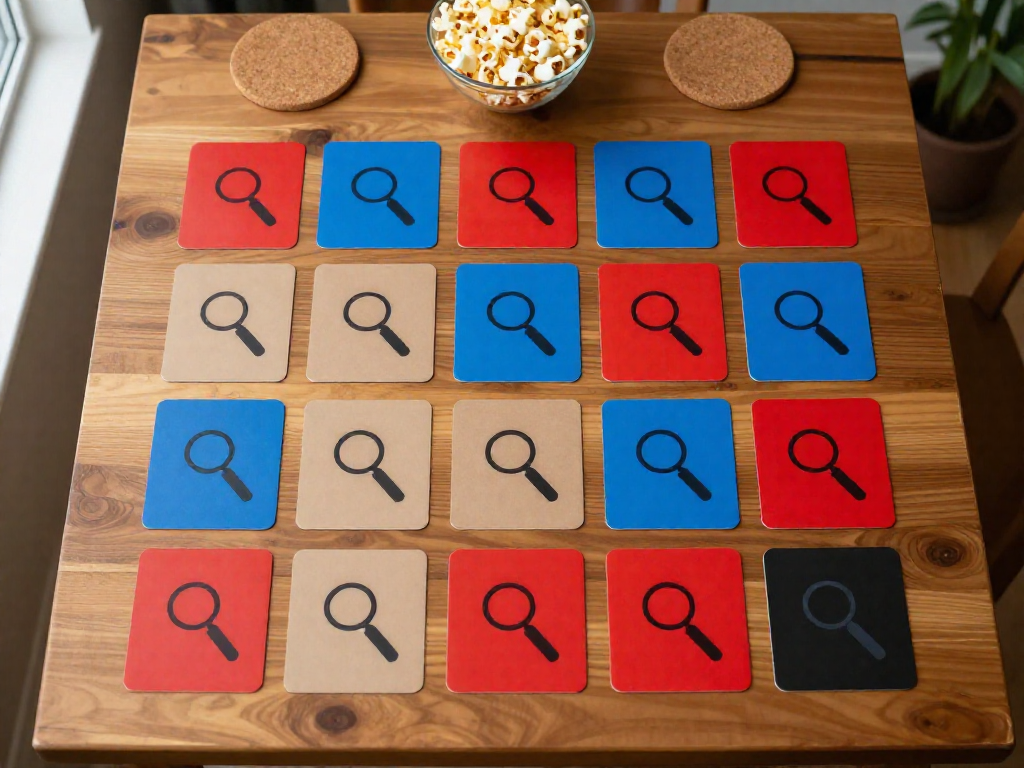
Codenames is a word-guessing party game where two teams—red and blue—race to find their own secret agents. On the table sits a 5x5 grid of word cards (think "apple," "bank," "ship"). Each team has one spymaster, the player who knows which words belong to which team and gives clues. Everyone else are the field operatives, who try to guess their team's words.
Here's the twist: a spymaster can only give a one-word clue plus a number, like "Fruit: 2." That number tells teammates how many words on the table connect to that clue. Guess your own agents and you stay in the lead; touch the wrong card and you could help the other team—or hit the dreaded assassin word and lose instantly.
The quick stats:
- Players: 2–8+ (best with 4 or more, split into two teams)
- Age: 10 and up; younger kids can pair with an adult or play Codenames: Pictures
- Play time: about 15 minutes per round
- Difficulty: Easy to learn, fun to master
In the box: word cards, two team key cards, agent/bystander/assassin cards, and a card stand.
It's a family favorite because the rules take two minutes to explain, it scales from a cozy foursome to a big group, and there's almost no reading—just clever connections.
What You Get in the Box (Components)
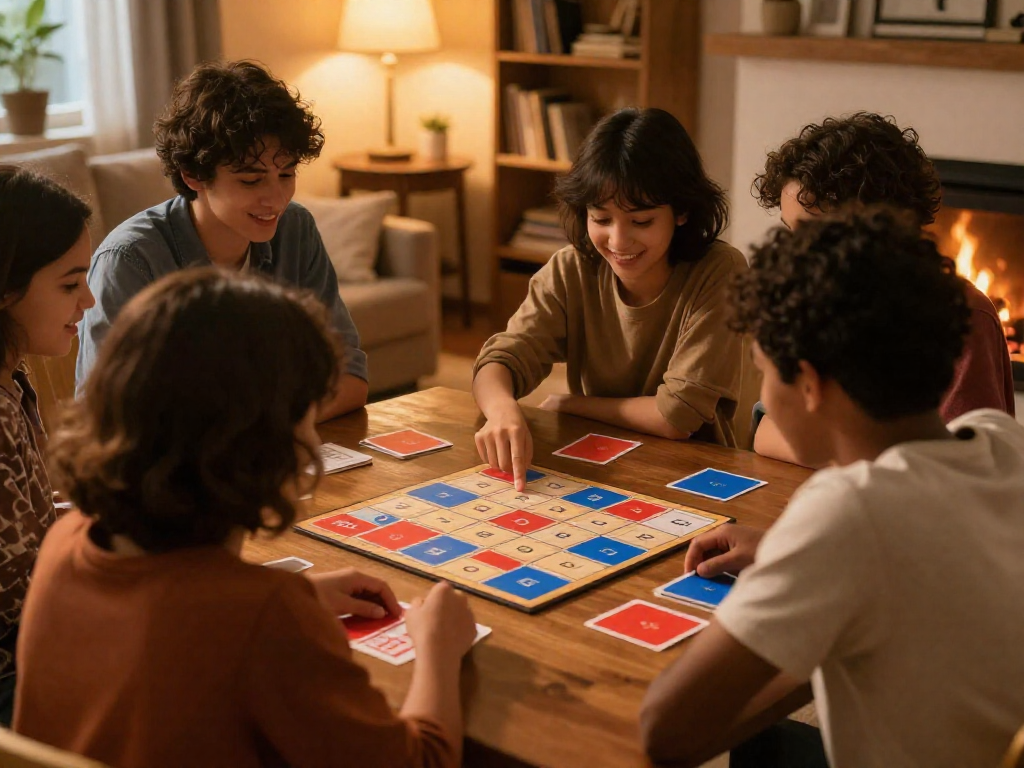
Open the box and you'll find a handful of simple pieces. Here's what each one does so setup clicks into place:
- Word cards. A big stack of double-sided cards printed with single words. You'll lay 25 of them out in a 5x5 grid—this is the playing field everyone looks at.
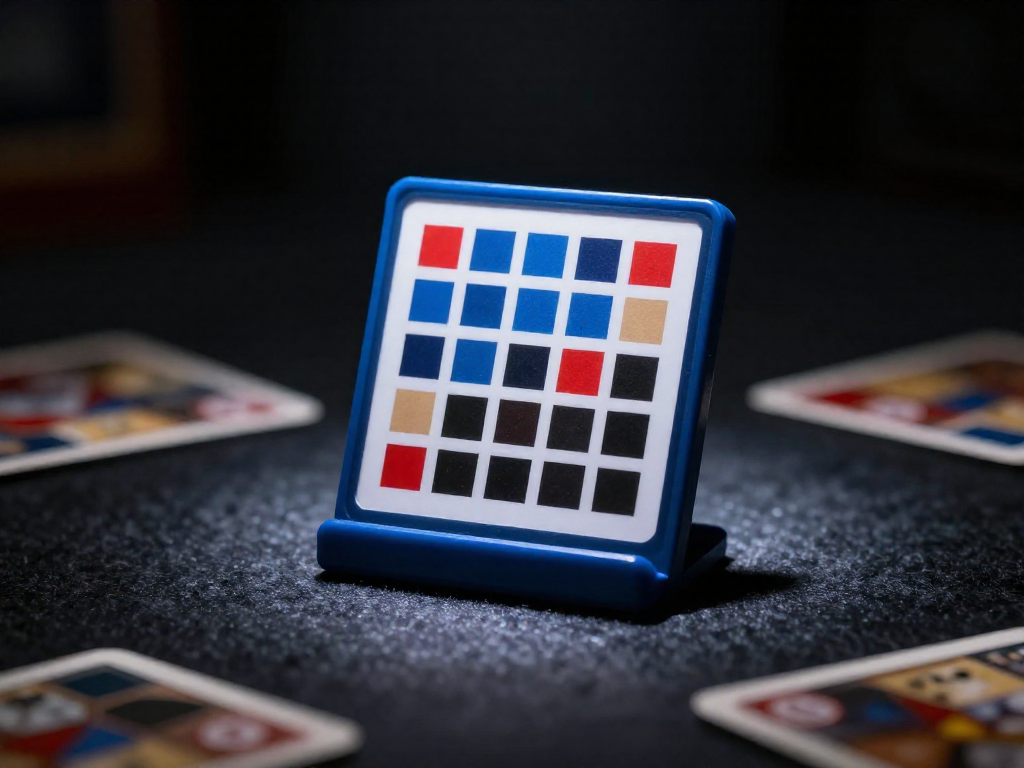
- Key card. A small card that shows a color-coded map of the grid. Only the two spymasters (the players giving clues) get to see it. It tells them which words belong to their team.
- Agent, bystander, and assassin cards. These are the cards your team places on words as you guess. Red and blue agents are the words you're trying to find. A tan bystander is a neutral, harmless miss. The black assassin is the one word to avoid at all costs—guess it and your team loses instantly.
- Card stand and sand timer (optional). The stand props up the key card so spymasters can read it without flashing it to the room. The timer is there if you want to keep guessing snappy, but feel free to skip it on a relaxed family night.
How to Set Up Codenames Step by Step
Setup takes about two minutes once you've done it once. Here's the order we use at our table.
-
Build the grid. Shuffle the word cards and lay 25 of them face-up in a 5x5 square in the middle of the table. These words are the "agents" your teams will try to guess.
-
Make two teams. Split everyone into a red team and a blue team. They don't need to be even—if you have an odd number, one team just gets an extra guesser.
-
Pick a spymaster for each team. The spymaster is the one player per team who gives the one-word clues. Everyone else on the team does the guessing. Seat the two spymasters side by side so the rest of the room can't peek at what they see.
-
Draw and view one key card. A spymaster draws a single key card and the two spymasters look at it together. This card is the "answer key"—a colored map showing which words belong to red, which belong to blue, which are neutral, and the one black "assassin" word to avoid.
-
Find the starting team. The key card has a colored border. The color that matches the border goes first and has one extra word to find (usually 9 instead of 8).
-
Hide the key. Slot the key card into the stand so only the two spymasters can see it. Now you're ready to play.
Family note: Setup is fully kid-friendly. Younger readers can help lay out the grid even before they're old enough to guess.
How to Play: Turn-by-Turn Rules
Each round, two teams race to find their own words on the 5x5 grid of cards. Here's exactly how a turn flows.
1. The Spymaster gives a clue. Each team has one Spymaster—the player who can see the secret color key showing which words belong to which team. On their turn, the Spymaster says a single word plus a number, like "Ocean: 2." The word hints at the meaning of their team's cards; the number tells the team how many cards relate to that clue. Everything else stays silent—no winks, no hints, no extra words.
2. The team gets guesses based on the number. With "Ocean: 2," the team is trying to find 2 cards. They get to guess up to that number plus one bonus guess (so 3 total here). The bonus exists in case they nailed a clue from an earlier turn.
3. The team touches a card; the Spymaster reveals its color. The guessing team talks it over, then one player taps a word out loud. The Spymaster covers that card with a colored tile so everyone sees what it was:
- Your team's color – Correct! You may keep guessing (up to your limit).
- A bystander (neutral tan card) – Not yours, but harmless. Your turn ends immediately.
- The other team's color – Oops—you just helped them. Your turn ends, and that card now counts for them.
- The assassin (the single black card) – Game over. Touch this and your team loses instantly, no matter the score.
4. Ending a turn early. Your team can stop guessing anytime—just say "pass." This is smart when you've found the words you're sure about and don't want to risk hitting a bystander, the opponent's word, or the assassin.
Play then passes to the other team. The first team to find all its words wins.
How to Win (and How to Lose)
Winning is simple: the first team to correctly identify all of their own agents (the colored cards their spymaster is hinting at) wins the game. Touch every one of your agent cards before the other team finishes theirs, and you take the round.
But there's a fast way to lose. Hidden among the cards is a single assassin card. If anyone on your team points to it while guessing, your team loses instantly—no matter how far ahead you were. That one card is why a careless guess can end everything.
This is what keeps Codenames tense. Teams alternate turns, so you're always racing the clock, and the assassin punishes wild guessing. The pressure to push for "just one more" guess is exactly where games are won and lost.
How to Give Clean One-Word Clues (Spymaster Tips)
As the Spymaster (the player who gives clues so teammates can guess their team's words), your whole job is connecting words your teammates will actually recognize. Here's how to do it well without overthinking.
Start small, then stretch. A clean clue links two of your words through a clear, everyday connection. Say "OCEAN" and "PIRATE" are both yours—SEA: 2 is a solid start. Resist the urge to chain four words into one clever clue early on; a confident pair beats a risky stretch that loses a turn.
Clue for one when unsure. A great beginner habit: if no safe pair jumps out, just point at a single word with a tight clue. MILK: 1 for cow is boring and effective. You'll rarely regret a clue that's too safe.
Think like your teammates, not like you. The cleverest connection in your head is worthless if no one else sees it. Picture how they hear the word. If your link relies on a movie only you've seen, pick something more common.
Scan the whole board for traps. Before you commit, check every clue against three dangers:
- The assassin (the single word that loses the game instantly if guessed)—if your clue could nudge anyone toward it, throw the clue out.
- The opponent's words—handing the other team a free guess swings the game.
- Neutral words—less costly, but they still end your turn.
Clear risky words early. If you have a word that's easy to confuse with the assassin or an enemy word, give a strong clue for it sooner rather than later, while you can still steer guesses precisely.
Family note: Codenames works great for ages 10+ with mixed teams—just lean on simple, concrete clues so younger players can keep up.
Clue-Giving Rules: What's Allowed and What's Not
As the spymaster (the player who gives clues), you say one clue word plus one number—the number tells your team how many cards on the table relate to that word. That's the core rule, and getting it right prevents most game-night arguments.
Here's what's allowed and what isn't under standard rules:
- One word and one number, period. No phrases or hyphenated combos to sneak in extra meaning. (Some groups loosen this as a house rule—agree before you start.)
- No words visible on the board. If "APPLE" is a card in play, you can't use "apple" or any form of it as your clue.
- No spelling, rhyming, or "sounds like" clues. You can't say "rhymes with cat" or "starts with B." Clues must connect by meaning.
- Proper nouns are a gray area. Many groups allow well-known names (like "Ohio" or "Beyoncé") but ban made-up or super-obscure ones. Decide as a table.
When to call a clue invalid: if it breaks a rule above, the opposing spymaster can flag it. The usual penalty is ending your team's turn immediately—no guesses that round.
When in doubt, settle the house rules out loud before the first clue. A 30-second chat beats a mid-game standoff.
Common Mistakes Beginners Make
Your first game of Codenames usually goes sideways for a few predictable reasons. Here's what trips up new players—and how to fix each one.
- Clues that are too clever. As the spymaster (the clue-giver), it's tempting to link four words with one brilliant clue. But if your team can't follow your logic, they'll guess wrong. Start with clues that connect just one or two words clearly.
- Forgetting the bonus guess. Your team always gets one extra guess beyond the number you said. Say "Ocean: 2," and they may make a third guess if they're confident. Use it for words left over from earlier turns.
- Guessers rushing. Talk it out before touching a card. A 20-second discussion catches mistakes that a quick grab won't.
- Tipping off your team. Spymasters give away answers by smiling, nodding, or wincing. Keep a steady face—your reactions are clues too.
Fix these four and your second game will feel far smoother.
Fun Variations and Family-Friendly Tweaks
Once you know the basics, a few tweaks keep Codenames fresh for different groups.
- Just two players? Try Codenames Duet, a cooperative version where you both give clues and race a turn limit together. 2 players, ages 11+, ~15–30 min, easy-to-medium. Great for date nights and quiet evenings.
- Playing with younger kids? Codenames Pictures swaps words for quirky illustrations, so early readers can join. 2–8+ players, ages 8+, ~15 min, easy. Family-friendly with no objectionable content.
- Want it faster or simpler? Use a house rule: allow short two-word clues, drop the turn timer, or remove the assassin card so a single wrong guess won't end the round. Good for first-timers and mixed ages.
- Small group (3–4 players)? Run a single-spymaster variant: one person gives clues for both teams while everyone else guesses, comparing scores at the end.
Who this is for: Families and casual groups wanting more replay value without learning a new game.
FAQ
How many people do you need to play Codenames?
Codenames works best with 4 or more players, split into two teams. You need at least 4 so each team has one "spymaster" (the person who gives one-word clues) and one or more "guessers" (the players trying to find their team's words). The game scales comfortably up to 8 or more, making it a great pick for game night or family gatherings. Ideal player count: 4–8+. Age range: 10 and up. Play time: about 15 minutes. Difficulty: easy to learn.
Can you play Codenames with 2 players?
Yes, but not with the standard competitive rules, which need two teams. For 2 players, use the cooperative variant: one person acts as spymaster giving clues while the other guesses, and you work together to find all the agent words within a set number of turns before time or mistakes run out. It's a fun, low-pressure way to play as a couple or a parent-and-child duo. For a built-for-two experience, the separate game Codenames: Duet is designed specifically for cooperative two-player play.
Are two-word clues allowed in Codenames?
No. A clue must be a single word, plus a number that tells your team how many board words it relates to (for example, "Ocean, 2"). The one exception many groups allow is a proper noun that is genuinely a single recognized name, like "Spider-Man." Compound words and hyphenated terms are a gray area, so agree as a group before you start. Keeping clues to one word is what makes the game both challenging and fair.
What happens if you guess the assassin in Codenames?
If your team touches the assassin word (sometimes called the "black" or "bystander-killer" card), your team loses the game immediately—no matter the score. This single card is what makes spymasters think carefully: a clue that accidentally points toward the assassin can end the round instantly. For families with younger players, it adds harmless suspense, and a lost game simply means you reset and play again, which usually takes only a few minutes.
Can a Codenames clue be a proper noun like a name or place?
Usually yes. Most groups allow proper nouns such as a person's name, a city, or a brand, as long as it's a real, commonly known name and counts as one word. What you cannot do is use a word that's printed on a visible board card, or a direct rhyme/spelling hint of one. Because rule interpretations vary, it's worth agreeing as a group up front—especially with kids—so everyone knows whether names and places are fair game.
How long does a game of Codenames take?
A single game typically runs about 15 minutes, and often less once everyone knows how to play. That short length is a big reason it's great for family game nights: you can fit several rounds into an evening, swap who plays spymaster, and keep younger or newer players engaged without a long time commitment. Setup takes only a couple of minutes, so you spend your time playing rather than reading rules.
What age is Codenames good for?
Codenames is recommended for ages 10 and up, mainly because giving and decoding word clues relies on reading skills and vocabulary. Younger kids can absolutely join in by teaming up with an adult, which makes it a friendly mixed-age activity. The content is fully family-friendly with nothing inappropriate. For families with early readers who want something similar, Codenames: Pictures swaps words for images and lowers the reading barrier.
See also
- Best Party Board Games for Family Game Night
- How to Play Codenames Duet (2-Player Guide)
- Easy Board Games to Teach Beginners
- Board Game Night Ideas for Families
- Codenames vs. Codenames Pictures: Which Should You Buy?
Related articles
How Does Scoring Work in Board Games? Points Explained Simply
Confused about who wins and why? Learn how board game scoring works—victory points, race conditions, and tracking—in plain language for family game night.
Jun 27, 2026 · 9 min read
What Does 'Eurogame' Mean? Hobby Jargon Demystified
What is a eurogame? A plain-language guide to the eurogame style, how it differs from other board game families, and easy titles to try at home.
Jun 27, 2026 · 6 min read
Deck-Building Explained: How These Games Actually Work
New to deck-building games? Learn what they are, how the core mechanic works, and which beginner-friendly titles to try first—explained in plain language.
Jun 27, 2026 · 10 min read