How to Read a Board Game Rulebook Without Falling Asleep
What's the fastest way to learn a game from its rulebook?
On this page
Why Rulebooks Feel So Hard (It's Not You)
If you've ever read a rulebook three times and still felt lost, you're in good company. The problem isn't your brain—it's the format.
Most rulebooks are written as reference manuals: documents you flip back to mid-game to settle a question, not step-by-step tutorials meant to teach you from scratch. That's why they're packed with edge cases, exceptions, and dense layouts that can feel intimidating before you've even set up the board.
Designers actually expect you to reread sections as questions come up. Nobody absorbs the whole thing in one sitting, and you're not supposed to. The jargon and wall-of-text formatting create a false sense of difficulty, but the game underneath is usually simpler than the page suggests.
Your real goal on a first read isn't memorizing every rule—it's getting "good enough to start." You learn the rest by playing.
The 5 Parts of Almost Every Rulebook
Here's the secret that makes any rulebook less scary: they almost all follow the same blueprint. Once you know the five parts, you can jump straight to what you need instead of reading front to back like a novel.
1. Overview, theme, and win condition — read this first. The opening page tells you what you're "doing" (running a farm, racing trains, escaping a haunted house) and, more importantly, how you win. Knowing the goal up front makes every other rule click into place, because now you understand what all those actions are for. If you read nothing else carefully, read this.
2. Components list — skim, don't memorize. This is the inventory of everything in the box: cards, tokens, dice, the board, those little wooden cubes (often called "meeples," a generic term for player pieces). You don't need to learn it. Just match the picture to the name so that when the rules say "place a meeple," you know which bits they mean.
3. Setup instructions. A step-by-step on how to arrange the board and hand out pieces before play begins. Do this with the box open in front of you—follow along physically rather than trying to picture it in your head.
4. Turn structure — how a round flows. The heart of the game: what you actually do on your turn, and in what order. This is the section worth reading twice. Once you understand a single turn, you understand 80% of the game.
5. Special rules, scoring, and edge cases — skip until needed. Tie-breakers, rare card combos, and "what if" exceptions live here. Don't try to absorb these before your first game. Start playing, and look them up only when a question actually comes up at the table.
Read parts 1 and 4 closely, skim 2 and 3, and save 5 for later. That order alone is the fastest way to get a game to the table.
The Smart Reading Order to Learn Fastest
Here's the secret most rulebooks won't tell you: you don't have to read them front to back. Rulebooks are written like reference manuals, but you learn faster by jumping around in the right order. Try this five-step path the next time you crack one open.
1. Find out how you win first. Skip to the objective—often called the "goal" or "victory conditions" (the thing that ends the game and decides the winner). Knowing the destination makes every other rule make sense. Without it, you're memorizing actions with no reason behind them.
2. Read the setup while you actually set up. Don't read the setup section from your chair. Sit at the table, dump out the pieces, and follow along one line at a time, placing things as you go. Setup instructions are basically a checklist—doing it with your hands beats reading it twice.
3. Learn one full turn before anything else. Most games boil down to "on your turn, do X, then Y." Get that core loop down cold before you touch the exceptions, edge cases, and "but if…" rules. Once you can describe a normal turn out loud, you understand 80% of the game.
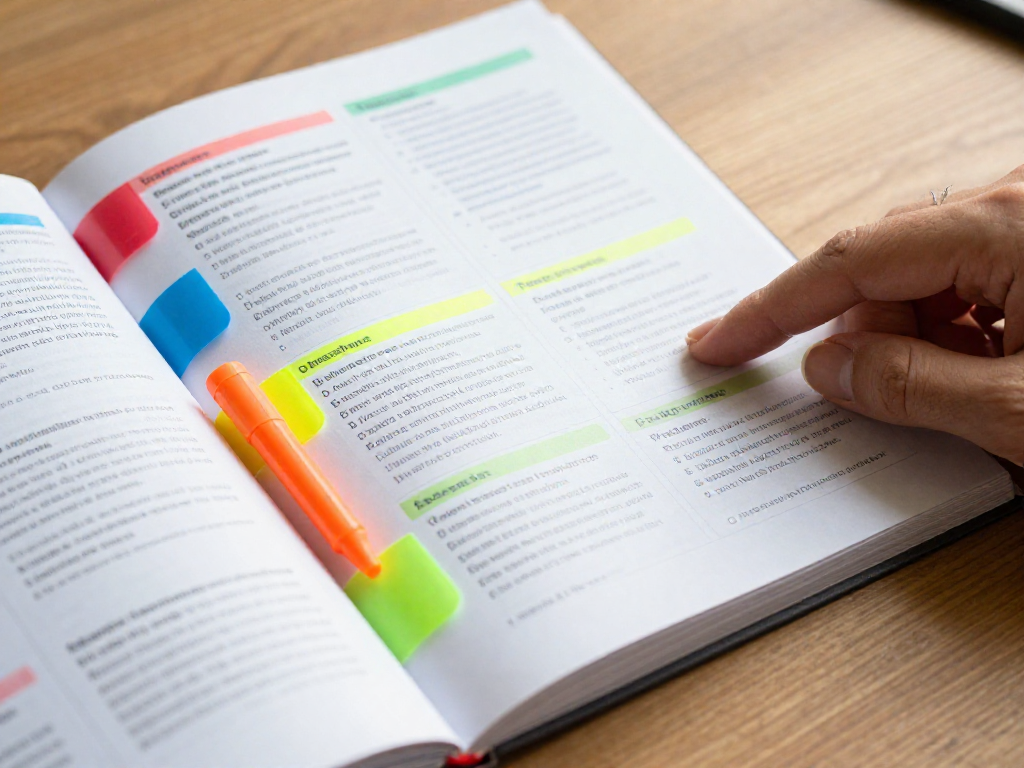
4. Sticky-note the scoring and special rules. You won't remember every scoring detail or oddball card power, and that's fine. Slap a sticky note or bookmark on those pages so you can flip to them mid-game. Treat them as a reference, not something to memorize up front.
5. Take a practice turn instead of finishing the book. Once you've got one turn down, stop reading and play a fake round with the pieces. Hands-on practice exposes the questions a rulebook never answers—and you'll learn more in three practice turns than in another ten pages of text.
This order works for nearly any game, from a 20-minute family card game to a heavier two-hour box. Read for the goal, set up by doing, master one turn, bookmark the rest, then play.
Shortcuts: Reference Sheets, Videos, and Apps
Sometimes the rulebook still drags. When that happens, lean on these faster supplements—often you can learn the whole game without reading every page.
- Start with the player aid. Most boxes include a small reference card (sometimes one per player) that lists each turn's options at a glance. Keep it next to you as a cheat sheet while you play your first round.
- Watch a short "how to play" video. A focused 5–10 minute video shows setup and a sample turn in real time, which is often clearer than text. Skip the hour-long strategy deep-dives; you just need the basics to start.
- Try a companion app. Many newer games offer a free app that walks you through setup step by step and tracks turns, so no one has to be the "rules reader."
- Use the quick-start guide for your first game. If the box includes a short quick-start or "learn to play" sheet, trust it over the full rulebook to begin. Save the complete rulebook for answering specific questions once everyone is already playing.
A good rule of thumb: get one round on the table fast, then look up edge cases as they come up.
Teaching the Game to Your Table
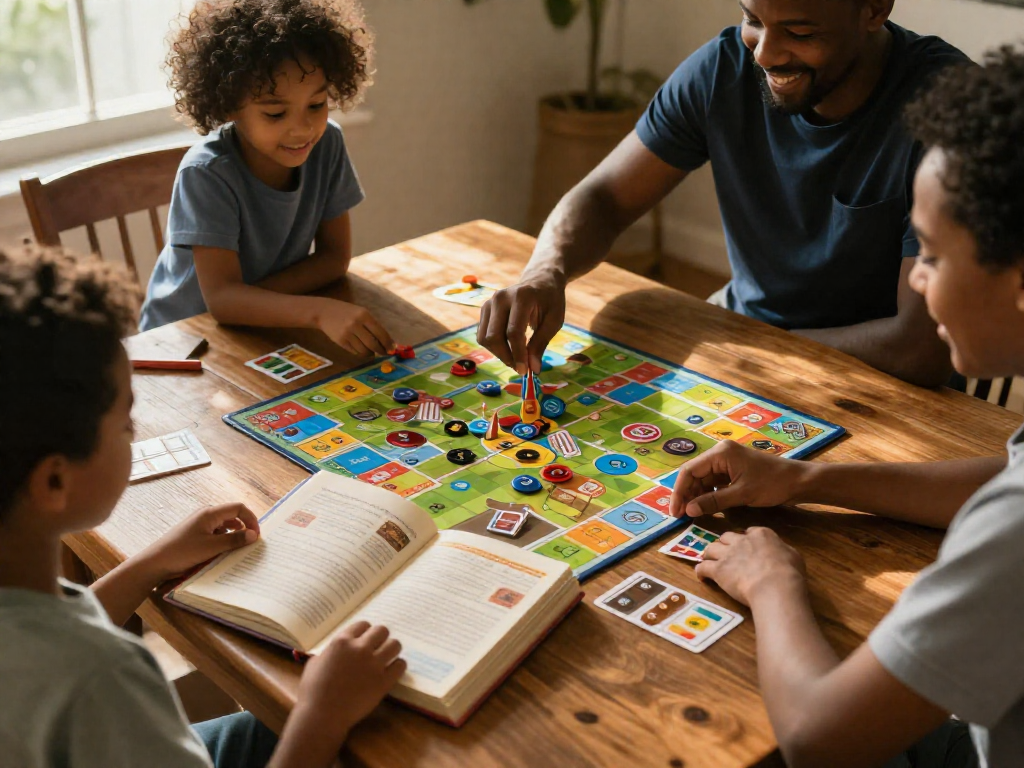
Once you've cracked the rulebook, the goal shifts: get everyone playing without a lecture. Here's the fast path.
Start with the goal. In one sentence, tell your table how someone wins ("First to 10 points wins"). Everything else makes more sense once people know what they're aiming for.
Then explain a basic turn. Walk through what a player does on their turn—nothing more. Most games boil down to a simple loop you repeat.
Teach by doing. Play the first round openly, with everyone's cards or pieces face up. People learn faster watching one real turn than hearing five minutes of rules.
Skip the edge cases. Ignore the rare "what if" rules until they actually come up. You can look them up in the moment.
Keep the player aid handy. A player aid is the quick-reference card that lists turn steps and actions. Set one where everyone can see it so you're not the rules hotline all night.
See also
- Best board games for beginners
- How to set up game night at home
- Easy family board games that teach in 5 minutes
- Glossary of common board game terms
Related articles
How Does Scoring Work in Board Games? Points Explained Simply
Confused about who wins and why? Learn how board game scoring works—victory points, race conditions, and tracking—in plain language for family game night.
Jun 27, 2026 · 9 min read

What Does 'Eurogame' Mean? Hobby Jargon Demystified
What is a eurogame? A plain-language guide to the eurogame style, how it differs from other board game families, and easy titles to try at home.
Jun 27, 2026 · 6 min read
Deck-Building Explained: How These Games Actually Work
New to deck-building games? Learn what they are, how the core mechanic works, and which beginner-friendly titles to try first—explained in plain language.
Jun 27, 2026 · 10 min read