How to Play Dominion: Deck-Building Made Simple for Beginners
How do you play Dominion and what is deck-building?
On this page
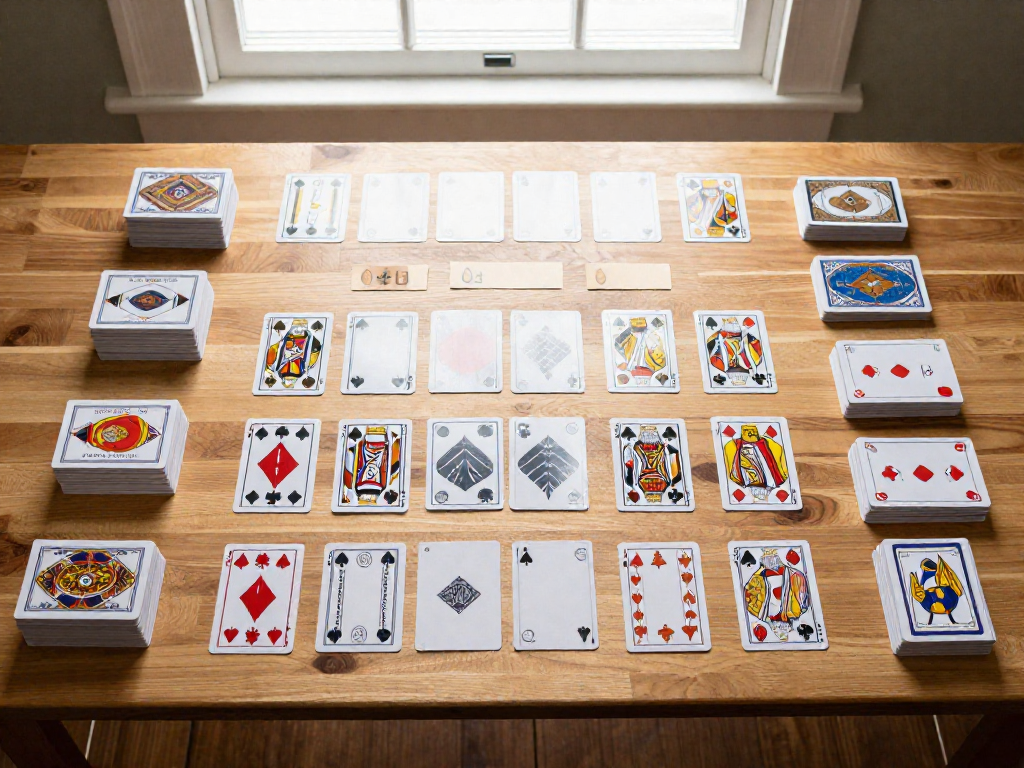
Open by reassuring nervous first-timers that Dominion looks intimidating but is genuinely easy once you grasp one idea—building a deck as you play. Promise a setup-and-walkthrough approach where the rules click into place as you physically lay out the cards, no strategy jargon required.
What Is Dominion (and What "Deck-Building" Actually Means)
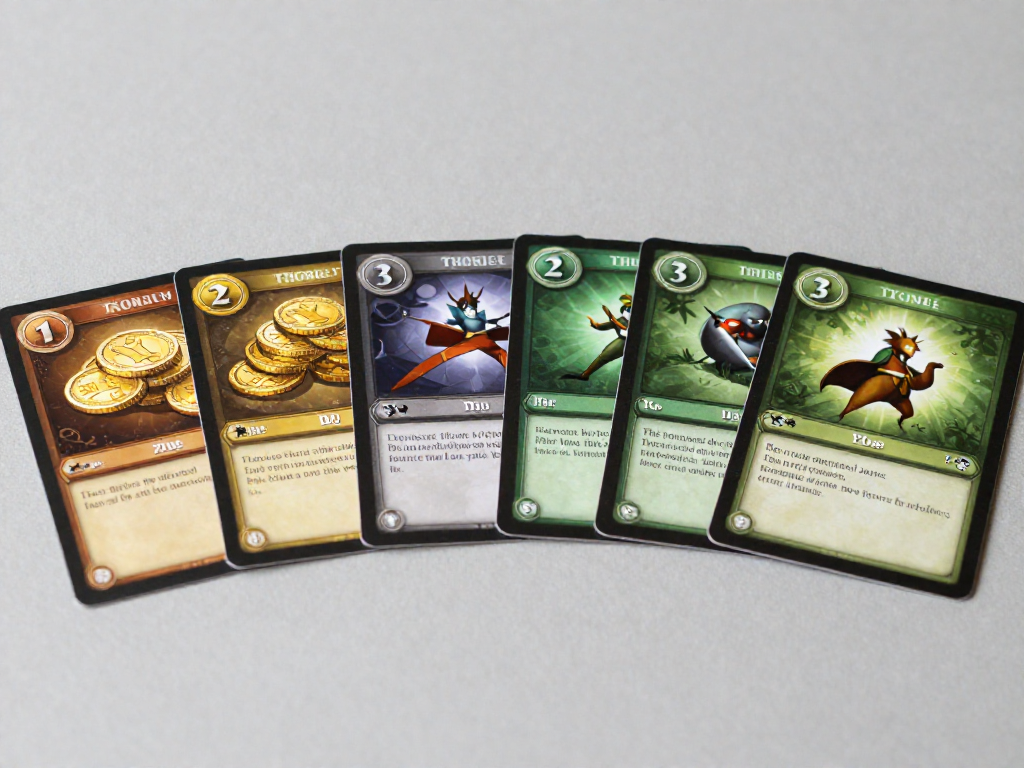
Dominion is a card game where your whole strategy lives in your deck—the personal stack of cards you draw from each turn. Here's the twist that trips up newcomers: you don't bring a finished deck to the table. You start with the same tiny, weak deck as everyone else (just a handful of basic money and point cards), and you build it into something better while you play.
That's what deck-building means. On your turn, you use the cards in your hand to buy new, more powerful cards from a shared market in the middle of the table. Those purchases go into your deck, get shuffled in, and show up in future hands. Bit by bit, a clunky starter deck becomes a smooth machine.
If you've heard of Magic: The Gathering, this is the opposite approach. In Magic you assemble your deck before the game even starts. In Dominion, building the deck is the game.
The phrase you'll see hobbyists throw around is building an "engine." In one sentence: an engine is a deck full of cards that help you draw more cards and buy more cards each turn, so every turn does more than the last. You don't need to master that on day one—it just clicks as you play.
The goal in a nutshell: end the game with the most victory points. Victory point cards are worth nothing during play (they actually clog your deck), so the real challenge is balancing buying points against keeping your deck fast.
Quick facts for your table:
- Players: 2–4
- Play time: about 30 minutes
- Age: 13+ on the box, though many families play comfortably with kids around 8–10 who can read and add small numbers
- Difficulty: easy to learn, with plenty of depth later—no math beyond simple addition, and there's no scary or mature content
That beginner-friendly mix is exactly why Dominion is a great first deck-builder for game night.
What's in the Box: The Cards You Need to Know
Before your first game, it helps to know the cards you'll be shuffling. Don't worry about memorizing anything—just get a feel for the four main types.
Treasure cards (Copper, Silver, Gold) are your money. You play them on your turn to "buy" new cards, the same way you'd hand over cash at a store. Copper is worth 1, Silver 2, and Gold 3. You start with a handful of Coppers and work your way up to the good stuff.
Victory cards (Estate, Duchy, Province) are how you win—they're worth points at the end (1, 3, and 6 respectively). Here's the catch: they do nothing during the game. When you draw one, it just sits in your hand taking up space, which is why players say they "clog" your deck. The trick is buying them at the right time.
Curse cards are worth –1 point and only show up in certain games (some Kingdom cards force opponents to take them). If your game doesn't use those, you may never see a Curse at all.
Kingdom cards are the heart of Dominion. These are the 10 piles of "Action" cards—special abilities like drawing extra cards or getting more money—that sit in the middle of the table. They change every game, so no two sessions feel the same.
A few other terms you'll hear: the supply is all the shared piles everyone buys from, and the trash is a discard zone for permanently removing unwanted cards (more on that later). That's it—you're ready to set up.
How to Set Up Dominion Step by Step
Setup takes about five minutes once you know the rhythm, and doing it together is the easiest way to learn how the game works. Here's the do-this-now version, with a quick "why" so the structure clicks as you go. Dominion plays best with 2–4 players, ages 13+ (we find 10+ works fine for math-comfortable kids), runs about 30 minutes, and is easy to learn.
Step 1: Set out the Treasure and Victory piles in the center. These are your "supply"—the shared market everyone buys from. Treasure cards (Copper, Silver, Gold) are the money you'll spend; Victory cards (Estate, Duchy, Province) are the points that decide the winner. Stack each type in its own pile so they're easy to grab.
Step 2: Choose 10 Kingdom cards. "Kingdom" cards are the special action cards that make each game different. For your first game, use the First Game set listed in the rulebook—it's balanced and beginner-friendly. Set out one pile (10 copies) of each of those 10 cards alongside the supply.
Step 3: Give each player a starting deck of 7 Coppers and 3 Estates. Everyone begins identical: a little money and a little (low) scoring. The whole game is about improving this 10-card deck—that's what "deck-building" means.
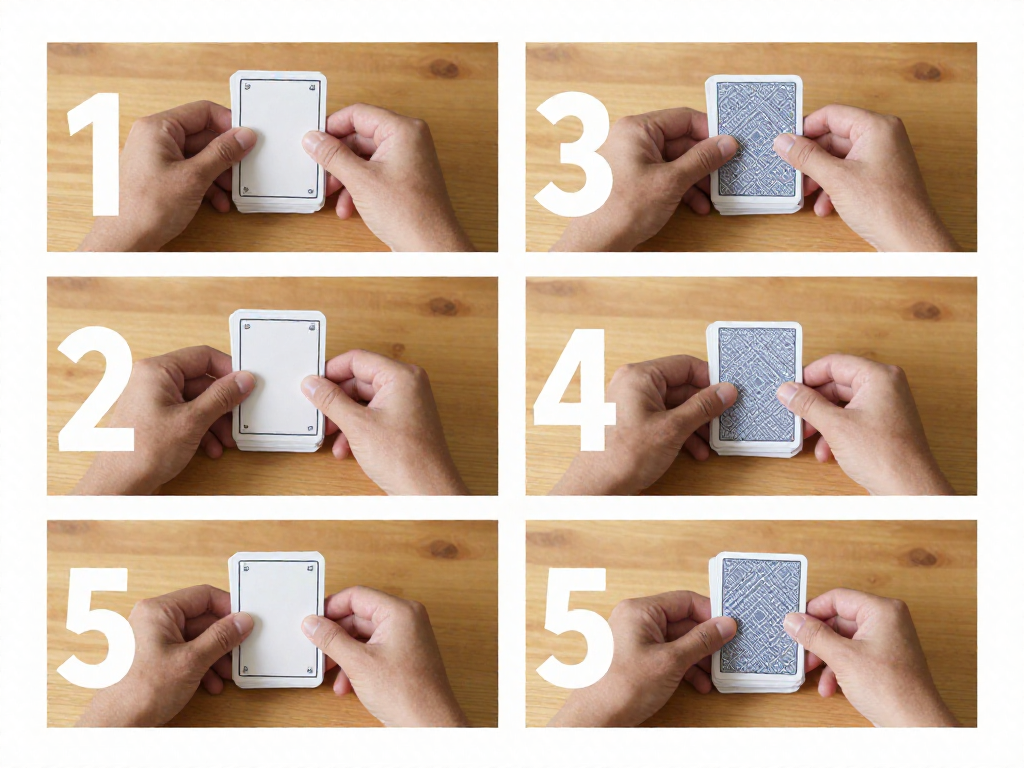
Step 4: Shuffle your deck and draw a hand of 5 cards. Shuffle your own 10 cards, place the deck face-down in front of you, and draw five. This is your opening hand for your first turn.
Step 5: Pick who goes first and set up the trash pile. Choose a starting player however you like. The "trash" is just a spot off to the side for cards you permanently remove from your deck later—an empty space works fine.
That's it. You're ready to take your first turn.
How a Turn Works: Action, Buy, Cleanup

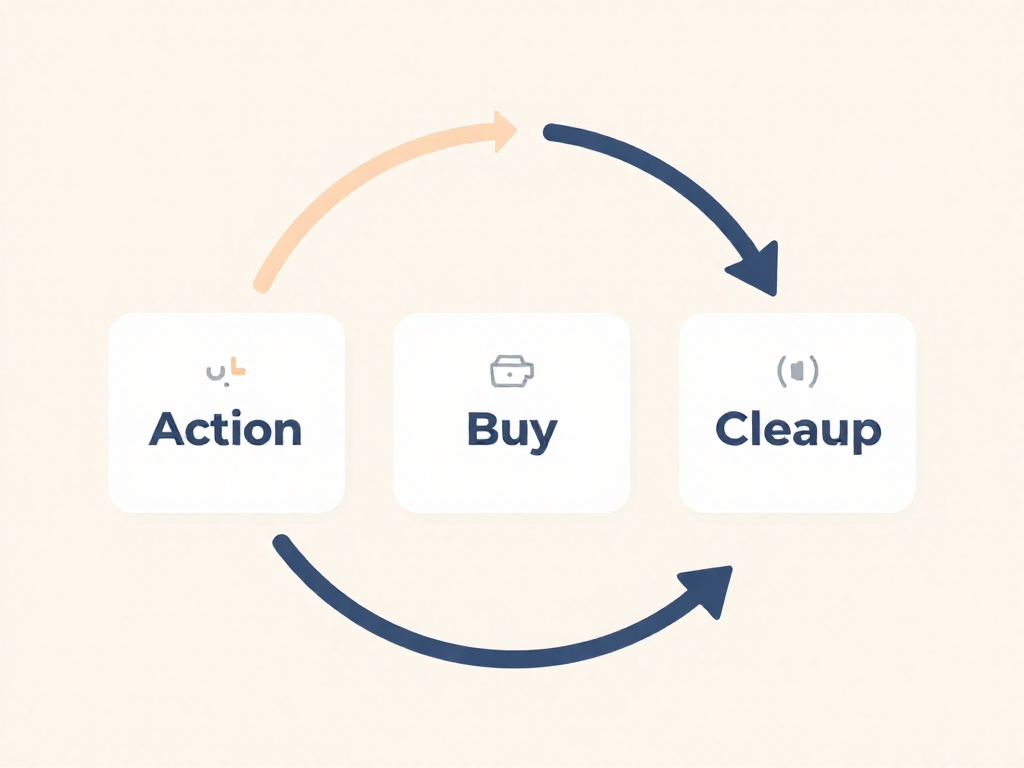
Once setup is done, every turn in Dominion follows the same three-phase rhythm. Learn this loop and you basically know how to play—you'll just repeat it until the game ends.
Here's the golden rule to memorize first: by default you get 1 Action and 1 Buy per turn. Some cards give you extra Actions or Buys, but unless a card says otherwise, that's your starting budget.
The phases always happen in this order:
1. Action phase. This is where you play one of your Kingdom cards—the special cards in the middle of the table that do things, like drawing extra cards or giving you more money. (Treasure and Victory cards aren't Actions; they don't go here.) Play one Action card from your hand and simply do what its text says, top to bottom. That's the whole secret to Dominion: the cards tell you exactly what to do. If a card grants "+1 Action," you can play another Action card afterward, which is how clever combos get going. No extra Actions left? Move on.
2. Buy phase. Now you turn your hand into shopping money. Play all the Treasure cards in your hand—Copper is worth 1 coin, Silver 2, Gold 3—to see how much you can spend this turn. Then use your 1 Buy to purchase a single card from any available pile, as long as you can afford it. The card you buy goes straight to your discard pile (a face-up stack next to you), not your hand. You won't get to use it until it cycles back to you later—that delayed payoff is the heart of "deck-building."
3. Cleanup phase. Discard everything: any cards you played and any unplayed cards still in your hand all go to your discard pile. Then draw 5 fresh cards to form next turn's hand, and play passes to the left.
One thing that trips up beginners: when your draw pile (sometimes called your deck) runs out and you still need cards, shuffle your discard pile to form a new draw pile, then keep drawing. This reshuffle is normal and happens many times per game—it's how the new cards you bought finally reach your hand.
Watching Your Deck Improve: A Sample Few Turns
The easiest way to "get" deck-building is to watch a deck change over a few turns. Remember, you start with 10 cards: 7 Coppers (worth 1 coin each) and 3 Estates (a Victory card worth 1 point but useless on your turn).
Turn 1: You shuffle and draw 5 cards—say, 4 Coppers and 1 Estate. That gives you 4 coins to spend. You buy a Silver (worth 2 coins, costs 3) and add it to your discard pile.
Turn 2: You draw 5 more cards from what's left. Maybe you get 3 Coppers and 2 Estates—only 3 coins this time. You buy a cheap action card like Village, which does "+1 Card, +1 Action."
Here's the payoff. Once you've played through your whole deck, you reshuffle, and now your new Silver and Village are mixed in. Drawing them feels like your deck "leveled up"—you have stronger cards than you started with.
Chaining in action: Say you draw a hand with a Village. You play it: draw 1 card (now you have an extra card in hand) and gain 1 action (so you can play another action card). If that drawn card is another action, you can keep going. This chaining is the heart of building a smooth deck.
A common beginner trap: Don't rush to buy Victory cards (Estates, Duchies) early. They score points at the end but do nothing on your turn—a hand full of them is a dead hand. Build your engine first, then load up on Victory cards in the final stretch.
How the Game Ends and How to Win
Dominion doesn't run forever—two simple triggers end it. The game stops the moment the Province pile (the highest-value Victory cards) runs out, OR when any three Supply piles are empty at once. Either one ends the game immediately after the current player finishes their turn, so keep an eye on those piles as they shrink.
Once the game ends, everyone counts the victory points (VP) hiding in their deck:
- Estates = 1 point each
- Duchies = 3 points each
- Provinces = 6 points each
- Curses = –1 point each (these subtract, so avoid collecting them)
Add up all the cards in your whole deck—hand, draw pile, and discard pile included. Highest total wins.
Here's the part that surprises new players: the person who looked like they were "losing" all game often wins. Victory cards do nothing useful while you're playing—they clog your hand and can't buy anything. So a player who spends early turns building a strong money-and-action engine looks behind, then buys several Provinces in a quick burst at the end. Don't panic if your point total stays at zero for a while. In Dominion, points come last—on purpose.
Beginner Tips and Common Mistakes to Avoid
Your first game of Dominion goes a lot smoother once you sidestep the mistakes almost everyone makes. Here's what we learned the hard way at our own table.
Don't ignore your Treasure cards. It's tempting to chase the flashy Kingdom cards (the ten special cards you picked for this game), but plain old Silver and Gold are what actually pay for the points. Buying a Silver or two early gives you more buying power every turn—they quietly win games while no one's watching.
Wait on Provinces. A Province is the big 6-point card, and it's the main way most beginners win. But buying one too early clogs your deck with a card you can't use for anything except scoring. Start grabbing Provinces once your deck reliably produces 6+ coins a turn, usually in the back half of the game.
Keep your deck lean. More cards isn't better. Every card you add gets shuffled in, so a bloated deck means your best cards show up less often. Buy with purpose, not just because you can.
Read each Kingdom card aloud the first time. Saying what a card does out loud—"+2 Cards, +1 Action"—helps the whole table learn the icons together and prevents missed effects. No one's expected to memorize them yet.
Use the recommended First Game setup. Dominion's rulebook suggests a specific set of ten Kingdom cards for your first play. Use it. Random Kingdoms can create tricky combos that overwhelm new players—save those for game three or four once everyone's comfortable.
Make these your habits and your first night will feel like fun, not homework.
FAQ
Is Dominion good for beginners?
Yes. Dominion is one of the easiest entry points into deck-building games, where each player slowly builds a personal deck of cards during play. The core rules fit on a single page: on your turn you play one action, buy one card, and clean up. There's no board to manage and no long setup, so new players can be up and running in minutes. Ideal for 2–4 players, ages 13+ (though many families play with kids around 10 who can read and add small numbers), it runs about 30 minutes and rates as easy-to-learn, medium-depth. Who it's for: anyone who wants a card game with real decisions but a gentle learning curve.
How long does a game of Dominion take?
A typical game runs about 30 minutes, and rarely more than 45. Two-player games often finish in 20–25 minutes once everyone knows the basics, while a full four-player game sits closer to 40. Your first game or two will take longer as you learn the cards, so budget extra time the first night. Because games are short, Dominion works well as a 'one more round' game for family game night rather than an all-evening commitment.
How many players do you need for Dominion?
The base game supports 2–4 players, and it's enjoyable across that whole range. Two players is fast and head-to-head; three or four adds more competition for limited cards but takes a bit longer because you wait through more turns. It is not a solo game out of the box, and you need at least two people to play. For family nights of five or more, you'd need an expansion that raises the player count. Recommended count: 2–4, ages 13+ (kids ~10 with help), about 30 minutes, easy difficulty.
What is the difference between Dominion and other deck-building games?
Dominion is the game that popularized deck-building, where you start with a small, weak deck and 'buy' better cards from a shared market to improve it over time. Compared to later deck-builders, Dominion is purposely simple: there's no central board, no shared map, and no enemies to fight. Games like Star Realms or Clank! layer on combat, exploration, or a board, while Dominion keeps the focus purely on building an efficient deck and racing for victory points. That stripped-down design is exactly why it's such a good first deck-builder. Who it's for: families and new hobbyists who want the core deck-building experience without extra systems to track.
Which Dominion set should I buy first?
Start with Dominion: Second Edition (the base set). It's a complete, standalone game built specifically to teach the basics, with a recommended set of starter cards so you don't have to choose from hundreds at once. It plays 2–4, ages 13+, in about 30 minutes at an easy difficulty. Skip the expansions until you've played the base game several times, since expansions add cards (not new rules you need on day one) and are designed to be mixed in later. Who it's for: any household buying their first Dominion box. Note: the cards are small text on a card-driven game, so it suits readers rather than pre-readers.
Can you play Dominion with 2 players?
Absolutely—two players is one of the best ways to play. The base game is balanced for 2–4, and with two it's quick (about 20–25 minutes) and more interactive, since you're directly racing one opponent for the same valuable cards. Setup and rules are identical to larger games; you just deal two starting decks instead of three or four. It's a great fit for couples, a parent and child, or two friends wanting a short, brain-engaging game. Family note: content is entirely family-friendly with nothing unsuitable for children—the only barrier for young kids is reading the cards.
See also
- Best beginner board games for families
- What is deck-building? A simple guide
- Best two-player board games for date night
- How to host a stress-free game night at home
- How to play [another gateway game] for beginners
Related articles
How Does Scoring Work in Board Games? Points Explained Simply
Confused about who wins and why? Learn how board game scoring works—victory points, race conditions, and tracking—in plain language for family game night.
Jun 27, 2026 · 9 min read

What Does 'Eurogame' Mean? Hobby Jargon Demystified
What is a eurogame? A plain-language guide to the eurogame style, how it differs from other board game families, and easy titles to try at home.
Jun 27, 2026 · 6 min read

Deck-Building Explained: How These Games Actually Work
New to deck-building games? Learn what they are, how the core mechanic works, and which beginner-friendly titles to try first—explained in plain language.
Jun 27, 2026 · 10 min read