How to Teach a Board Game to People Who've Never Played
How do you teach a new board game to first-time players?
On this page
Open on the relatable pain of watching new players glaze over during a 20-minute rules lecture. Reframe teaching as a learnable skill—not memorizing the rulebook, but guiding people to their first turn fast. Promise a repeatable approach that keeps beginners curious instead of overwhelmed.
Why Teaching a Game Well Matters More Than the Game Itself
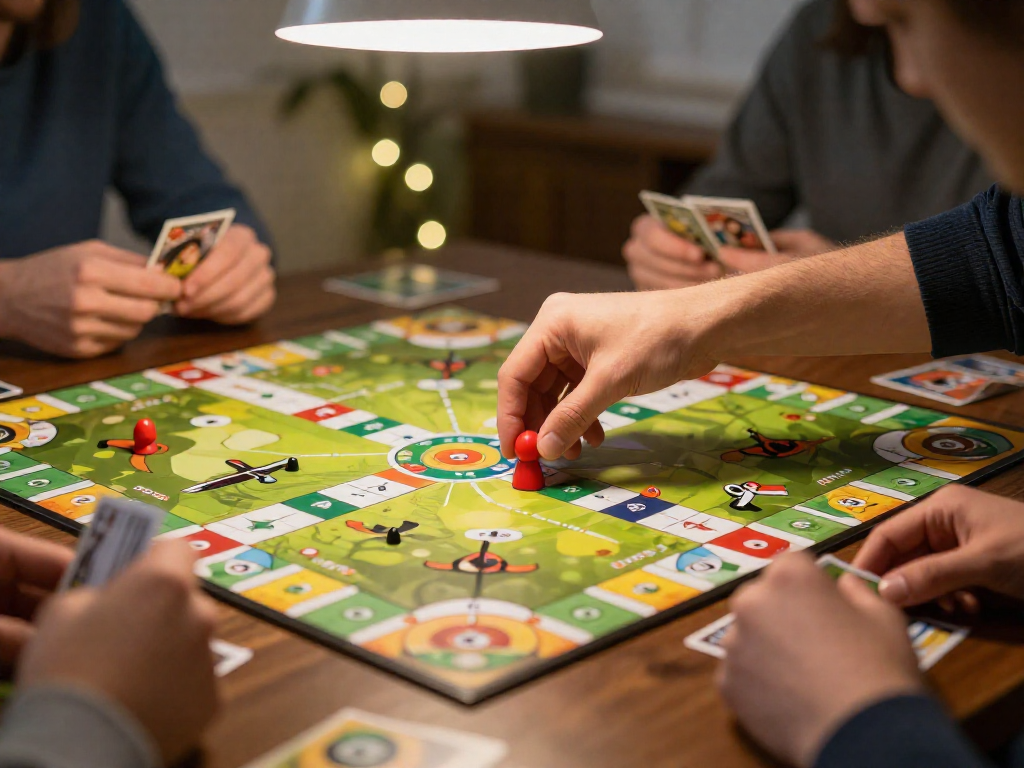
You can own the best board game in the world, but if the "teach"—the few minutes you spend explaining how to play—falls flat, your group may never want to touch it again. That first session is where people decide whether tabletop gaming feels fun or like homework.
Here's the mindset shift: your job isn't to recite the rulebook perfectly. It's to get everyone playing and enjoying themselves quickly. A new player doesn't need every edge case up front; they need to understand what they're trying to do and how to take their first turn. Details can come as they're needed.
Watch your audience while you explain. Glazed eyes, fidgeting, or someone quietly reaching for their phone are clear signals you've lost them—usually because you're going too long or too deep. When you see those signs, stop talking and start playing. A great teach leaves people curious and confident, not overwhelmed.
Before Game Night: Pick the Right Game and Prep
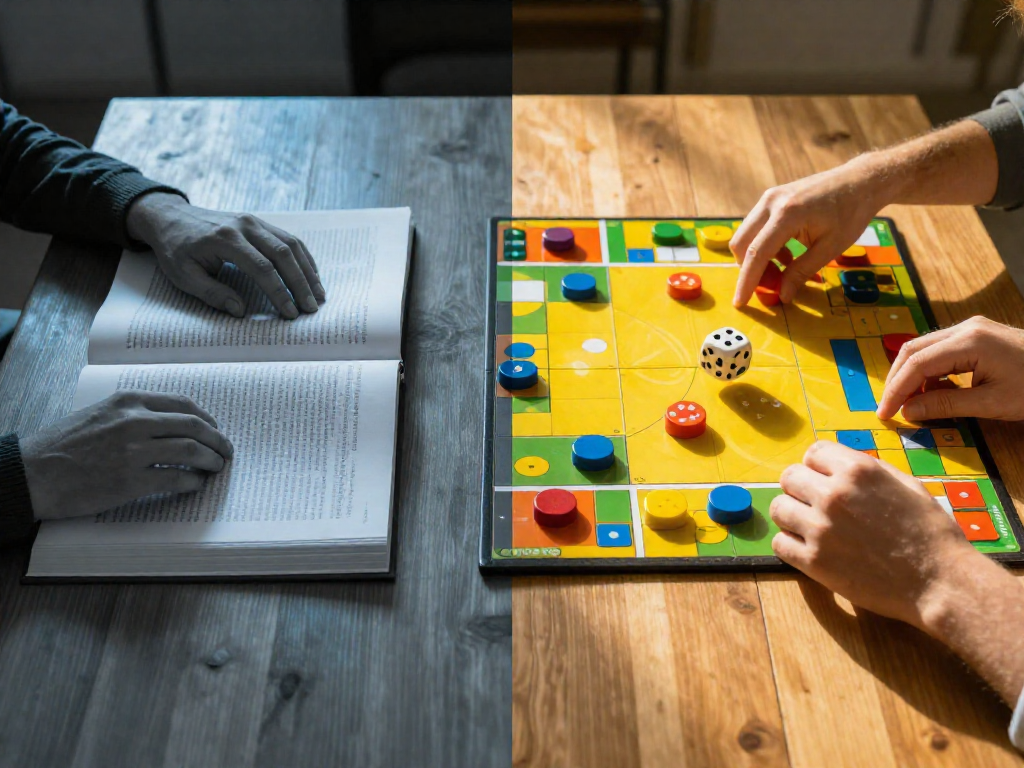
A smooth teaching session starts long before anyone sits down. Get these four things right and the rest of the night gets easier.
Match the game to your group. For true beginners, reach for a gateway game—a deliberately simple title designed to welcome new players, usually with short rules and quick turns. Good picks land around 30–45 minutes, suit ages 8 and up, play well with 2–5 people, and rate as easy on difficulty. Save heavier strategy games for after your group has a couple of wins under their belt. Trying to teach something complex on night one is the fastest way to lose the room.
Learn the rules yourself first. Read the rulebook front to back, then do a solo practice run—set the game up and play a few turns as if you were two different players. You'll catch the fiddly bits (scoring, edge cases, that one card everyone asks about) before they trip you up in front of guests. You don't need to be an expert; you just need to be one confident step ahead.
Set up before guests arrive. Punch out the pieces, sort the cards, and lay out the board ahead of time. Setup can eat 10–15 minutes, and watching the host fumble with tiny tokens kills momentum. A ready table signals "we're playing" the moment people walk in.
Have a one-sentence goal ready. The first question new players ask is "What are we trying to do?" Answer it in a single line—for example, "Be the first to collect four matching sets." Lead with the goal, and every rule afterward has somewhere to hang.
Start With the Goal, Not the Rules

When you teach a new game, resist the urge to open the rulebook and march through every step. New players don't yet have a place to put all that information. Instead, start with the goal—the one thing everyone is trying to do.
Say the win condition in a single plain sentence. Skip the setup, the special cards, and the edge cases. Just answer "How do I win?" For example: "First person to get four of their pieces home wins," or "Whoever has the most points when the deck runs out wins." That one sentence gives everyone a finish line to aim for.
Then explain the theme—the story the game is dressed in. Are you rival train companies racing to build routes? Villagers stocking up for winter? The theme isn't just flavor; it makes the actions logical. When players understand why they're collecting wood or moving across a map, the rules stop feeling like random chores and start feeling like obvious choices.
Why this works: people remember rules better when they can connect each one to the goal. If your friend knows the aim is to score points by completing routes, then "you draw two cards on your turn" suddenly has a purpose—it's how you build toward winning. Working backward from the goal turns a list of disconnected instructions into a clear path. Teach the destination first, and the directions make sense the whole way there.
Teach the Core Loop, Skip the Edge Cases
The fastest way to lose a new player is to read them the whole rulebook before anyone has touched a piece. Instead, teach the core loop—the small set of actions a player repeats on a typical turn. That's the engine of almost every board game, and once people feel it, the rest clicks into place.
Start by answering one question out loud: "What do I actually do when it's my turn?" Keep it to two or three steps. For example: "On your turn, you draw a card, play one card to the table, then collect any coins it earns." That's enough to start. Everyone can take a turn, see the result, and build a mental model before you pile on detail.
Now deliberately leave things out. Special cards, scoring bonuses, rare exceptions, the one weird rule about ties—defer all of it. These details mean nothing to someone who hasn't felt a normal turn yet, and front-loading them buries the part that matters. When a special situation finally comes up in play, explain it right then. Keep a friendly phrase in your back pocket: "We'll cover that when it happens." It signals the rule exists without forcing anyone to memorize it cold.
This goes double for scoring. Resist the urge to walk through every way to earn points up front. New players can't weigh trade-offs they don't understand yet, and a wall of scoring math early on just creates anxiety. Give them the headline—"you're trying to collect the most coins"—and reveal the finer scoring paths as they become relevant.
Teach the loop, play a few turns together, and let the edge cases arrive naturally. You'll spend less time explaining and far more time actually playing.
Show, Don't Just Tell: Demo a Sample Turn
After you've explained the goal and the basic flow, the fastest way to make it click is to show one turn instead of describing more of them. Abstract rules turn concrete the moment players see them happen.
Play out one full turn, narrated aloud. Take your own turn first and say what you're doing as you do it: "I'm drawing two cards, then I'll play one here, which lets me move my piece three spaces." Hearing the sequence while watching it removes the guesswork. Keep it to a single, ordinary turn—don't chase rare situations.
Point to components as you mention them. A "component" is just any physical piece—cards, tokens, the board, dice. When you say "you collect a coin token," tap the actual token. Linking words to objects helps people remember where things live on the table.
Offer a no-stakes practice round. Let everyone take one or two throwaway turns that don't count toward winning. Mistakes here cost nothing, questions come out, and confidence builds before the real game starts.
A good rule of thumb: if you've explained something twice and it still isn't landing, stop talking and demo it. One visible turn usually beats five more minutes of rules.
Keep Beginners Engaged During the First Game
The first game is where new players decide whether the hobby feels welcoming or overwhelming. Your job shifts from teacher to host: keep people involved without hovering.
Guide, don't take over. It's tempting to point out the "best" move on someone's turn, but that habit—called quarterbacking (telling other players exactly what to do)—quietly tells beginners their choices don't matter. Offer reminders about what's possible ("you could draw a card or move a piece"), then let them decide. A clumsy choice they made themselves beats a perfect one you made for them.
Make mistakes normal. Say out loud, early, that everyone forgets rules and that questions are welcome anytime. When someone misplays, keep it light: "Easy fix, happens to all of us." If a mistake is harmless, sometimes just let it stand rather than rewinding the whole turn. Confidence matters more than a flawless rules record in a first game.
Read the room and adjust. Watch for glazed-over expressions, long silent pauses, or someone checking their phone—signs the pace or complexity is off. Speed up if people are breezing through, slow down and re-explain if they look lost. Check in with a quick "Make sense so far?" between rounds.
The goal of game one isn't to win or to play optimally. It's for everyone to finish thinking, "That was fun—let's play again."
Common Teaching Mistakes to Avoid
Even with good intentions, a few habits can sink a first game night. Watch for these:
- Reading the rulebook aloud, word for word. Rulebooks are written for reference, not for teaching. Translate them into your own simple summary instead.
- Leading with strategy. Telling someone the "best" move before they grasp the basics just creates noise. Let them make their own choices first; tips can come later.
- Dumping every exception up front. Skip the rare edge cases (unusual situations that almost never come up early). Cover them only when they actually happen during play.
- Making the first game cutthroat. If you play to crush newcomers, they won't want a rematch. Treat round one as a friendly practice run—help people, allow take-backs, and keep it welcoming.
The fix for all four is the same: teach less, play sooner, and let the game itself do the explaining once everyone is rolling.
Quick-Reference Cheat Sheet for Teaching Any Game
Save this and pull it up before your next game night. It works for almost any game, from a 20-minute card game to a longer family board game.
- Lead with the goal. Tell players how someone wins before anything else, so every rule has a purpose to hang on.
- Teach the core turn. Explain what a normal turn looks like—the action players repeat most often—and skip the rare exceptions until they actually come up.
- Demo one sample turn. Play a single turn out loud so people see it, not just hear it.
- Run a quick practice round. Let everyone take a no-stakes turn before the real game starts.
- Then go hands-off. During real play, let people make their own choices (and small mistakes). Answer questions, but resist steering every move.
Print it, pin it, reuse it.
FAQ
How long should it take to teach a board game?
For most beginner-friendly games, aim for 5 to 10 minutes. If your explanation runs past 15 minutes, players start to lose focus before the fun begins. A good rule of thumb: cover the goal, a typical turn, and how the game ends, then start playing and explain the finer points as they come up. Lighter family games (think 30-minute play times) usually need only a few minutes to teach, while heavier games naturally take longer—but if you're teaching brand-new players, save those for later sessions.
What are the easiest board games to teach beginners?
Look for games with a single clear goal and short turns. A few reliable starters: Ticket to Ride (2–5 players, ages 8+, about 45 minutes, easy—collect train cards and connect cities; great for families, no reading-heavy rules). Sushi Go! (2–5 players, ages 8+, about 15 minutes, very easy—pick a card, pass the rest; fast and forgiving, perfect for younger kids too). Azul (2–4 players, ages 8+, about 35 minutes, easy—draft colorful tiles to fill your board; quiet and tactile, with no objectionable content). Pros across these: quick to learn, visually appealing, and family-safe. Cons: limited depth for players craving heavy strategy. Who they're for: families and new hobbyists who want to be playing within minutes, not studying a manual.
Should you let new players take back moves in their first game?
Yes—be generous with take-backs during a first game. The goal of a teaching session is for everyone to understand how the game works and have fun, not to crown a winner. Letting someone undo a move they made by mistake (a 'take-back') helps them learn the consequences without feeling punished. A friendly approach: tell the table up front that the first game is a 'practice round' where take-backs are fine, then play strictly by the rules once everyone's comfortable. This keeps the mood relaxed and makes people far more likely to want a second game.
How do you teach a board game without reading the whole rulebook?
You don't need to read the rulebook aloud—in fact, you shouldn't. Prepare by reading the rules yourself beforehand, then teach in this order: (1) the goal—how someone wins; (2) what a single turn looks like, ideally by demonstrating one; (3) how the game ends. Skip edge cases and rare exceptions until they actually come up in play. Keep the rulebook nearby as a reference for tricky situations rather than a script. Teaching the 'shape' of the game first, then filling in details during play, helps new players learn by doing instead of memorizing.
What if someone gets frustrated or confused while learning?
Pause and reset expectations—confusion in a first game is normal, not a sign anyone is doing badly. Offer to walk through their options on their turn, or quietly suggest a move so they stay in the flow. Reassure the table that nobody is expected to play well the first time and that mistakes are part of learning. Avoid piling on extra rules when someone's already overwhelmed; stick to the basics and add depth in the next game. If frustration lingers, it's okay to switch to a shorter, lighter game—keeping the night fun matters more than finishing any single game.
See also
- Best gateway board games for families
- How to set up a board game collection on a budget
- Game night ideas for adults and kids together
- Beginner-friendly board game rules explained in plain language
Related articles
How Does Scoring Work in Board Games? Points Explained Simply
Confused about who wins and why? Learn how board game scoring works—victory points, race conditions, and tracking—in plain language for family game night.
Jun 27, 2026 · 9 min read

What Does 'Eurogame' Mean? Hobby Jargon Demystified
What is a eurogame? A plain-language guide to the eurogame style, how it differs from other board game families, and easy titles to try at home.
Jun 27, 2026 · 6 min read

Deck-Building Explained: How These Games Actually Work
New to deck-building games? Learn what they are, how the core mechanic works, and which beginner-friendly titles to try first—explained in plain language.
Jun 27, 2026 · 10 min read