How to Play Ticket to Ride in 10 Minutes: Setup and First Turn
How do you set up and play your first game of Ticket to Ride?
On this page
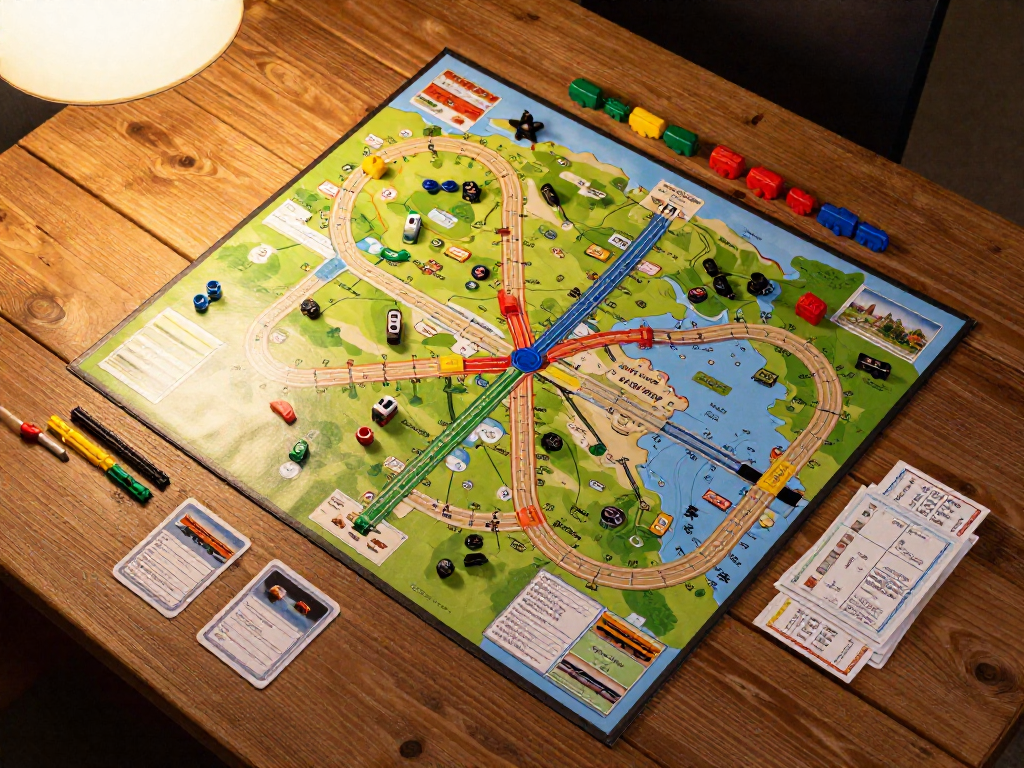
Open by reassuring the reader that Ticket to Ride is one of the easiest "real" board games to learn—you can be playing in 10 minutes. Promise a no-jargon walkthrough that covers the goal, fast setup, and your very first turn so the whole family can start right away.
The Goal of Ticket to Ride (in One Sentence)
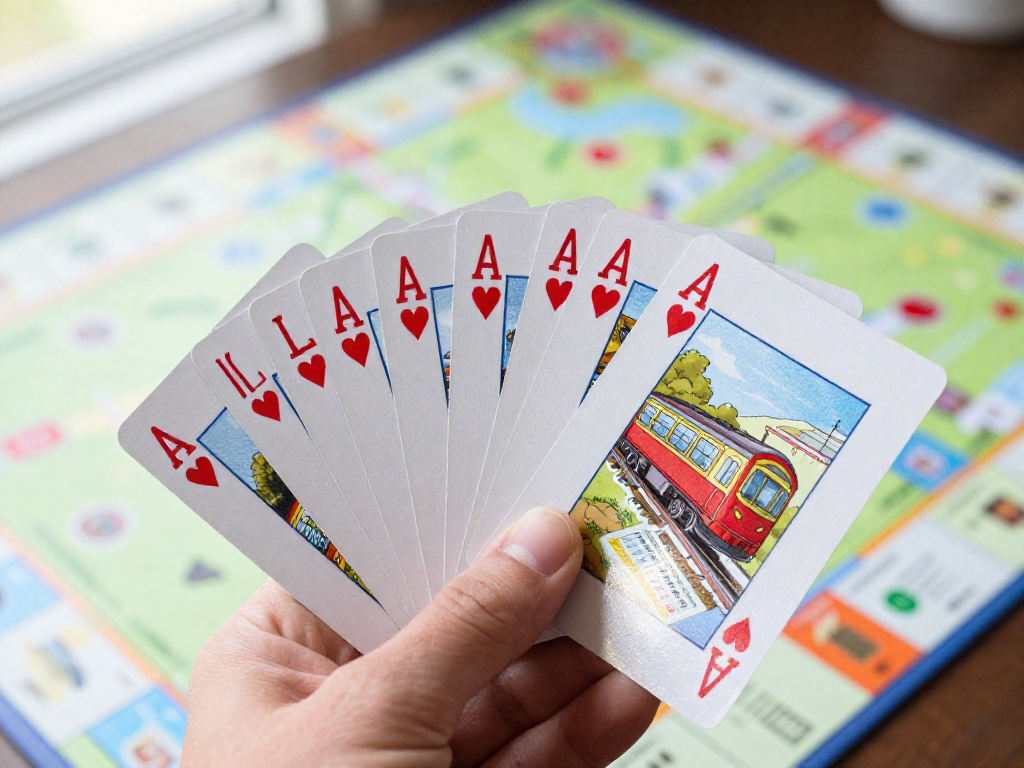
Here's the whole game in one breath: collect colored train cards, use them to claim railway routes between cities on the map, and rack up the most points by the end. That's it. Once that clicks, everything else is just details.
Points come from two places:
- Claimed routes. Every stretch of track you grab between two cities scores points—longer routes are worth more.
- Destination Tickets. These are secret goal cards (think "connect Los Angeles to New York") that pay out bonus points when you finish them.
There's exactly one "gotcha" to remember: a Destination Ticket you don't finish counts against you. Those same bonus points get subtracted from your score instead. So only chase tickets you think you can actually complete.
Whoever has the highest total when the trains run out wins. Keep this single picture in mind—claim routes, finish tickets, count points—and the setup on the table will make a lot more sense.
What's in the Box
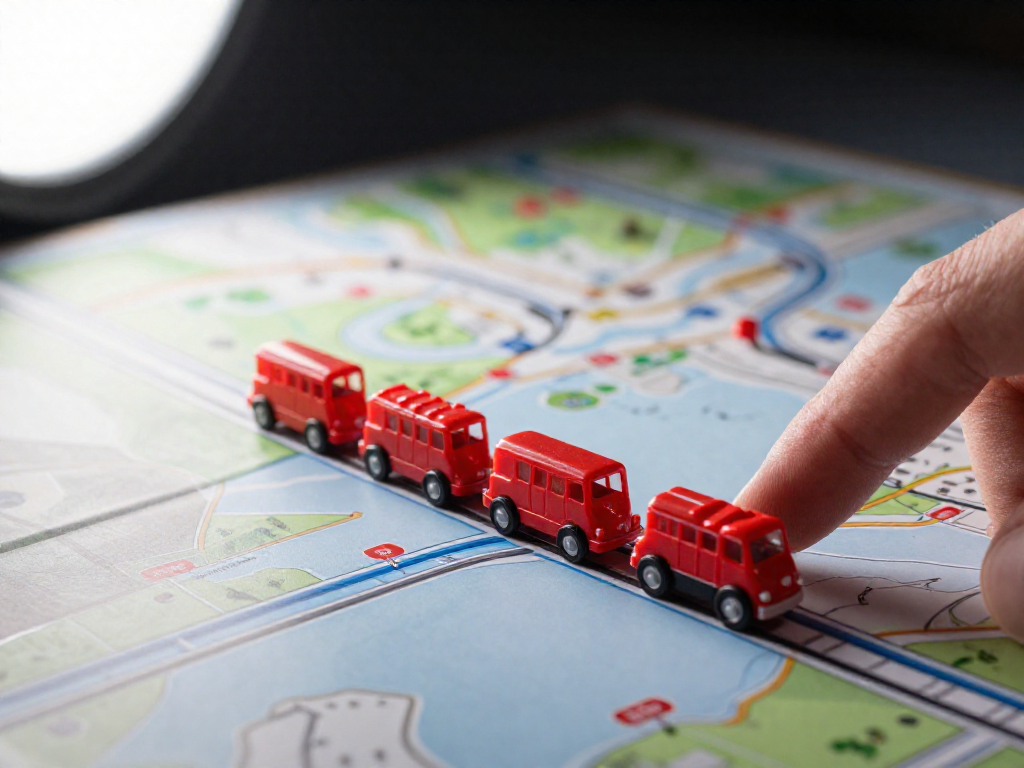
Before you set up, take a minute to lay out the pieces so the steps ahead make sense. Here's what you'll find inside:
- Game board — a large map of the United States covered in colored "routes" (the spaces between cities where you'll claim train tracks).
- Colored train cars — 45 little plastic trains per player, in one color each. These are the pieces you place on the board.
- Train Car cards — the colored cards you hold in your hand and spend to claim routes.
- Destination Ticket cards — secret goal cards that name two cities to connect for bonus points.
- Scoring markers and the rules sheet — small tokens that track your points around the board's edge, plus the official instructions.
That's everything. Sort the trains by color, shuffle the two card decks separately, and you're ready to set up.
Setup in Under 5 Minutes
Ticket to Ride looks busy on the table, but setup is genuinely quick once you know the order. Here's the hands-on routine we use to get a family game rolling in well under five minutes.
1. Lay out the board and shuffle the Train Car deck. Unfold the map of the US in the middle of the table where everyone can reach it. The Train Car deck is the stack of colored cards you'll use to claim routes (the colored "tracks" between cities). Give it a good shuffle.
2. Deal 4 Train Car cards to each player. These are your starting hand. Keep them hidden from other players—part of the fun is not knowing exactly what routes your opponents are building toward.
3. Reveal 5 cards face-up next to the deck. This is the "open market." On your turn you can grab one of these visible cards instead of drawing blind from the deck. Quick rule to remember: if three of the five face-up cards are ever the multicolored locomotive (wild) cards, scrap all five and deal five fresh ones.
4. Deal 3 Destination Tickets to each player. Destination Tickets are secret goal cards that name two cities you'll try to connect for bonus points. Look at your three, then keep at least 2—you may return up to one to the bottom of the ticket pile. Don't toss tickets you can't finish, though: any unconnected ticket subtracts its points at the end.
5. Pick a color and gear up. Each player chooses a color and takes all 45 plastic trains in that color, plus the matching scoring marker. Place your marker on the Start space of the scoring track that runs around the board's edge.
6. Choose a starting player. Any method works—youngest player, last to win game night, a quick dice roll. Play then moves clockwise.
That's it. Board out, hands dealt, tickets chosen, trains counted, first player picked. You're ready for your opening turn.
The Three Things You Can Do on a Turn
Here's the part that makes Ticket to Ride so easy to teach: on your turn, you pick exactly one of three actions. That's it. You do one thing, then play passes to the person on your left. No combos, no juggling multiple moves—just choose, act, and pass.
Here are your three options.
1. Draw 2 Train Car cards. Train Car cards are the colored cards you collect to claim routes later. You can take them two ways: grab a face-up card from the five on display, or draw one blindly from the deck. You may mix and match (one face-up, one from the deck) or take two of the same kind.
One catch: the colorful locomotive cards (also called wild cards—they count as any color) are special. If you take a face-up locomotive, that's your whole turn. You don't get a second card. Drawing a locomotive blindly from the deck is fine, though—no penalty there.
2. Claim a route. Routes are the colored spaces connecting two cities on the board. To claim one, play a set of Train Car cards matching the route's color and length—for example, three blue cards for a three-space blue route. Place your little plastic trains on those spaces, then score points right away based on how long the route is (longer routes are worth more). Gray routes accept any single color, as long as all the cards match each other.
3. Draw 3 new Destination Tickets. Destination Tickets are secret goal cards that ask you to connect two specific cities for bonus points. If you want more goals, draw three from the pile and keep at least one (you can keep all three if you like). Be careful: any ticket you fail to complete by game's end counts against you.
The golden rule: you do only ONE of these three things per turn. New players often try to draw cards and claim a route in the same turn—you can't. Pick one, do it, pass along. Once everyone has this rhythm, the game flows fast.
Your Very First Turn: A Walkthrough
You've finished setup, so let's play an actual turn together. The goal here isn't to win—it's to get comfortable with the rhythm of the game.
Step 1: Read your Destination Tickets. These are the small cards you were dealt during setup, each showing two cities you're trying to connect with an unbroken chain of train routes. Say one of yours reads Los Angeles to El Paso. Trace that path on the board with your finger. Notice it's a fairly short connection—only a couple of route segments. Short tickets are friendly to first-time players because they're easier to finish and harder to get blocked.
Step 2: Pick one of your three actions. On any turn you can draw colored train cards, claim a route, or draw more Destination Tickets. (We covered all three in the last section.) For your very first turn, drawing train cards is almost always the smart move.
Why drawing is the safe opening: You can't claim a route until you have enough matching colored cards in your hand to pay for it. Early on you simply don't have them yet, so spending a turn building your hand sets you up without any risk.
Step 3: Draw two cards. Take two train cards—either from the five face-up cards or blindly from the deck. Aim for colors that match the routes you need for Los Angeles to El Paso. If you see a face-up card in the right color, grab it. After this turn, you're already building toward your goal.
When to claim a route early instead: If you start with enough matching cards to grab a route on your path right away—especially a route only one space long, or one another player clearly wants—take it. Locking in a contested route early can save you a lot of frustration later.
How to Claim a Route (Step by Step)
Claiming a route—connecting two cities on the board—is the heart of every turn. It looks fiddly at first, but it's really just matching colors. Here's the whole thing in five steps.
- Pick a route and check its color and length. Each route between two cities is a chain of colored spaces. A red route that's three spaces long needs three red train cards. The color and the number of spaces tell you exactly what to spend.
- Match it with same-colored cards from your hand. Lay down train cards that match the route's color, one card per space.
- Handle gray routes with any single color. Gray (uncolored) routes are wild on your end—just play any one color, as long as all the cards are the same color and you have enough to cover the length. So a gray route of four spaces could be four green cards or four black cards, but not a mix.
- Place your train cars on the route's spaces. Drop one plastic train car onto each space to "build" your track. Those spaces are now yours, and no one else can use that route.
- Discard the used cards and score. Put the spent cards in the discard pile, then move your scoring marker forward using this cheat sheet:
| Route length | Points |
|---|---|
| 1 | 1 |
| 2 | 2 |
| 3 | 4 |
| 4 | 7 |
| 5 | 10 |
| 6 | 15 |
Notice how longer routes pay off big—a 6-space route is worth 15 points, more than three separate 2-space routes. That's a handy thing to keep in mind, but don't sweat strategy on your first game. Just connect cities and have fun.
How the Game Ends and Who Wins
The game doesn't end after a set number of rounds—it ends when someone runs low on trains. Here's how the final stretch and scoring work.
The endgame trigger. As soon as any player has 2 or fewer plastic train cars left in front of them, the end is near. That player finishes their turn as normal, and then everyone (including that player) gets exactly one more turn. After that final round, the game stops. Tip: if you're racing to finish a route, keep an eye on the table—once trains start running out, you may not get another chance to build.
Adding up your score. Tally each player's points in three steps:
- Add route points. You earned points each time you claimed a route during the game (longer routes are worth more). Make sure these were tracked on the scoring track around the board's edge.
- Add completed destination tickets. A destination ticket is a card showing two cities you were secretly trying to connect. If your trains form an unbroken path between them, add that ticket's points.
- Subtract incomplete tickets. If you didn't connect a ticket's two cities, subtract those points instead. This is why grabbing too many tickets can backfire.
The longest route bonus. Finally, whoever built the single longest continuous run of connected trains earns a +10 bonus. The highest total wins—and ties go to the player with the most completed tickets.
Beginner Tips for a Smooth First Game
Your first game should feel relaxed, not like a strategy exam. A few simple habits keep everyone happy and the table moving.
- Don't grab too many tickets early. Destination tickets (cards that name two cities you must connect) score big when completed but cost you points if you don't finish them. Start with the two or three you're dealt and only draw more once you're comfortable.
- Claim key routes before they're blocked. Each track between two cities can usually be taken by only one player. If a short route sits on a path you need, grab it early rather than saving it for "later."
- Keep turns quick. A turn is just one action: draw train cards, claim a route, or draw tickets. If you're stuck, draw cards and move on. Casual beats perfect for a first game.
- Make it easier for younger kids. Play with all destination tickets face-up so you can help plan, skip ticket penalties so unfinished routes don't subtract points, or play a "no blocking" house rule where any city connection is allowed.
Who this is for: families with kids roughly 8 and up, 2–5 players, about 30–60 minutes, low difficulty. Nothing here is unsuitable for young children—the only real challenge is patience while everyone learns.
FAQ
How long does a game of Ticket to Ride take?
A typical game of Ticket to Ride runs about 30 to 60 minutes, depending on player count and how much everyone deliberates over their routes. With two players who know the rules, you can finish in around 30 minutes; a full table of five new players may take closer to an hour. It's a great fit for a weeknight family game night since you can comfortably play a full round and still have time for a second one.
How many players do you need for Ticket to Ride?
Ticket to Ride plays with 2 to 5 players. It works well across that whole range, but many families find the sweet spot is 3 to 4 players, where there's enough competition for popular routes to keep things interesting without too much downtime between turns. You only need one copy of the game to support up to five people.
What age is Ticket to Ride good for?
The box lists Ticket to Ride for ages 8 and up, and that's a fair guide. The rules are simple enough for most early grade-schoolers to grasp—collect matching train cards, then claim routes on the map. Younger kids around 6 or 7 can often play on a team with an adult. There's no scary or mature content, so it's fully family-friendly. Difficulty is low to medium: easy to learn, with just enough planning to keep adults engaged.
Do you lose points for incomplete Destination Tickets?
Yes. A Destination Ticket is a card showing two cities you're trying to connect with an unbroken chain of your trains. If you complete the route by the end of the game, you score the points printed on the ticket. If you don't finish it, those same points are subtracted from your score instead. That risk-and-reward balance is the heart of the game—take on more tickets for a higher potential score, but only if you're confident you can connect them.
What's the difference between Ticket to Ride and Ticket to Ride: Europe?
Both share the same core idea—collect train cards and claim routes—but Europe adds a few beginner-friendly twists on a map of Europe instead of the United States. The main additions are stations (which let you borrow one of another player's routes to complete your ticket), tunnels (routes that may cost extra cards to claim), and ferries (routes that require locomotive/wild cards). Many families consider Europe the better starting point because stations soften the sting of being blocked. Both play 2 to 5 players, ages 8 and up, in 30 to 60 minutes at a low-to-medium difficulty. Pick the original for a slightly simpler ruleset, or Europe for a touch more variety and forgiveness for new players.
Can you play Ticket to Ride with 2 players?
Yes, Ticket to Ride supports 2 players and plays smoothly that way. With only two people, fewer routes get blocked, so the game feels a bit more relaxed and planning-focused than a crowded full table. Some routes (the double-line ones) restrict the second color to 3+ player games, but this rarely gets in the way. It's a solid choice for couples or a parent-and-child game night, typically wrapping up in about 30 minutes.
See also
- Best Board Games for Family Game Night
- Easy Board Games to Learn in 10 Minutes
- How to Play Catan for Beginners
- Best 2-Player Board Games for Couples
- Board Game Night Setup Ideas for Families
Related articles
How Does Scoring Work in Board Games? Points Explained Simply
Confused about who wins and why? Learn how board game scoring works—victory points, race conditions, and tracking—in plain language for family game night.
Jun 27, 2026 · 9 min read

What Does 'Eurogame' Mean? Hobby Jargon Demystified
What is a eurogame? A plain-language guide to the eurogame style, how it differs from other board game families, and easy titles to try at home.
Jun 27, 2026 · 6 min read

Deck-Building Explained: How These Games Actually Work
New to deck-building games? Learn what they are, how the core mechanic works, and which beginner-friendly titles to try first—explained in plain language.
Jun 27, 2026 · 10 min read