How to Play Uno: The Real Rules vs. House Rules Explained
What are the official Uno rules and which house rules are common?
On this page
Uno at a Glance: Goal, Players, and What's in the Box
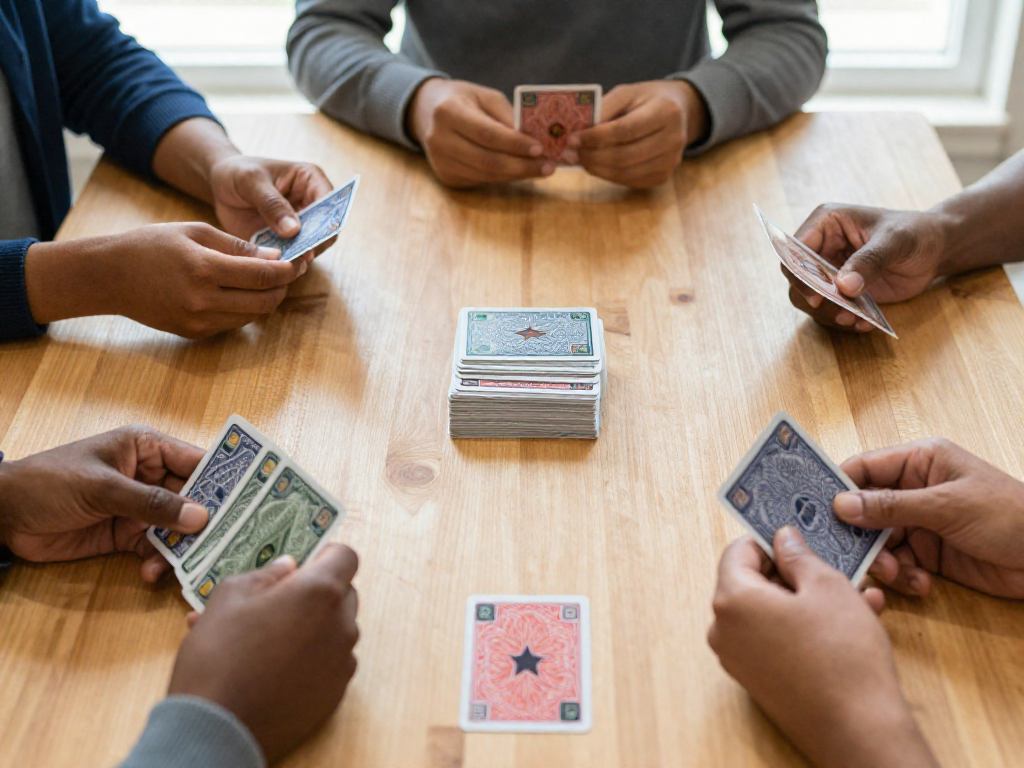
Before we untangle the official rules from the house rules everyone swears by, here's the quick lay of the land.
The goal: In a full game, you're racing to 500 points. You earn points by being the first to empty your hand each round, scoring the cards your opponents are still holding. In casual play, most families skip the scoring entirely and just call a winner the moment someone plays their last card.
Players: Uno works with 2 to 10 players. For family game night, 3 to 5 hits the sweet spot—enough chaos to be fun, not so many that turns drag.
What's in the box: A standard deck has 108 cards: numbered cards (0–9) in four colors, plus action cards that change the flow of play.
The four action cards, in plain English:
- Skip — the next player loses their turn.
- Reverse — flips the direction of play around the table.
- Draw Two — the next player draws 2 cards and is skipped.
- Wild / Wild Draw Four — lets you pick the next color (and, for Draw Four, forces the next player to draw 4).
That's the whole game in a nutshell—now let's dig into the rules.
How to Set Up a Game of Uno
Setup takes about a minute, and it's the same every time you play. Here's how to get a game going with 2 to 10 players (ages 7 and up):
- Shuffle and deal 7 cards to each player. Keep your hand hidden from everyone else.
- Make the draw pile. Place the rest of the deck face-down in the middle of the table. This is where players draw cards when they can't play.
- Start the discard pile. Flip the top card of the draw pile face-up next to it. This first card sets the color and number that play begins with.
- Pick a starting player and direction. A common method is to let the dealer go first, with play moving clockwise (to the left). Direction matters later because Reverse cards flip it.
If the first flipped card is an action card, handle it before play starts:
- Skip: the first player loses their turn.
- Reverse: direction switches, so play goes the other way.
- Draw Two: the first player draws 2 cards and is skipped.
- Wild: the first player chooses the starting color.
- Wild Draw Four: return it to the deck, reshuffle, and flip a new card.
Now you're ready to play.
The Official Rules: How a Turn Actually Works
Uno plays clockwise, and on your turn you do one thing: play a single card from your hand that matches the top card of the discard pile. A card matches if it shares the same color, the same number, or the same symbol (an action icon like Skip or Reverse). That's it—match one of those three things and you're good. Once you play, your turn ends and it's the next person's go.
When you can't play. If nothing in your hand matches, you draw one card from the draw pile. By the real rulebook, you then have a "play it or keep it" choice: if that freshly drawn card happens to be playable, you may play it right away, or you may choose to hold it and pass. You draw only one card—not until you find a match.
What the action cards do:
- Skip – The next player loses their turn entirely.
- Reverse – Switches the direction of play (clockwise becomes counter-clockwise).
- Draw 2 – The next player draws 2 cards and is skipped; they don't get to play.
- Wild – Lets you pick any color to continue with. You can play a Wild on your turn no matter what's showing on the pile.
- Wild Draw 4 – Pick the new color and the next player draws 4 cards and is skipped.
The rule most people break: A Wild Draw 4 is only a legal play when you have no card matching the current color in your hand (you can still hold matching numbers, symbols, or other Wilds). Officially, you're not supposed to drop it just because it's convenient. The player being hit can challenge a suspected illegal Draw 4—but that's a house-favorite we'll cover later.
Two-player note: With just two people, Reverse acts like a Skip—it bounces the turn straight back to you, so you get to go again.
Calling "Uno" and Winning the Round
Here's the rule almost everyone forgets at the table: the moment you play your second-to-last card—leaving just one card in your hand—you have to say "Uno" out loud. That's your warning to everyone else that you're one turn from winning.
The penalty for staying quiet
If you forget to call "Uno" and another player catches you before the next player takes their turn, you draw 2 cards as a penalty. The timing matters: once the next player has started their turn (drawn or played a card), you're safe and the penalty no longer applies. We like this rule because it keeps the table paying attention to each other instead of zoning out—great for family game night.
Ending the round
A round ends the instant one player gets rid of their very last card. If that last card is a Draw Two or Wild Draw Four, the next player still has to draw those cards before the round closes out.
Scoring what's left
The winner scores points based on the cards still stuck in everyone else's hands. Add them up like this:
- Number cards (0–9): face value (a 7 is worth 7 points)
- Action cards (Draw Two, Reverse, Skip): 20 points each
- Wild and Wild Draw Four cards: 50 points each
Those Wild cards are worth holding onto carefully—getting caught with one is expensive. First player to reach 500 points across multiple rounds wins the game.
Popular House Rules (and What the Official Rules Say)
Here's where most family arguments start. A house rule is simply a tweak your group adds that isn't printed in the rulebook. They're fun—but it helps to know what's official before someone "wins" the debate.
Stacking Draw 2s and Draw 4s. The classic move: someone plays a Draw 2, you slap down your own Draw 2 to pass the penalty along. Hugely popular, but not official. By the rulebook, when a Draw 2 hits you, you draw two cards and lose your turn—no passing it on.
Jumping in (playing an identical card out of turn). If you hold the exact same card (same color and number) that was just played, some groups let you "jump in" immediately, even out of order. Fun and fast, but not official.
Drawing until you find a playable card. Many families make you keep drawing until you can play. The real rule: you draw one card. If it's playable you may play it; if not, your turn ends.
The Zero/Seven swap rule. A widely shared variant where playing a 7 lets you trade hands with another player, and a 0 rotates everyone's hands around the table. Genuinely entertaining, but not official.
Forcing endless drawing on Draw 2/Draw 4. Some tables pile on extra penalties. Stick to the printed amount—two or four cards—and the turn passes.
Why Mattel weighed in. The stacking debate got so heated that Mattel, Uno's publisher, posted on social media confirming that stacking is not part of the official rules. Plenty of fans pushed back, which tells you everything: these house rules are beloved.
The verdict for game night: none of these are official, but all are family-friendly and easy for kids. Just agree on your rules before you deal—that one habit prevents most mid-game meltdowns.
Setting House Rules Before You Deal
The single best way to avoid mid-game arguments is to settle your house rules—the optional tweaks your family plays by instead of the official ones—before the first card is dealt. Take 30 seconds and say them out loud: "Are we stacking Draw 2s? Can you play a Draw 4 anytime, or only when you have no matching color?" Once everyone nods, you've got a deal.
For younger kids (roughly ages 5–7), keep it simple with a stripped-down set:
- Skip the stacking and challenges—just play one card per turn.
- No penalty for forgetting to say "Uno"; the reminder is enough.
- Allow do-overs if someone plays the wrong color by mistake.
Finally, jot your agreed rules on a small slip of paper and tuck it in the box. Next game night, there's nothing to re-argue—you just read the note and deal. It's a tiny habit that keeps the table friendly and the focus on fun.
See also
- How to Play & Setup Guides category page
- Best Card Games for Families
- Easy Games for Family Game Night
- How to Play Crazy Eights
- Beginner-Friendly Board Games for Kids
Related articles
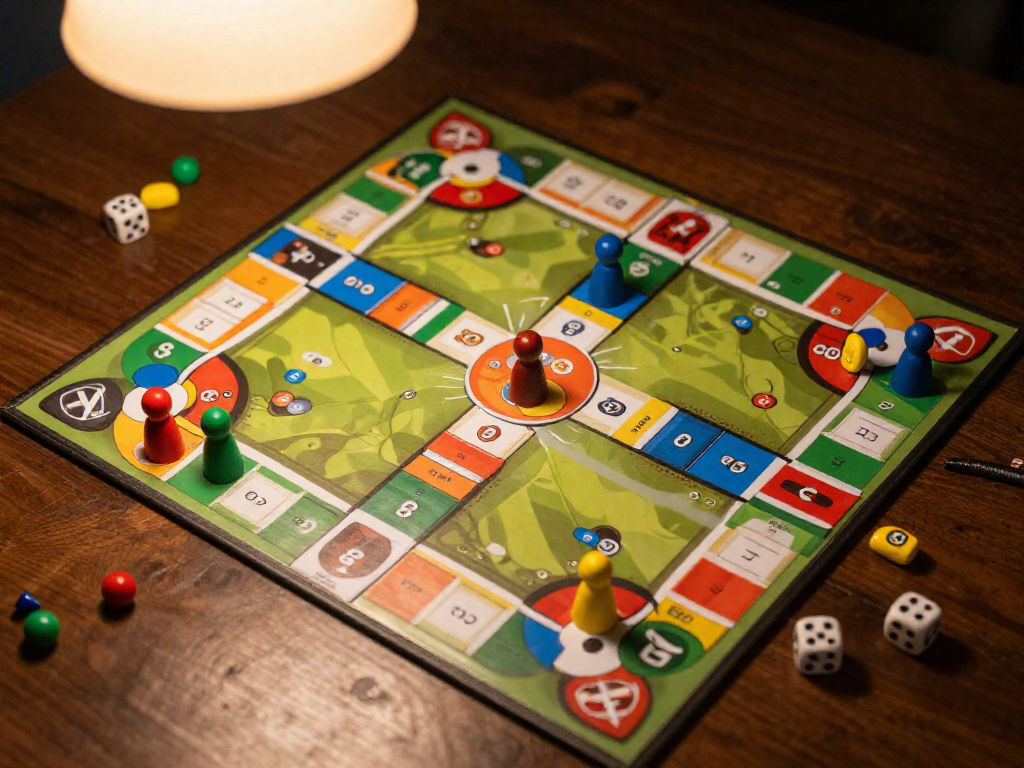
How Does Scoring Work in Board Games? Points Explained Simply
Confused about who wins and why? Learn how board game scoring works—victory points, race conditions, and tracking—in plain language for family game night.
Jun 27, 2026 · 9 min read
What Does 'Eurogame' Mean? Hobby Jargon Demystified
What is a eurogame? A plain-language guide to the eurogame style, how it differs from other board game families, and easy titles to try at home.
Jun 27, 2026 · 6 min read
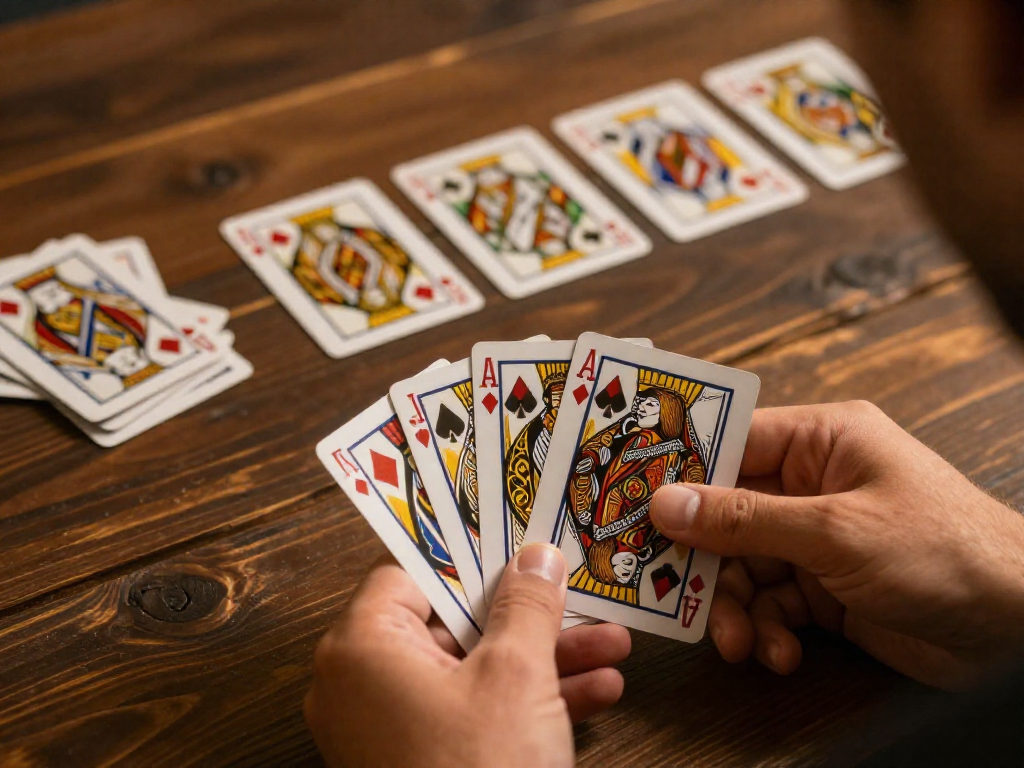
Deck-Building Explained: How These Games Actually Work
New to deck-building games? Learn what they are, how the core mechanic works, and which beginner-friendly titles to try first—explained in plain language.
Jun 27, 2026 · 10 min read