What Is a 'Gateway Game'? The Beginner's Term Explained
What does 'gateway game' mean and which games qualify?
On this page

The Short Answer: What a Gateway Game Is
A gateway game is an easy-to-learn modern board game made to introduce newcomers to the hobby. That's the one-sentence definition you can quote and repeat.
In plain terms, it's a game with simple rules, a short setup, and quick payoff—but enough depth to keep adults interested. It sits between the games most of us grew up with (think Monopoly or Sorry) and the bigger, more involved "hobby games" that can take an hour just to learn.
The name says it all: a gateway game is the gateway—the welcoming first step that pulls people into the wider tabletop world. Play one good one with friends or family, and there's a real chance you'll want to try another.
So if someone hands you a "gateway game," expect something approachable, family-friendly, and easy to teach at the table tonight—no strategy jargon or rulebook deep-dives required.
What Makes a Game a 'Gateway' Game
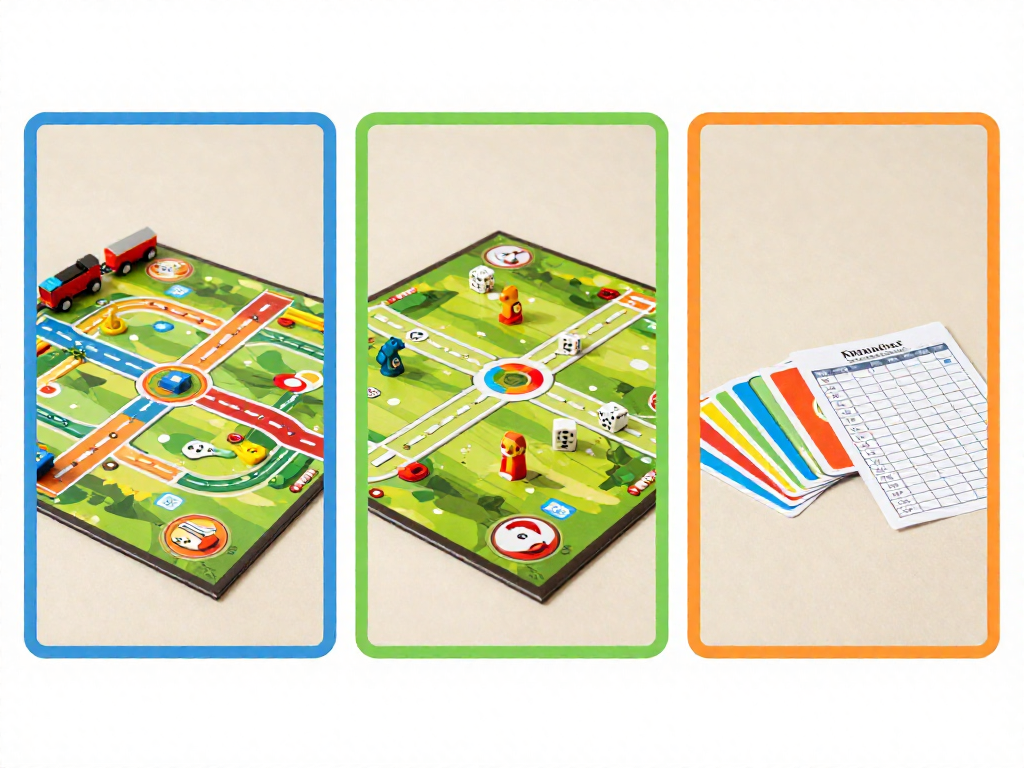
A "gateway game"—a game designed to ease newcomers into the hobby—earns the label by checking a handful of practical boxes. Once you know them, you can size up almost any box on the shelf yourself instead of relying on someone else's list.
Here's what to look for:
- Quick to teach. You can explain the rules in 5–10 minutes, so the table starts playing instead of slogging through a manual.
- A satisfying-but-short length. Most games wrap up in 30–60 minutes—long enough to feel like a real game night, short enough to fit a weeknight or squeeze in a rematch.
- Light, intuitive decisions. Choices make sense at a glance. There's no "rules lawyering" (arguing over fine print) and no heavy math to slow things down.
- Choices that actually matter. Easy doesn't mean mindless. Good gateway games still reward a little planning, so winning feels earned.
- Room for mixed groups. Kids, grandparents, and first-timers can all keep up and have fun in the same session.
- Low downtime. Turns move fast, so nobody sits bored waiting five minutes for their next move.
No single trait makes a gateway game—it's the combination. If a game is easy to learn, fair to a mixed table, reasonably quick, and still fun to think about, you've found one. Use these six checks as your personal litmus test the next time you're deciding what to bring to game night.
Why the Concept Matters for New Players
Knowing this term before you shop saves you real money and a lot of frustration. The biggest risk for a new group isn't picking a "bad" game—it's picking one that's too complex too soon. Hand a table a thick rulebook on the first night and people check out before the fun starts. That game then quietly sits in the closet, unplayed.
A gateway game (an easy-to-learn title designed to welcome newcomers) does the opposite. It teaches the basics in a few minutes, builds confidence with every turn, and creates that "one more round" feeling that keeps everyone at the table. Wins feel earned, not lucky, so players want to come back.
There's a longer payoff, too. Once your group is comfortable, gateway games become a launchpad. The skills they teach—taking turns strategically, reading the board, weighing simple choices—make heavier, meatier games far less intimidating later. Start light, and you keep your options open without scaring anyone off.
Classic Examples Most People Start With
Now that you know what makes a game a "gateway game" (an easy-to-learn title that welcomes newcomers into the hobby), here are five proven picks. Each one teaches a core skill you'll see again in more advanced games.
-
Ticket to Ride — Build train routes across a map by collecting matching colored cards. Players: 2–5 | Ages: 8+ | Time: 30–60 min | Difficulty: Easy. Teaches: planning ahead and weighing risk versus reward.
-
Catan — Gather and trade resources (wood, brick, wheat) to build settlements. The original gateway hit. Players: 3–4 | Ages: 10+ | Time: 60–90 min | Difficulty: Easy-Medium. Teaches: negotiation and trading with other players.
-
Carcassonne — Lay tiles to build a shared landscape of roads and cities. Players: 2–5 | Ages: 7+ | Time: 30–45 min | Difficulty: Easy. Teaches: spatial thinking and reading the board.
-
Azul — Draft colorful tiles to complete patterns. Gorgeous and approachable. Players: 2–4 | Ages: 8+ | Time: 30–45 min | Difficulty: Easy. Teaches: "drafting" (picking from a shared pool) and efficient choices.
-
Sushi Go! — A quick card game where you pass hands of cards to score sets. Players: 2–5 | Ages: 8+ | Time: 15 min | Difficulty: Very Easy. Teaches: set collection in short, snackable sessions.
All five are family-friendly with no objectionable content—great for game nights with kids around 8 and up.
Gateway Game vs. Family Game vs. Filler: Quick Clarifications
These terms overlap, so here's a plain-English breakdown of what each one really means.
- Family game: A game designed to be age-friendly and easy for mixed groups (kids and adults) to enjoy together. It's about accessibility, not depth—so not every family game is a "hobby-style" board game with deeper choices.
- Filler: A very short game (often 10–20 minutes) you play between longer games or while waiting for everyone to arrive. Think of it as a quick warm-up or palate cleanser.
- Gateway-plus (step-up) games: Slightly meatier games for when a gateway game starts feeling too simple. They add a bit more decision-making without overwhelming you.
And here's the good news: overlap is completely fine. Many gateway games double as fantastic family games—you don't have to pick just one label.
How to Pick Your First Gateway Game
Use this quick checklist to land on the right pick tonight:
- Match age and patience. Be honest about your group. A restless 7-year-old and a friend who hates losing need a short, light game—not a 90-minute brain-burner.
- Read the box. Every game lists a player count, age range, and play time. Pick something where your real group sits comfortably in the middle of those numbers, not at the edges.
- Go cooperative if competition causes friction. Cooperative games (where everyone plays as a team against the game itself, rather than against each other) sidestep hurt feelings and are great for mixed-age tables.
- Plan to learn the rules fast. Don't read the rulebook cold at the table. Watch a 5-minute "how to play" video first, or follow one of our step-by-step setup guides, then teach as you go.
Your next step: pick one game that fits your group's age, count, and time—then schedule a night to actually play it. The best gateway game is the one that hits the table.
FAQ
Is Monopoly a gateway game?
Not really. A "gateway game" is an easy-to-learn title designed to introduce newcomers to modern tabletop gaming, and Monopoly doesn't fit the bill. It relies heavily on luck, can run very long, and often leads to one player being knocked out early or everyone arguing—the opposite of the smooth, welcoming experience gateway games aim for. Better starting points keep everyone involved until the end and teach a single clean idea (trading, tile-laying, set collection). If your group loves Monopoly's theme of buying and building, try a modern alternative like Ticket to Ride (2–5 players, ages 8+, ~45 minutes, easy) for a friendlier on-ramp.
What is the most popular gateway game?
Catan and Ticket to Ride are the two most commonly recommended gateway games, with Ticket to Ride usually winning for absolute beginners because the rules fit on a postcard: collect matching train cards, claim routes, connect cities. Ticket to Ride supports 2–5 players, ages 8 and up, plays in about 45 minutes, and is easy to learn. Catan (3–4 players, ages 10+, ~60–90 minutes, easy-to-moderate) adds trading and negotiation, which is great for families who enjoy a little table talk. Who it's for: both work well for mixed-age family game nights; pick Ticket to Ride if you want the gentlest start and Catan if you want more player interaction.
Are gateway games only for kids?
No. "Gateway" describes how easy a game is to pick up, not the age of who's playing. These titles are built so that anyone new to modern board games—adults included—can learn in a few minutes and have fun on the first play. Many gateway games carry age ratings like 8+ or 10+ and are genuinely enjoyable for grown-ups; plenty of adult hobbyists keep them on the shelf for casual nights with friends. They're ideal when you're mixing experienced and brand-new players, or when ages span a wide range. So they're family-friendly, but "family-friendly" here means "easy and approachable for everyone," not "childish."
How is a gateway game different from a family game?
The terms overlap but aren't identical. A "family game" describes the audience—something the whole household can enjoy together, usually rated for younger players. A "gateway game" describes the purpose: it's chosen specifically to ease beginners into modern tabletop gaming by teaching core concepts simply. Many games are both (Ticket to Ride, 2–5 players, ages 8+, ~45 minutes, easy, is a classic example). But some family games are purely casual party fun with little to learn, while some gateway games lean slightly more involved to bridge newcomers toward heavier titles. In short: family = who plays it; gateway = what it prepares you for.
What should I play after gateway games?
Once a quick gateway game feels too light, step up to "gateway-plus" or mid-weight titles—games with a bit more decision-making but still beginner-reachable. Good next stops include Carcassonne (2–5 players, ages 7+, ~35 minutes, easy-to-moderate) for tile-laying and area control, 7 Wonders (3–7 players, ages 10+, ~30 minutes, moderate) for fast simultaneous play that scales to big groups, and Splendor (2–4 players, ages 10+, ~30 minutes, easy-to-moderate) for satisfying engine-building (slowly improving your ability to score each turn). Who these are for: families and groups comfortable with the basics who want deeper choices without long rulebooks or strategy jargon. All are family-friendly with no mature content.
See also
- How to Play Ticket to Ride: Beginner's Setup Guide
- Catan Rules Explained in Plain Language
- Best Cooperative Board Games for Families
- Board Game Night Ideas for Beginners
- Best 2-Player Board Games for Couples
Related articles
How Does Scoring Work in Board Games? Points Explained Simply
Confused about who wins and why? Learn how board game scoring works—victory points, race conditions, and tracking—in plain language for family game night.
Jun 27, 2026 · 9 min read

What Does 'Eurogame' Mean? Hobby Jargon Demystified
What is a eurogame? A plain-language guide to the eurogame style, how it differs from other board game families, and easy titles to try at home.
Jun 27, 2026 · 6 min read

Deck-Building Explained: How These Games Actually Work
New to deck-building games? Learn what they are, how the core mechanic works, and which beginner-friendly titles to try first—explained in plain language.
Jun 27, 2026 · 10 min read