Why Your Group Keeps Getting the Rules Wrong (And How to Fix It)
What are the most commonly misplayed board game rules and how do you fix them?
On this page
Why Rules Go Wrong in the First Place
If your game nights keep stalling over "wait, is that actually allowed?"—you're in good company. Misplaying rules is one of the most common things that happens at the table, and it's almost never because anyone did something wrong. The deck is stacked against you from the start.
Here's where the trouble usually creeps in:
- Rulebooks bury the important stuff. Key rules often hide inside dense paragraphs, sidebars, or tiny footnotes, so they're easy to skim past on your first read.
- "Telephone" teaching. When one person learns a game slightly off and then teaches the next group, the mistake spreads—just like the childhood game of Telephone, where a whispered message gets garbled down the line.
- House rules sneak in. A house rule (a tweak your group invented for fun) quietly gets remembered as the official rule, and nobody notices the swap.
- Edge cases rarely come up. Unusual situations happen so seldom that a wrong habit can sit uncorrected for years.
And here's the reassuring part: even seasoned hobby groups get rules wrong all the time. It's not a sign you're bad at games—it's a sign the rules were hard to find. Once you know where the gaps come from, the fixes ahead make a lot more sense.
The Most Commonly Misplayed Rules (By Game)
Here are the rules groups get wrong most often—and the quick fix for each.
Monopoly
- The myth: Money piles up on Free Parking, payable to whoever lands there.
- The rule: Free Parking does nothing. It's a free resting space, full stop.
- The other miss: When a player lands on an unowned property and declines to buy it, the bank must auction it to all players immediately—starting bid can be as low as $1. Skipping auctions is the single biggest reason Monopoly drags on for hours.
Catan
(Catan = a resource-trading game where players build settlements; "the robber" is a piece that blocks production.)
- The myth: Rolling a 7 only matters for moving the robber.
- The rule: When anyone rolls a 7, every player holding 8 or more resource cards discards half (rounded down) before the robber moves. Forgetting this lets card-hoarders run away with the game.
UNO
- The myth: You can "stack" a +2 on a +2, or a +4 on a +4, to pass the penalty along.
- The rule: Officially, you cannot stack draw cards. The player hit by a +2 or +4 simply draws and loses their turn. Stacking is a popular house rule—just agree on it before you deal.
Ticket to Ride
(A route-building game where you collect cards to claim train routes between cities.)
- The myth: Unfinished route cards are harmless.
- The rule: At game end, every incomplete destination ticket is subtracted from your score, not ignored. Reveal all tickets and tally the penalties out loud so no one quietly skips theirs.
Scrabble
- The myth: A challenged word that turns out to be invalid just gets taken back, no harm done.
- The rule: In standard play, if a player challenges a word and the challenge fails (the word was valid), the challenger loses their next turn. If it succeeds, the word comes off the board and the player who placed it loses that turn. Knowing the penalty keeps challenges honest.
Codenames & Party Games
(Codenames = a team word game; the "spymaster" gives one-word clues to point teammates at the right cards.)
- The myth: Any clue goes.
- The rule: A spymaster's clue must be one word plus one number, and it can't be a word currently visible on the board (no rhyming or spelling it out). Bending this is the fastest way to start an argument mid-game.
Why these rules get missed most
Notice the pattern: nearly every rule above is either invisible during normal play (Free Parking does nothing, so nobody checks), a penalty that's easy to skip (Scrabble challenges, Ticket to Ride tickets), or a fun-feeling house rule that spread so widely people assume it's official (UNO stacking, Catan trades). Rulebooks bury these in dense paragraphs, and once a wrong version "feels right" at one game night, it travels home with everyone at the table.
The fix is the same across all of them: read the end-of-game scoring and the penalty sections out loud once before you start, and agree openly on any house rules. Two minutes up front saves a half-hour standoff later.
How to Tell a House Rule From a Real Mistake
Not every "wrong" rule needs fixing. A house rule (a change your group makes on purpose) is perfectly fine—as long as everyone agrees to it before you start, not after someone realizes it would have helped them win. The trouble starts when a misplay sneaks in by accident and nobody decided on it.
Here's a quick way to sort one from the other:
- Did everyone agree up front? If yes, it's a house rule. Keep it and move on.
- Does the misplay break balance or pacing? If a forgotten rule lets one player run away with the game, or drags every turn to a crawl, fix it. These are worth pausing for.
- Is it just a small slip on a casual night? If it doesn't affect who wins or how fun the round feels, let it go. Stopping to re-litigate one card rarely improves the evening.
When you do want the official answer, check it fast: the rulebook index first, then the publisher's website FAQ, or a "rules questions" thread for that specific game. A 30-second lookup beats a 10-minute argument.
The goal isn't a perfect game—it's a table where nobody feels caught out. Decide together, fix what matters, and shrug off the rest.
A Simple System to Get Rules Right Every Time
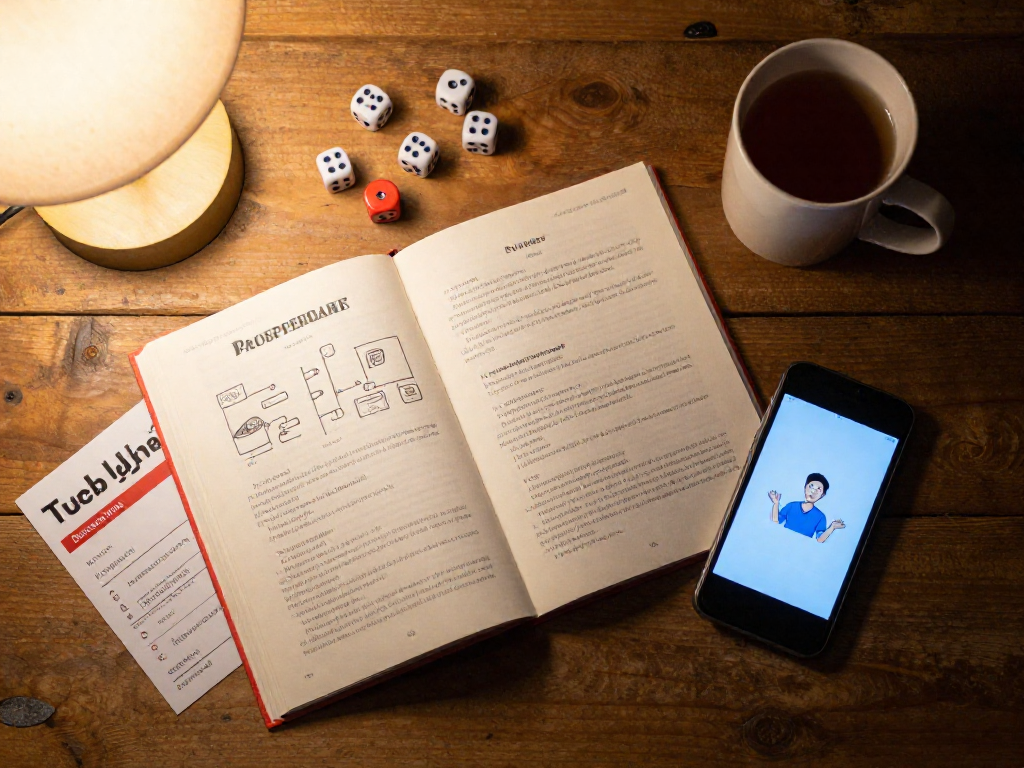
Misplayed rules usually come from rushing setup, not from a confusing game. The fix is a short routine you run before anyone touches a piece. Here's a five-step system you can use on any game night, whether it's a 20-minute filler or a two-hour box.
1. Pick one rules reader. Choose a single person to skim the rulebook before play. They don't need to memorize everything—just two things first: how to set up, and how someone wins. Knowing the win condition (the goal that ends the game) keeps every decision pointed in the right direction.
2. Watch a 5-minute how-to-play video. A short official or well-known channel walkthrough shows the flow of a turn far faster than reading. Pause it, set up alongside it, and you'll catch the small steps rulebooks bury in paragraphs.
3. Keep the reference card open during play. Most modern games include a player aid—a small card or page summarizing the actions you can take on your turn. Leave one face-up next to each player. If the game doesn't include one, keep the rulebook open to the turn-summary page.
4. Agree on house rules out loud. A house rule is any change your group makes to the official rules (for example, "no attacking on turn one"). Decide these before you start, say them aloud, and make sure everyone nods. This prevents the mid-game argument where half the table thought a rule was real and the other half thought it was optional.
5. Bookmark one rules-lookup source. For mid-game disputes, agree in advance on a single trusted place to check—the publisher's FAQ or a well-moderated rules forum. Pick the ruling, write it on a sticky note, and keep playing. Resolve it after the game if you're still unsure.
Run these five steps once and they become automatic. The whole routine takes about ten minutes and saves you from replaying a game "the right way" later—a win for families who just want to start having fun.
Handling Rule Disputes Without Killing the Vibe
Catching a mistake mid-game shouldn't turn into a courtroom drama. The goal is to keep things fun while still playing fair. Here's how to fix a rule without souring the table:
- Pause, look it up, finish the turn. When something feels off, check the rulebook quickly, then let the current player wrap up. Don't stop everything to relitigate turns from ten minutes ago—nobody remembers them accurately anyway.
- Apply the fix going forward, not backward. Once you've sorted out the correct rule, use it from this point on. Rewinding the game to "undo" past moves creates more arguments than it solves.
- Keep it light. A misplayed rule is not a betrayal. No one should lose a friendship over who really owed rent on Free Parking.
- Ease newer players in. If someone's learning, skip the firehose of corrections. Let them play a turn or two, then gently fold in the rules they missed.
Get the rule right, keep the laughs going, and the game stays the main event.
FAQ
What is the most commonly misplayed board game rule?
One of the most frequently misplayed rules is Monopoly's auction rule. By the official rules, whenever a player lands on an unowned property and chooses not to buy it, that property must immediately go up for auction to all players. Most groups skip this entirely, which makes games drag on much longer because properties stay unsold. The fix is simple: read the 'unowned property' section before your next game and agree to run the auction. It speeds up play and adds a fun bidding moment.
Can you actually stack +2 and +4 cards in UNO?
No. Stacking (playing a Draw 2 or Wild Draw 4 on top of another so the penalty piles up for the next player) is a house rule, not an official one. UNO's publisher has confirmed that when someone plays a Draw card on you, you draw the cards and lose your turn—you cannot pass the penalty along. That said, stacking is one of the most popular house rules out there, so it's perfectly fine to use it as long as everyone at the table agrees before the game starts.
Is money supposed to go on Free Parking in Monopoly?
No—the official Monopoly rules say Free Parking is just a resting space where nothing happens. There is no rule about collecting taxes, fees, or a jackpot when you land there. The popular 'money on Free Parking' version, where fines and a starting pot go to whoever lands on the space, is a house rule. It's fun and many families love it, but be aware it pumps extra cash into the game and tends to make matches last significantly longer. Decide as a group before you start.
How do I settle a rules argument during game night?
Keep it quick and friendly so the fun doesn't stall. First, check the rulebook or its quick-reference summary—most games keep one on the back page or a separate sheet. If it's still unclear, look up the publisher's official FAQ, since many games post answers to common edge cases online. When you can't find a clear answer fast, make a temporary ruling, write it down, and keep playing; you can confirm the correct rule afterward. The golden rule: don't let a single card ruin the night. Agree to a 'we'll settle it later' approach so the game keeps moving.
Are house rules okay or should we always play by the book?
House rules—the tweaks a group makes to the official rules—are completely okay and are a big part of what makes game night your own. The only requirement is that everyone agrees on them before the game begins, so no one feels blindsided mid-game. For families, house rules can make a game gentler for younger players or shorter on a busy evening. The one time to stick to the book is when you're learning a game for the first time or playing with new people, since the official rules give everyone a shared starting point. Once you know the game, customize away.
See also
- Beginner's guide to setting up your first board game night
- Easy family board games that teach themselves
- How to teach a new board game to total beginners
- Best 5-minute rules explainer videos for popular games
Related articles
How Does Scoring Work in Board Games? Points Explained Simply
Confused about who wins and why? Learn how board game scoring works—victory points, race conditions, and tracking—in plain language for family game night.
Jun 27, 2026 · 9 min read

What Does 'Eurogame' Mean? Hobby Jargon Demystified
What is a eurogame? A plain-language guide to the eurogame style, how it differs from other board game families, and easy titles to try at home.
Jun 27, 2026 · 6 min read
Deck-Building Explained: How These Games Actually Work
New to deck-building games? Learn what they are, how the core mechanic works, and which beginner-friendly titles to try first—explained in plain language.
Jun 27, 2026 · 10 min read