Holiday Game Night: Games and a Plan for Family Gatherings
What games and plan work best for a holiday family gathering?
On this page
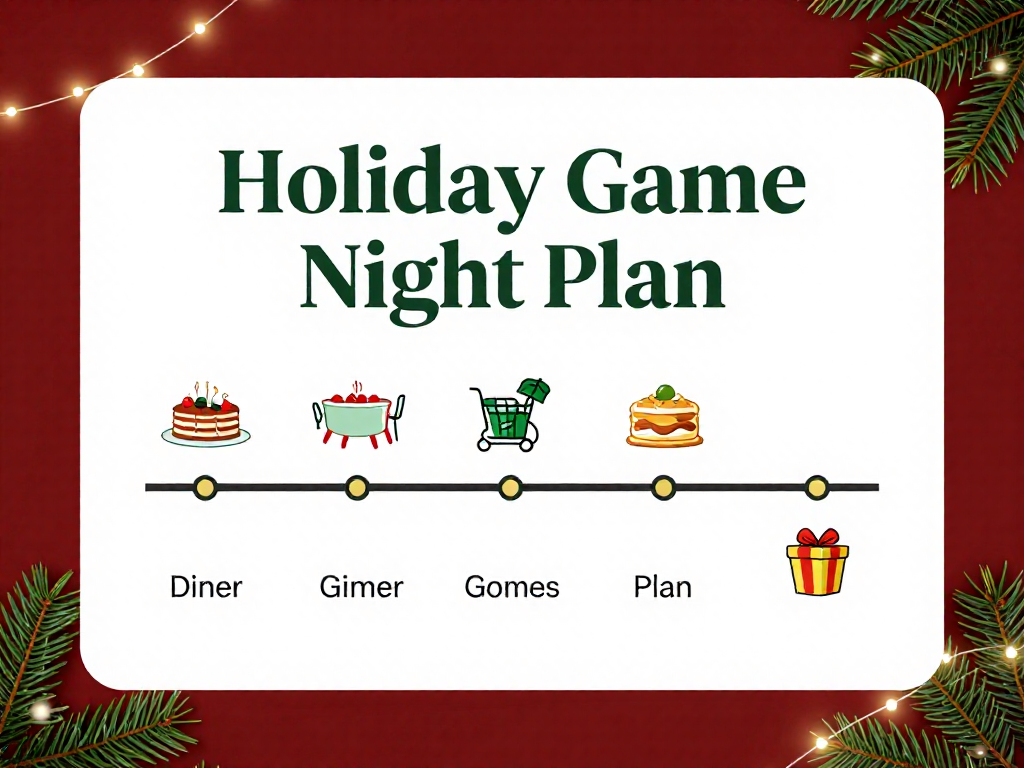
Why Holiday Game Nights Go Sideways (and the Fix)
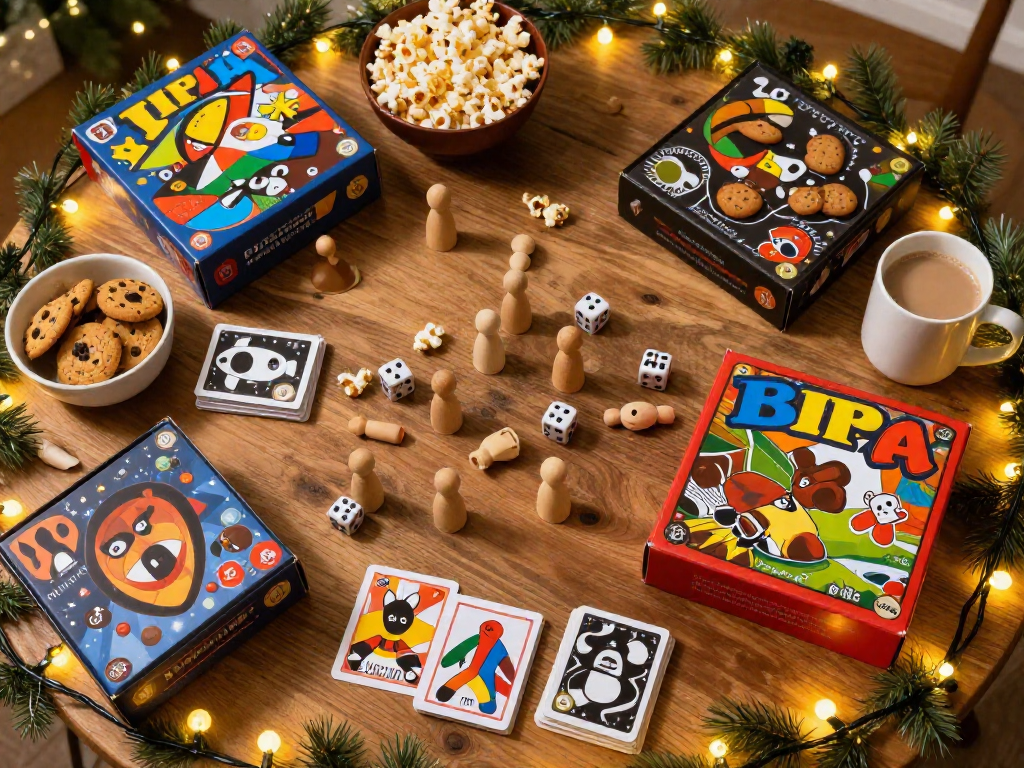
You know the scene: a stack of boxes on the table, a 12-page rulebook open to nobody, and Grandma quietly checking her phone while one cousin explains setup for the third time. Holiday game nights usually fall apart for the same handful of reasons—too many rules at once, a game that leaves out the youngest kids or the oldest guests, and long stretches of "dead time" (the lull while someone learns or teaches a game) that drain the room's energy.
Here's the shift that fixes most of it: plan the night, don't just pile up games. Pick titles based on your actual group—how many people, what ages, and how much mental energy they have after a big meal—rather than whatever's trending this year. A simpler game everyone can join beats a clever one that benches half the table.
It also helps to set a rhythm and say it out loud:
- Warm-up: a quick, low-rules game to get everyone laughing.
- Main event: one bigger game while attention is fresh.
- Wind-down: something light to close out the night.
The rest of this guide gives you the games—and the plan—to pull it off.
A Simple Holiday Game Night Plan (Hour by Hour)
The secret to a smooth game night isn't a perfect game—it's a loose plan you can repeat every year. Here's a two-hour flow that keeps everyone included and lets you, the host, actually play.
Before guests arrive (15 minutes of prep)
Clear the table completely so there's room to deal cards and pass pieces. Stack 3–4 games within reach so you're not digging through a closet mid-party. Set up a self-serve snack station—drinks, chips, something sweet—so you're not stuck refilling bowls instead of joining in.
First 30 minutes — Warm-up
People always trickle in late, so start with a party game: a light game that anyone can join or leave without breaking the flow. Good fits handle big, flexible groups and need almost no setup.
Try: Codenames — Players: 4–8+ · Ages: 10+ (younger kids can pair with an adult) · Time: 15 min/round · Difficulty: Easy. Who it's for: mixed crowds where people are still arriving. Pro: teams mean no one sits out. Con: the spymaster role can stump very young kids—keep them on a team.
Middle hour — Main event
Now that everyone's here, play one bigger group game that seats the whole table. Pick something with simple rules but room for laughs and comebacks.
Try: Ticket to Ride — Players: 2–5 · Ages: 8+ · Time: 45–60 min · Difficulty: Easy-to-medium. Who it's for: a settled group ready for one "real" game. Pro: easy to teach in five minutes; Con: caps at 5 players, so split a big crowd (see below). Family-friendly with no objectionable content.
Last 30 minutes — Wind-down
Energy fades before dessert, so close with a quick, low-stakes round—nothing that demands deep focus.
Try: Sushi Go! — Players: 2–5 · Ages: 8+ · Time: 15 min · Difficulty: Easy. Who it's for: tired players and kids. Pro: fast and forgiving; Con: light on strategy for adults who want a challenge.
Backup: splitting a big crowd
If more than 6–8 people show up, plan to split into two tables during the main event—say, a card game for the adults and a faster, kid-friendly game nearby. Keep one extra easy game stacked for this exact moment, and you'll never scramble.
Best Games by Group Size and Age Mix
The fastest way to ruin a holiday game night is forcing one game on a room with very different people in it. Instead, match the game to who's actually at the table. Here are our hands-on picks, grouped by the situation you're in.
Big groups (8 or more)
When the whole family is crowded in, you want party games—games that handle large, loud groups and don't require everyone to track complicated rules.
- Trivia or charades-style picks (e.g., guess-the-clue or act-it-out games). Players: 6–16+. Ages: 8 and up (younger kids can pair with an adult). Play time: 20–40 minutes, and you can stop anytime. Difficulty: easy. Who it's for: mixed crowds who'd rather laugh than concentrate. Heads-up: some trivia decks skew toward older pop culture, so skim the cards if young kids are playing.
Mixed ages with young kids
With little ones at the table, reach for cooperative games (everyone plays as a team against the game, so nobody gets knocked out) or luck-based games that don't reward experience.
- Co-op or roll-and-move picks. Players: 2–6. Ages: 5–6 and up. Play time: 15–30 minutes. Difficulty: easy; minimal reading. Who it's for: families who want a 6-year-old and Grandma to have an equal shot. Heads-up: strategy-minded adults may find these light—that's the point.
Adults after the kids are in bed
Once the youngest are asleep, you can step up to light strategy (a few meaningful choices, still under an hour) or social deduction (players hide secret roles and try to read each other).
- Light strategy / social deduction picks. Players: 3–8. Ages: 12 and up. Play time: 30–45 minutes. Difficulty: medium. Who it's for: adults wanting a bit more bite without a rulebook marathon. Heads-up: deduction games involve bluffing, which can get competitive—keep it friendly.
Two-player lulls
When most people have drifted off and only a couple remain, keep a filler (a short, simple game) ready.
- Quick two-player fillers. Players: 2. Ages: 8 and up. Play time: 10–15 minutes. Difficulty: easy. Who it's for: the night-owls who aren't done yet. Heads-up: none—these are about as low-stakes as it gets.
Pick one game from each tier before the gathering, and you'll always have the right fit on hand.
Including Everyone: Grandparents, Toddlers, and Reluctant Players
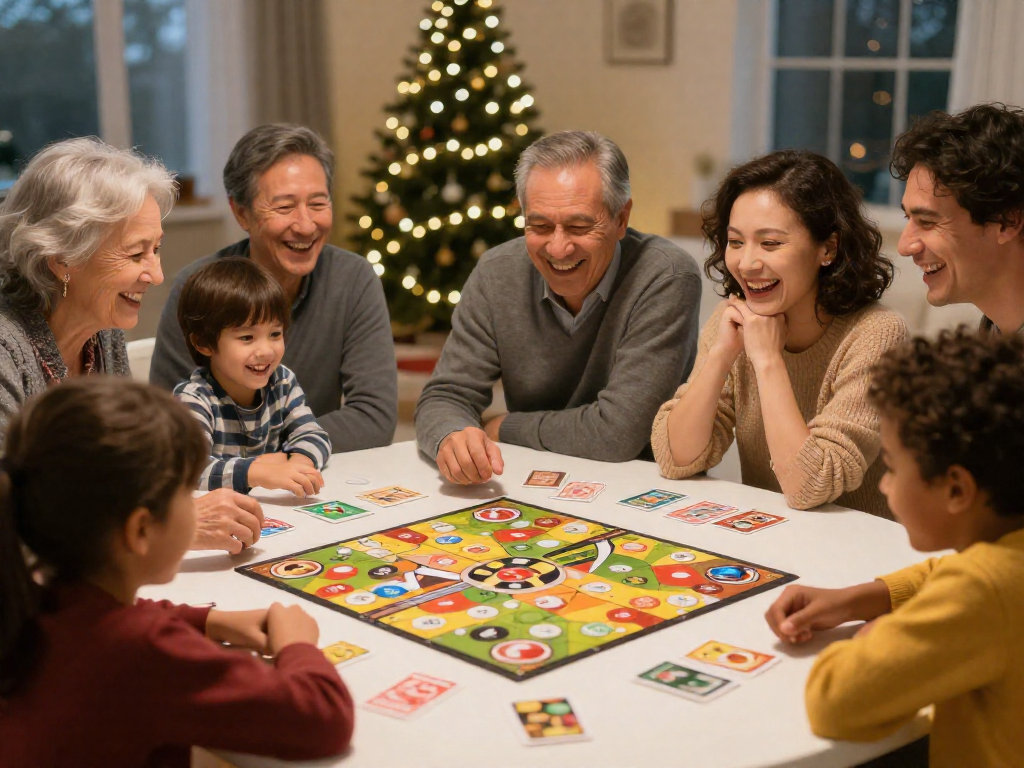
Holiday nights are tricky because you're rarely playing with one age group. A four-year-old, a teenager, and Grandpa all need to feel like they belong at the table. A few small adjustments make that possible.
Team up the youngest players. Instead of asking a toddler to take a full turn alone, pair them with an adult teammate who can read cards, count spaces, and quietly coach. The child still picks the move and celebrates the win—just with backup. This also keeps the game moving so older players don't lose patience.
Pick games that don't punish poor eyesight or early readers. Look for large print, bold icons, or designs with no reading at all (often called "language-independent" games). Picture-matching games like Spot It! work well here: 2–8 players, ages 6+ (younger with a teammate), about 15 minutes, very easy. Everyone scans the same cards, so nobody is left squinting at tiny text.
Give the reluctant player a job. Not everyone wants to compete. Offer a low-pressure role—judge, scorekeeper, or timer. It keeps them involved without the spotlight, and many warm up to playing after a round or two.
Avoid elimination. Games that knock people out early send kids off to a screen and leave the table thinner each round. Choose games where everyone stays in until the final score.
A note on content: double-check party games for adult humor before the kids join. When in doubt, preview the cards.
Host Tips: Snacks, Setup, and Keeping the Energy Up
A great game night lives or dies on the small stuff. Here's how to keep things moving once everyone's gathered.
Pick snacks that won't wreck your games. Greasy chips and saucy dips are the enemy of cardboard cards and tokens (the small pieces you move or collect during play). Stick to "dry hands" finger foods: popcorn, pretzels, grapes, cheese cubes, and cookies served on the side. Keep drinks in spill-proof cups and away from the table edge.
Teach in under two minutes. Nobody wants to sit through a rulebook reading. Explain the goal first ("be the first to..."), cover the one or two main actions, then start a quick practice round where mistakes don't count. People learn by doing far faster than by listening, and a practice hand gets everyone playing in minutes.
Read the room. Watch for the signs a game has run its course—phones come out, side conversations start, energy dips. That's your cue to wrap up or switch to something lighter and faster. It's better to end a game on a high note than to grind through to the bitter end.
Add low-pressure stakes. A small prize or a silly trophy (a dollar-store crown or a goofy mug works) gives winners something to play for without making the night feel competitive. Pass it around between games so everyone gets a shot at glory.
Your Quick-Start Holiday Game Night Checklist
Short on time? Here's the whole plan in one glance—pin it now and you'll be ready before the relatives arrive.
- Pick 3–4 games using the warm-up / main / wind-down flow. A warm-up is a quick, low-rules game to get everyone laughing; the main is your centerpiece; the wind-down is something calm to close the night.
- Match games to your real crowd. Check each box for player count, age range, and play time before you commit—don't make Grandma learn a 90-minute strategy game.
- Prep snacks and the play space early. Clear the table, set out finger foods, and have a backup game in reach.
- Save the plan for next time. Pin this checklist so your next gathering takes minutes to set up.
One game night down, many to go. Pin this, gather your crew, and let the good-natured chaos begin.
FAQ
What games are best for a large holiday family gathering?
For big groups, pick "party games"—light games built for many players at once and easy to explain in a minute. Strong picks: Codenames (4–8+ players, ages 10+, ~15 min, easy) where two teams guess words from one-word clues; Telestrations (4–8 players, ages 12+ but easy enough for younger kids with help, ~30 min, very easy), a drawing-and-guessing chain that gets hilarious; and Just One (3–7 players, ages 8+, ~20 min, easy), a cooperative word-guessing game where everyone wins or loses together. Pros: high player counts, lots of laughs, quick to teach. Cons: they can get loud and some reward quick thinking over careful play. Who this is for: hosts who want everyone involved without long rules. If your crowd is larger than 8, run two tables or choose a game with team play so no one sits out. All three are family-friendly; Telestrations can produce silly off-color drawings depending on who's playing, so set a tone for younger kids.
How do I include both little kids and grandparents in the same game?
Look for cooperative games (everyone plays as one team against the game) or games with simple, even rules so no one needs an advantage. Outfoxed! (2–4 players, ages 5+, ~20 min, very easy) is a cooperative "whodunit" where players work together to catch a fox—young kids can play and grandparents can help without taking over. Spot It! (2–8 players, ages 6+, ~15 min, very easy) is pure pattern-matching that levels the field across ages. For a gentle competitive option, try Ticket to Ride: First Journey (2–4 players, ages 6+, ~20 min, easy), a simpler train-route game. Pros: shared goals reduce tears, and rules are quick. Cons: cooperative games can let one confident adult "solve" everything—agree to let kids make their own moves. Who this is for: multi-generation tables that want everyone genuinely participating. Tip: pair a younger child with an adult as a team for any game that's slightly above their age range. All are family-friendly with no concerning content.
How long should a family game night last?
Plan for about 1.5 to 2 hours of actual play, which usually fits two or three shorter games. Mixed-age groups—especially with kids under 8—tend to lose focus after that, so it's better to end while everyone's still having fun than to push one long game. A simple plan: start with one quick warm-up game (10–15 min) while people arrive, play one main game (30–45 min), and finish with a fast, funny game (15–20 min). Build in a short snack break to reset energy. Pros of keeping it tight: kids stay engaged and nobody burns out. Cons: you may not finish a longer "big box" game in one sitting. Who this is for: families balancing attention spans across ages. If your group is all adults or older kids, you can comfortably stretch to a single longer game of 60–90 minutes.
What are good games to play with no reading required?
Choose games that rely on pictures, colors, shapes, or memory instead of text—great for pre-readers and for keeping the pace quick. Top picks: Spot It! (2–8 players, ages 6+, ~15 min, very easy), a fast symbol-matching game with no words on the cards; Sushi Go! (2–5 players, ages 8+ but playable younger with help, ~15 min, easy), a "card drafting" game (you pick a card, then pass your hand to the next player) that uses clear icons; and Hoot Owl Hoot! (2–4 players, ages 4+, ~15 min, very easy), a cooperative color-matching game perfect for the youngest players. Pros: no reading barrier, quick to learn, travel-friendly. Cons: light on deep decisions, so older players may want something meatier later. Who this is for: families with pre-readers or anyone wanting low-friction fun. All are family-friendly with no concerning content.
How many games should I have ready for game night?
Have three or four games ready, not your whole shelf. Aim for variety so you can match the room's energy: one quick warm-up (10–15 min), one main game (30–45 min), and one or two lively backups in case a choice falls flat or the group grows. Too many options leads to long debates and decision fatigue, especially with kids waiting to play. Pros of a short lineup: faster decisions and a smoother night. Cons: you might miss a perfect fit—so pick games that cover different player counts and ages to stay flexible. Who this is for: hosts who want to be prepared without overwhelming guests. Practical tip: pre-read the rules for each game and set them out in the order you plan to play so you're not learning a rulebook while everyone watches.
See also
- Best cooperative board games for families
- Easy party games for big groups
- Board games for 2 players
- How to teach board game rules quickly
- Best board games for kids ages 5-8
Related articles

Outdoor and Backyard Game Night Ideas for Warm Evenings
Plan the perfect outdoor game night with family-friendly backyard games, lighting and snack ideas, and tips for playing tabletop games outside on warm evenings.
Jun 27, 2026 · 7 min read
Game Night on a Budget: Big Fun Without Spending Much
Host a fun family game night without overspending. Get free and cheap game ideas, DIY snacks, and simple setups everyone will love.
Jun 27, 2026 · 9 min read

How to Handle a Sore Loser at Family Game Night
Tears, tantrums, and table-flipping? Here's how to defuse poor sportsmanship and teach kids (and adults) to lose gracefully at family game night.
Jun 27, 2026 · 9 min read